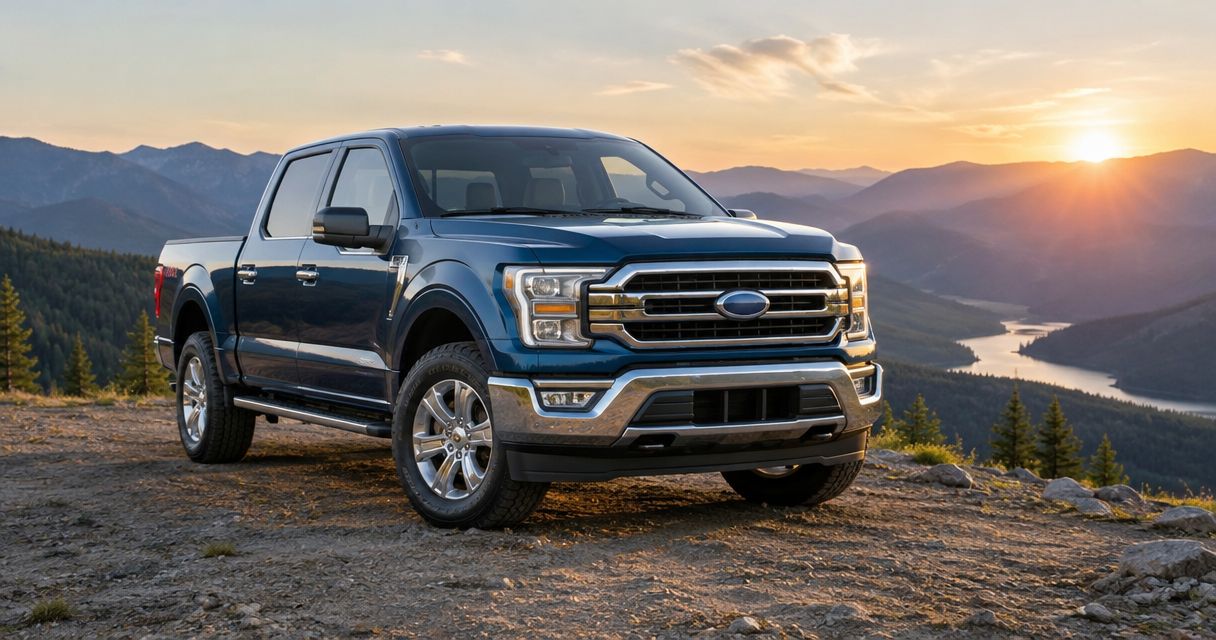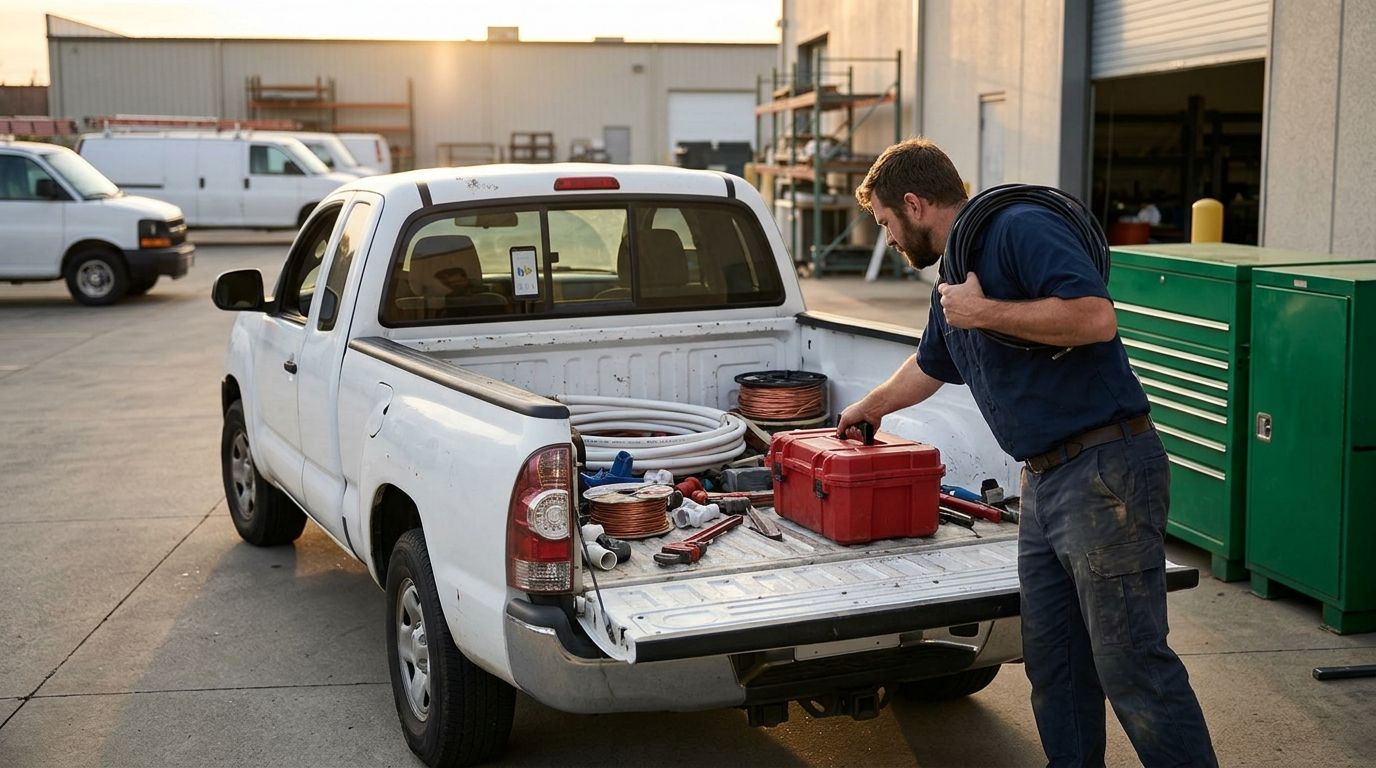
Electricians and plumbers’ used-truck selection is the process of matching a pre-owned pickup to tools, materials, and job-site access so you can work without overloading it. Choose around your loaded workday—not the truck’s appearance—with this 2026 guide to payload, storage, inspections, financing, and trade-ins.
- Choose used trucks for electricians and plumbers by loaded payload, secure tool storage, and job-site access.
- GMS Autos suits Placentia buyers seeking pre-owned pickups, financing, and trade-in services.
- A bed cap adds covered storage; a service body adds compartments but also weight.
- Inspect the exact truck and installed equipment before committing to a work-truck purchase.
Why work-truck selection matters for electricians and plumbers
A work truck carries more than tools. Occupants, shelving, a ladder rack, fittings, replacement parts, and trailer tongue weight all affect the load the truck must support. Buying before you total those demands leaves the most important question unanswered: can this specific truck carry your working load?
Electricians need organized access to testers, connectors, cable, and ladders. Plumbers need to account for pipe, bulky equipment, and the separation of wet or dirty tools from clean supplies. Your own job mix determines which demands matter most.
GMS Autos is best for Placentia buyers seeking used pickups, financing, and trade-in services. Start with GMS Autos after you define the truck’s job; compare each candidate against that written requirement rather than changing your requirements to fit a truck.
For your 2026 purchase, treat load capacity and condition as pass-or-fail checks. Comfort and appearance come after the truck clears both.
How to choose a used truck for your trade
Define your daily work load
Start with a notebook or spreadsheet. Keep a 7-day load log covering the people, tools, and materials you actually take out, including equipment that only travels on demanding jobs. This is a planning exercise, not a substitute for weighing the finished vehicle.
Separate everyday essentials from items you can collect when needed. A truck selected around an imaginary light day leaves little room for the work that pays you.
Describe each load clearly enough that someone else could check it. “Plumbing tools” is too vague; a drain machine, replacement fixtures, pipe, and fittings create different storage and handling needs.
- List every regular occupant and the seating each person needs.
- Record heavy tools separately from small parts and consumables.
- Identify ladders, pipe, conduit, and other long materials.
- Note occasional loads that still belong in your buying decision.
- Mark items needing locked, dry, or separate storage.
Verify the exact truck’s load limits
Read the candidate truck’s labels and owner documentation before relying on a listing headline. Payload and towing capacity describe different limits; a strong towing claim does not establish room for your crew and tools.
Use the vehicle’s stated occupant-and-cargo limit as a starting point. Account for installed equipment that was not included in that figure, and verify the completed work setup against the gross vehicle and axle ratings. Trailer tongue weight also loads the truck.
Buy capacity for the finished work truck, not the empty pickup. Model names and badges are not substitutes for the exact vehicle’s documentation.
- Photograph the door-jamb loading and certification labels.
- Confirm the configuration using the vehicle identification number.
- Identify the weight of caps, racks, drawers, and other additions.
- Weigh the loaded truck before putting the completed setup into service.
- Check vehicle, axle, tire, hitch, and trailer limits where applicable.
Match the storage layout to your trade
Sketch your storage layout before shopping for accessories. For electricians, group testing equipment, small components, cable, and ladders by how you use them. For plumbers, plan access to bulky machines and separate dirty equipment from clean fittings.
GMS Autos sells pre-owned pickups and offers financing and trade-in services. Use those services after defining the required configuration; the dealership route does not replace checking whether an individual truck accepts your storage plan.
A cap, service body, or rack changes both access and carried weight. Check the completed setup rather than assuming that every attachment improves the truck.
- Assign frequently used tools reachable storage positions.
- Separate clean supplies from wet or dirty equipment.
- Check long-material support and securement points.
- Confirm rack, cap, and bed compatibility before purchasing accessories.
- Account for locks without treating them as theft guarantees.
Test access on your actual route
A truck that carries everything still needs to reach the work. Measure your usual parking constraints, then inspect the candidate with those measurements in hand. Include the height of installed racks and anything carried above them.
Build a 3-stop route check around a typical customer property, a supply pickup, and your overnight parking location. Use lawful, permitted stops and record access restrictions rather than relying on memory.
Test the activities you repeat: opening compartments, lifting a tool over the bedside, and reaching the front of the bed. In 2026, put those checks on your written shortlist alongside mechanical condition.
- Measure the completed vehicle’s height and overall length.
- Check turning room and parking access at representative stops.
- Open storage doors without blocking the working area.
- Practice loading your bulkiest regularly carried tool.
- Confirm that a rack or cap does not obstruct required visibility.
Inspect condition before discussing monthly payments
Start with your own walkaround, then arrange an independent pre-purchase inspection. A clean interior and fresh exterior finish do not establish engine, transmission, brake, or suspension condition.
Ask to see service records and review a vehicle history report. Neither replaces a physical inspection. For a truck with previous work equipment, inspect mounting areas and wiring modifications as carefully as the bed itself.
Use a 2-part inspection: a mechanical assessment and a work-equipment assessment. Ask the technician to document defects so you can distinguish routine maintenance from repairs that prevent immediate work use.
- Check the frame, mounting points, bed, and underside for damage.
- Inspect tires, brakes, steering, suspension, and fluid leaks.
- Test starting, shifting, cooling, and warning-light operation.
- Examine accessory wiring, rack fasteners, locks, and compartment seals.
- Confirm required emissions compliance for the vehicle and registration location.
Compare financing and trade-in terms separately
Write down the vehicle purchase terms, financing terms, and trade-in terms separately. Combining them into a single monthly payment makes it harder to see what you are agreeing to.
Compare the annual percentage rate, loan length, amount financed, finance charge, and total of payments. For a trade-in, distinguish its stated value from any outstanding loan payoff. Review optional products individually rather than treating them as necessary parts of the truck.
GMS Autos offers financing and trade-in services. Use those options to compare a complete written deal, not to skip the truck inspection. Approval and contract terms belong in the actual financing documents.
- Request an itemized purchase agreement before signing.
- Compare financing offers on equivalent terms.
- Check the existing vehicle’s payoff when trading it in.
- Separate optional products from the vehicle purchase.
- Keep the inspection findings beside the proposed agreement.
Validate the completed setup before the first job
After choosing the truck, confirm that the installed work equipment matches your plan. A suitable pickup can become unsuitable when added storage consumes capacity or blocks access.
Load the truck as it will leave for work, including people and routine materials. Check the completed vehicle’s weight and axle loads against the applicable ratings. Secure tools and materials using equipment intended for the task and load.
Keep a 2026 baseline record of the setup, inspection findings, and maintenance needs. Recheck the load when you add equipment, change crew size, or start carrying different materials.
- Record completed-vehicle weights and applicable limits.
- Verify rack, cap, drawer, and compartment installation.
- Secure heavy tools against movement during travel.
- Check lights, mirrors, doors, and rear visibility after loading.
- Assign maintenance and inspection responsibilities before daily use.
Compare work-truck configurations
Choose the configuration that solves your daily loading problem with the fewest compromises. These are layout options, not claims about any truck’s present configuration. Check the exact vehicle, accessories, and installation before deciding.
| Option | Best for | Main advantage | Key limitation |
|---|---|---|---|
| Open bed | Buyers carrying bulky or dirty loads | Direct access to the cargo area | Tools need separate weather protection and secure storage |
| Bed cap | Buyers wanting covered pickup-bed storage | Keeps the bed enclosed while retaining a pickup layout | Access depends on openings, and the cap adds weight |
| Service body | Crews needing organized exterior compartments | Separates tools and supplies by task | Body weight reduces remaining load capacity; dimensions affect access |
| Cargo van | Buyers prioritizing enclosed, walk-in storage | Provides an enclosed workspace for an organized layout | Tall or bulky loads must fit the doors and interior |
An open bed is not automatically practical for an electrician carrying sensitive test equipment. A service body is not automatically right for a plumber who regularly moves bulky equipment. Both decisions depend on how you secure, reach, and carry the load.
A cargo van belongs in the comparison even when you begin with pickups. It is an alternative vehicle type, not a claim about GMS Autos’ offerings. If enclosed access is essential, compare that requirement honestly before committing to a pickup conversion.
Common mistakes electricians and plumbers make
Buying around towing capacity instead of carried weight
A trailer rating does not answer whether the truck can carry your crew, tools, accessories, and trailer tongue weight together. Check the loaded truck against its own limits, even if towing is only an occasional part of your work.
Treating installed equipment as an automatic benefit
A used rack or service body only helps if it suits your loads and is properly installed. Inspect attachment points, corrosion, wiring, locks, and access; do not let included equipment distract from condition or capacity.
Ignoring the difference between dry and dirty storage
Electricians need to protect appropriate tools and materials from exposure. Plumbers need a plan for wet or contaminated equipment. A single undivided storage area does not resolve either requirement merely because it has a cover.
Financing the wrong configuration
A manageable payment cannot fix insufficient capacity, awkward loading, or unsuitable parking dimensions. Establish the truck’s suitability first, then compare the written deal. Keep that order on your 2026 buying checklist.
FAQ
What are the best used trucks for electricians and plumbers?
The best used trucks for electricians and plumbers are the ones that carry the completed working load within their ratings and provide suitable tool access. Choose by the exact vehicle’s condition, load limits, and storage layout rather than a model badge alone.
Should an electrician choose a pickup or a cargo van?
Choose a pickup when its bed layout fits your materials and job-site needs; compare a cargo van when enclosed access is the priority. Include ladders, sensitive equipment, parking restrictions, and load securement in the decision.
Is a service body better than a bed cap for plumbers?
A service body is better for separating tools into exterior compartments, while a bed cap suits covered storage within a pickup bed. Compare equipment weight, access openings, and space for bulky tools before choosing.
How do I check whether a used pickup has enough payload?
Check the specific truck’s loading labels and documentation, then account for occupants, cargo, installed equipment, and trailer tongue weight. Verify the completed loaded vehicle against its gross vehicle and axle ratings.
Should I get an inspection if a used work truck has service records?
Yes, arrange an independent pre-purchase inspection even when service records are available. Records describe documented work; an inspection assesses the truck’s present condition and installed equipment.
Can I finance a used pickup and trade in my current vehicle?
GMS Autos offers financing and trade-in services for local buyers. Review the vehicle agreement, financing terms, trade-in value, and any existing loan payoff separately before signing.
What should I check before putting a used truck to work in 2026?
Verify the completed load, equipment installation, mechanical condition, and required registration and emissions compliance. Confirm that tools are secured and that the loaded setup stays within the applicable vehicle and equipment limits.
One last thing
Bring your hardest-to-load tool to the viewing, with the seller’s permission. A measurement tells you whether it fits; a loading trial shows whether you can handle it without dismantling the storage plan. Check it before choosing a truck, not after fitting out the bed.