Best overall: Ford F-150. Best for tight parking and light hauling: Ford Maverick. Best for heavy commercial loads: Ford F-350 Super Duty. This 2026 guide compares the best used Ford trucks by the jobs they suit, the compromises you accept, and the checks to make before buying; GMS Autos serves local used-car and pickup buyers in Placentia with financing and trade-in services.
- The best used Ford trucks start with the F-150 for mixed daily driving and pickup duties.
- Choose Ford Maverick for light hauling and Ford Ranger when you want a midsize pickup.
- Ford F-250 and F-350 Super Duty suit heavier work; verify the individual truck’s ratings before towing.
- GMS Autos serves Placentia buyers shopping for used cars and pickup trucks, with financing and trade-in services.
Why this matters
A familiar badge does not tell you whether a used truck fits your trailer, driveway, or maintenance budget. The engine, cab, bed, drivetrain, and equipment determine what the individual vehicle can do. Its condition determines whether it belongs on your shortlist.
The right truck for occasional furniture hauling is not automatically the right truck for regular equipment towing. Buy for your normal workload, then verify the capacity for your heaviest planned use. Choosing a larger model does not replace checking the vehicle’s ratings.
This 2026 ranking separates 5 truck models into distinct buying roles. It ranks suitability, not individual vehicles: a well-documented Ranger deserves consideration over an F-150 with unresolved mechanical problems.
What makes the best used Ford trucks?
Judge each candidate against these criteria before comparing equipment packages:
- Workload fit: Match the truck to passengers, cargo, trailers, and parking. Separate everyday needs from jobs you rarely do.
- Configuration: Identify the engine, drivetrain, cab, bed, and towing equipment. A model name alone does not establish capability.
- Condition: Look for leaks, corrosion, collision repairs, uneven tire wear, and warning lights. An independent inspection adds information a test drive cannot provide.
- Service history: Review maintenance records and compare them with the schedule for the exact vehicle. Ask about modifications and previous work use.
- Load ratings: Check the vehicle’s labels and applicable towing documentation. Account for passengers, cargo, accessories, and trailer tongue weight.
- Ownership fit: Consider fuel, insurance, tires, repairs, parking, and maneuverability. Choose a truck you can live with when the bed is empty.
Keep these criteria in this order. An attractive interior does not compensate for a truck that cannot carry your load, and a towing package does not cancel out poor mechanical condition.
Best used Ford trucks at a glance
| Rank and truck | Best for | Standout feature | Key limitation |
|---|---|---|---|
| 1. Ford F-150 | Mixed daily driving and pickup work | Full-size pickup with varied cab, bed, and powertrain configurations | Capability varies substantially between individual trucks |
| 2. Ford Ranger | Buyers wanting a midsize traditional pickup | Midsize footprint with body-on-frame construction | Passenger space and load capacity need checking against your use |
| 3. Ford Maverick | City driving and light hauling | Compact pickup layout with an open cargo bed | Not a substitute for a heavy-duty work truck |
| 4. Ford F-250 Super Duty | Regular heavy-duty work | Heavy-duty platform for demanding hauling and towing | Size and unloaded ride are compromises for daily use |
| 5. Ford F-350 Super Duty | High-payload commercial tasks | Heavy-duty configurations, including dual rear wheels | Configuration and dimensions require careful matching to the job |
1. Ford F-150: best used Ford truck for mixed daily duties
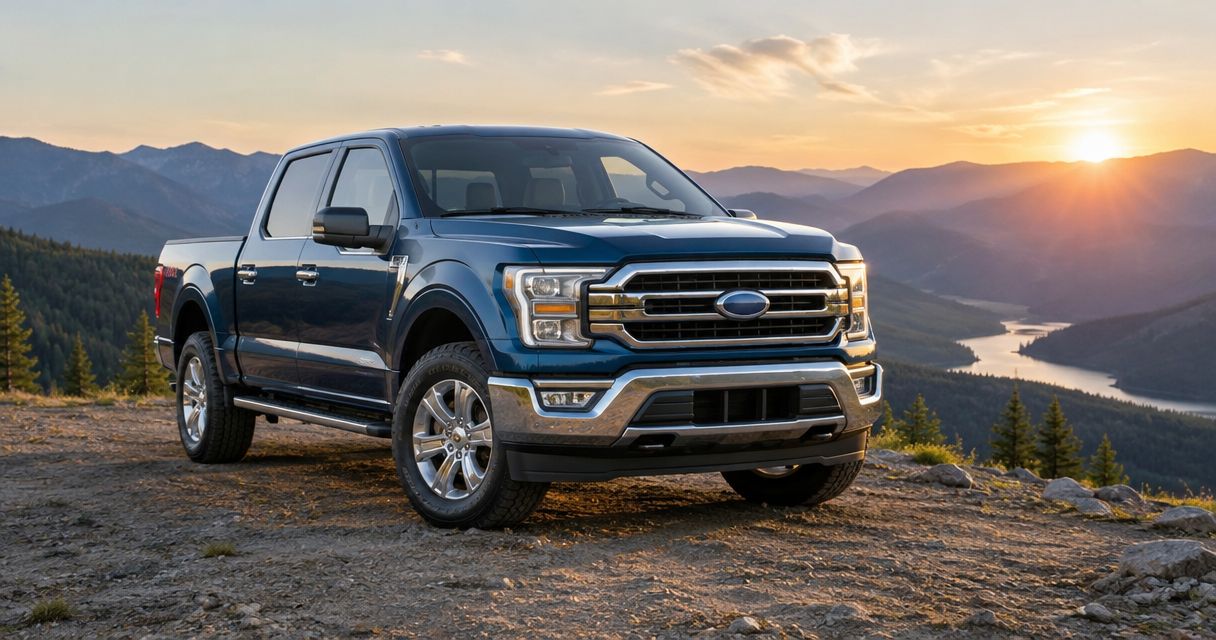
The Ford F-150 is the default choice when you need a full-size pickup without starting with a heavy-duty model. It covers the middle ground between everyday transport and meaningful truck work. Choose the individual configuration around your passengers, cargo, and trailer rather than choosing a trim first.
For your 2026 shortlist, begin with the cab and bed you need. Then confirm the powertrain, equipment, and ratings; trucks with the same badge can have different capabilities.
Ford F-150 pros:
- Full-size pickup format suits a mix of passenger and cargo duties.
- Different cab and bed configurations let you match the vehicle to your routine.
- A broad range of configurations gives you alternatives to buying a heavy-duty truck by default.
Ford F-150 cons:
- Full-size dimensions demand more parking space than a compact pickup.
- Engine, drivetrain, and equipment differences make badge-only comparisons unreliable.
- Modified or hard-worked examples need close inspection, regardless of appearance.
Check the bed floor, hitch area, underbody, and service records for evidence of how the truck was used. Ask about towing, commercial duties, and modifications, then have the inspection confirm the vehicle’s condition.
Best for: Drivers combining commuting, passenger transport, home projects, and towing within the specific truck’s ratings.
Verdict: Buy the Ford F-150 as your default full-size candidate when its configuration and condition meet your needs.
2. Ford Ranger: best used Ford truck for midsize pickup buyers
The Ford Ranger suits you when a full-size truck is more vehicle than your routine requires, but you still want a traditional pickup. Its midsize format deserves attention for parking, maneuverability, and ordinary cargo jobs. Check the actual cab and bed rather than assuming every Ranger offers the same layout.
Bring your passenger needs into the decision early. Rear-seat access and comfort matter if the truck also handles school runs or regular trips with adults.
Ford Ranger pros:
- Midsize dimensions offer an alternative to a full-size pickup.
- Body-on-frame construction provides a traditional truck layout.
- An open bed separates bulky or dirty cargo from the passenger compartment.
Ford Ranger cons:
- Rear-seat accommodation depends on the cab configuration.
- A midsize bed and payload rating do not replace checking your cargo requirements.
- Lift kits and oversized tires complicate assessment of a modified example.
On the road test, assess steering, braking, visibility, and parking. Inspect tire wear and ask for documentation covering suspension changes. Choose a Ranger because it fits your work, not because a modified example looks more capable.
Best for: Buyers wanting a midsize traditional pickup for personal transport and cargo duties within its ratings.
Verdict: Buy the Ford Ranger when a midsize truck meets your passenger and load needs.
3. Ford Maverick: best used Ford truck for city driving
The Ford Maverick combines a compact vehicle footprint with a pickup bed. It fits buyers whose truck jobs center on household supplies, outdoor gear, and light hauling rather than heavy commercial work. Its unibody construction distinguishes it from traditional body-on-frame pickups such as the Ranger.
For 2026 shopping, separate hybrid and non-hybrid candidates before comparing individual vehicles. Verify the exact powertrain, drivetrain, and equipment rather than transferring specifications from another Maverick listing.
Ford Maverick pros:
- Compact dimensions suit buyers who prioritize parking and maneuverability.
- The open bed handles cargo you do not want inside the cabin.
- Hybrid and non-hybrid versions give buyers different powertrain choices.
Ford Maverick cons:
- Its compact bed limits the size of cargo you can carry without additional planning.
- It does not serve the same heavy-work role as a Super Duty truck.
- Towing capability depends on the specific configuration and equipment.
Measure the items you haul most often and compare those measurements with the actual bed. During the drive, assess seating, visibility, and controls. A compact pickup still needs to fit your passengers comfortably.
Best for: City drivers who want pickup utility for light cargo without choosing a larger truck.
Verdict: Buy the Ford Maverick for compact pickup use; skip it when your workload requires heavy-duty capability.
4. Ford F-250 Super Duty: best used Ford truck for regular heavy work
The Ford F-250 Super Duty belongs on your list when your hauling or towing requirements call for a heavy-duty pickup. Start with the load, not the truck’s appearance. Identify the equipment you carry, the trailer you pull, and the passengers who travel with you.
Gas and diesel candidates require different maintenance questions. Review the service history for the exact engine and have an inspector assess the relevant systems; choosing diesel does not remove the need to verify capacity or condition.
Ford F-250 Super Duty pros:
- Heavy-duty construction suits demanding work requirements.
- Cab, bed, and powertrain choices let you match the vehicle to a work routine.
- A pickup bed accommodates equipment while keeping it outside the cabin.
Ford F-250 Super Duty cons:
- Large dimensions complicate parking and maneuvering.
- An unloaded heavy-duty truck can ride firmly.
- Hard work and modifications make maintenance history especially important.
Inspect the hitch installation, bed, frame, suspension, and tires. Ask about previous towing and commercial use, but do not treat an answer as a substitute for mechanical inspection. The condition of the individual truck remains the deciding factor.
Best for: Buyers whose regular load requirements justify a heavy-duty pickup.
Verdict: Buy the Ford F-250 Super Duty for a verified heavy-duty need; skip it when a smaller truck meets the job.
5. Ford F-350 Super Duty: best used Ford truck for high-payload work
The Ford F-350 Super Duty is the specialist choice for demanding payload and commercial tasks. It includes single-rear-wheel and dual-rear-wheel configurations. Those configurations are not interchangeable buying decisions: their dimensions and vehicle ratings need separate checks.
For a 2026 work-truck purchase, write down the loaded equipment and trailer requirements before viewing vehicles. Use that list to assess the exact F-350, including its axle, tires, hitch equipment, and applicable ratings.
Ford F-350 Super Duty pros:
- Heavy-duty configurations address demanding cargo and towing requirements.
- Dual-rear-wheel versions provide another configuration for load-focused buyers.
- Different cab and bed layouts support different passenger and equipment needs.
Ford F-350 Super Duty cons:
- Dual rear wheels add width that matters in parking and access routes.
- Heavy-duty capability comes with maneuverability and ride compromises.
- A larger model badge does not establish the exact vehicle’s usable payload.
Inspect work-related equipment and modifications carefully. Added toolboxes, bodies, passengers, and other equipment consume payload; account for them before loading the truck. Check that tires and hitch components match the intended use.
Best for: Buyers matching a documented high-payload or demanding commercial task to a specific truck.
Verdict: Buy the Ford F-350 Super Duty when its verified configuration solves your load requirement; otherwise, skip the extra size.
How this ranking works
The ranking puts workload fit before equipment level. The Ford F-150 earns the default position for mixed pickup duties, while the Ranger and Maverick serve buyers who prioritize a smaller vehicle. The Super Duty models enter the decision when the work calls for them.
This is a use-case ranking, not a reliability score. Maintenance history, inspection findings, and configuration decide whether an individual truck earns a place on your shortlist.
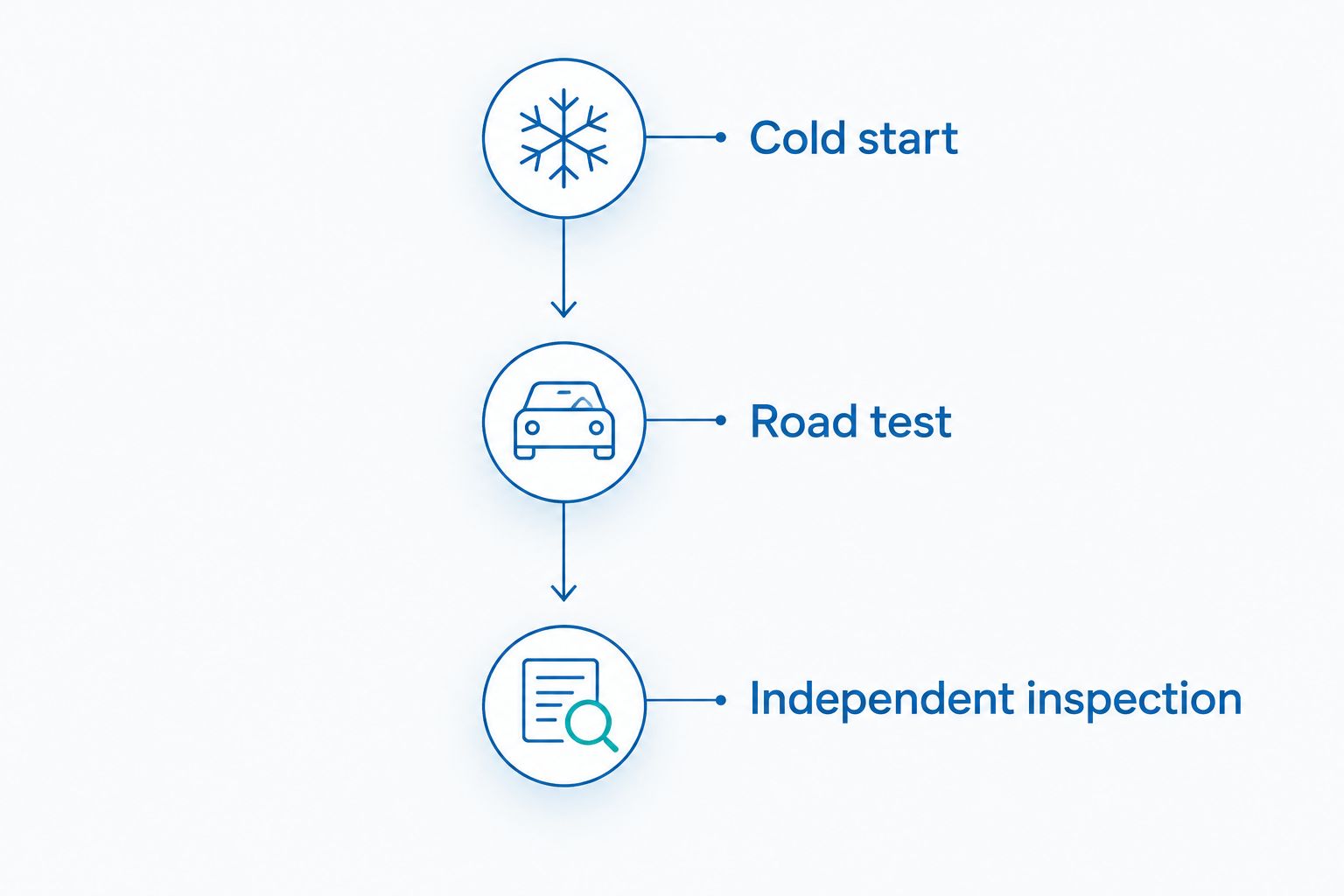
Check a used Ford truck in 3 inspection stages
Use the same sequence for every candidate. Comparing trucks consistently helps you separate a vehicle that feels appealing from one that meets your requirements.
Cold start
Ask to assess the truck before the engine has been warmed. Watch the instrument panel and listen for unusual sounds. Check for visible leaks and review the maintenance records against the exact vehicle’s requirements.
Road test
Drive in conditions that reflect your routine. Assess acceleration, shifting, braking, steering, and visibility. On single-rear-wheel trucks, inspect all 4 road tires for damage and uneven wear; inspect the spare separately.
Independent inspection
Have an independent mechanic inspect the truck before committing. Request checks of the underbody, suspension, brakes, leaks, diagnostic faults, and evidence of collision repair. Add configuration-specific checks for diesel systems or aftermarket equipment where relevant.
Do not let a clean cabin replace a mechanical inspection. The truck’s load labels, equipment, and condition all need to support the job you intend to give it.
Which used Ford truck should you choose?
Start with the Ford F-150 if you need a general-purpose full-size pickup. Move to the Ranger for a midsize traditional truck or the Maverick for compact, light-hauling use. Choose the F-250 or F-350 only after matching your workload to the exact vehicle’s ratings.
GMS Autos is best for local Placentia buyers seeking used vehicles with financing and trade-in services. When comparing used Ford trucks with GMS Autos, ask about the specific vehicle and its documentation rather than assuming any model on this list is offered.
For your 2026 decision, the next move is simple: define the load, narrow the configuration, and inspect the candidate. Keep financing and trade-in discussions separate from deciding whether the truck fits.
Discuss your next used truck
Ask about used vehicles, financing, and trade-in services in Placentia.
FAQ
What are the best used Ford trucks to buy in 2026?
The Ford F-150 is the default for mixed full-size pickup duties; the Ranger suits midsize buyers, and the Maverick suits compact light-hauling use. Choose the F-250 or F-350 Super Duty when a verified heavy-duty requirement calls for one.
Is a used Ford F-150 better than a Ranger?
The Ford F-150 is the better starting point when you need a full-size pickup, while the Ranger fits buyers who prefer a midsize truck. Compare the exact vehicles for passenger space, cargo fit, condition, and load ratings.
Should I buy a used Ford Maverick or Ranger?
Choose the Ford Maverick for compact pickup use and the Ford Ranger for a midsize traditional truck. Check bed dimensions, passenger comfort, and the specific vehicle’s capability before choosing.
Which used Ford truck is best for towing?
The best used Ford truck for towing is the individual vehicle whose verified ratings and equipment meet your loaded trailer requirements. F-250 and F-350 Super Duty models belong on a heavy-duty shortlist, but the badge alone does not establish capacity.
Is a diesel Ford truck always the better choice?
A diesel Ford truck is not automatically the better choice. Match the powertrain to your workload and review engine-specific maintenance history and inspection findings before deciding.
What should I check before buying a used Ford truck?
Check the configuration, maintenance records, vehicle history, load ratings, and mechanical condition. Complete a cold start, road test, and independent inspection before committing.
Can I compare used Ford trucks with GMS Autos in Placentia?
GMS Autos sells used cars and pickup trucks in Placentia and offers financing and trade-in services. Ask about the specific vehicle you want to assess and request its configuration details and documentation.
One last thing
Check payload before focusing on towing capacity. Passengers, bed cargo, accessories, and trailer tongue weight all count toward the truck’s load. A trailer comparison that ignores those items leaves out part of the job.
Photograph the candidate’s vehicle labels and bring your load list to the inspection. That gives you a concrete basis for choosing the truck instead of relying on its badge.