
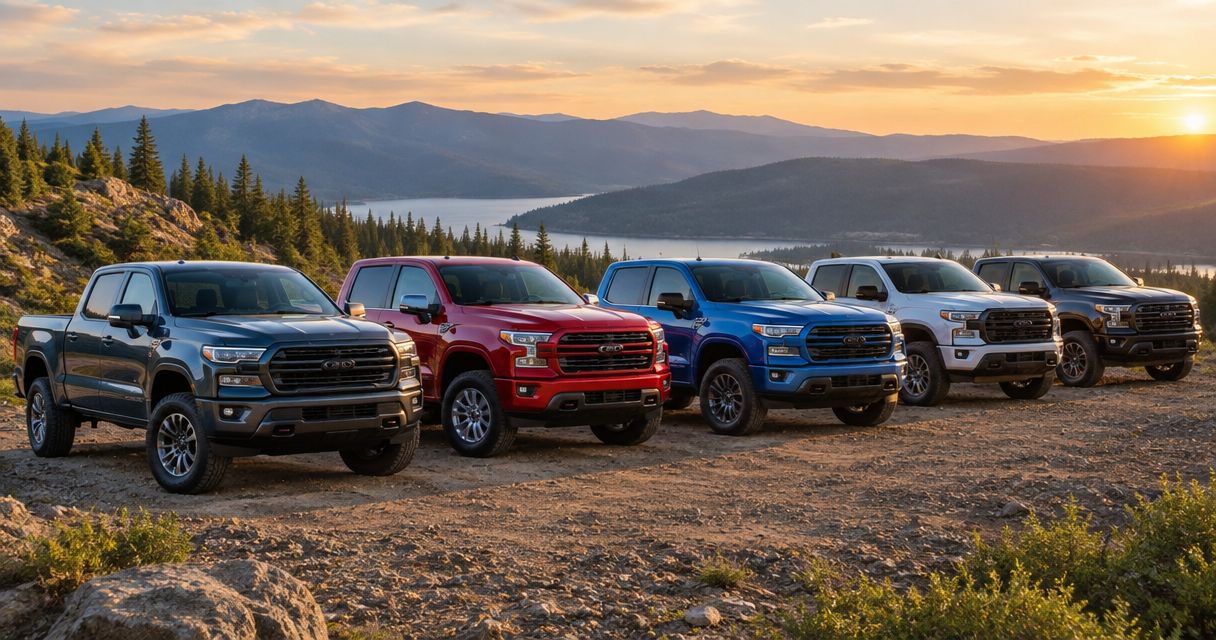
Best overall: Ford F-150. Best for family driving: Honda Ridgeline. Best for straightforward midsize utility: Nissan Frontier. This 2026 guide ranks the best used pickup trucks by the job you need them to do, then explains what to inspect before buying.
- The Ford F-150 tops this best used pickup trucks shortlist for buyers who need full-size versatility.
- The Honda Ridgeline suits family driving; the Toyota Tacoma suits buyers prioritizing a smaller off-road pickup.
- Buy the truck's documented condition and exact configuration, not its badge or advertised maximum towing figure.
- Gmsautos serves local used pickup truck buyers in Placentia with financing and trade-in services.
Why this matters
A pickup model name does not tell you its towing capability, maintenance history, or previous workload. Two trucks wearing the same badge can have different engines, axle ratios, cab layouts, and equipment. Your shortlist is only the starting point.
Gmsautos sells pre-owned cars and pickup trucks in Placentia, California, with financing and trade-in services. For local buyers comparing used pickup trucks, the useful question is not which badge wins; it is which individual truck fits your work without bringing unresolved repair needs.
What makes the best used pickup trucks?
Use these criteria when comparing trucks in 2026:
- Job fit: Match bed space, passenger needs, parking conditions, and trailer requirements to the exact truck.
- Documented maintenance: Look for service records, not just a clean exterior.
- Configuration: Verify engine, drivetrain, cab, bed, and towing equipment rather than assuming trim tells the whole story.
- Mechanical condition: Make purchase approval depend on an independent inspection.
- Ownership practicality: Check insurance, tire replacement, service access, and whether the truck fits your normal parking space.
Condition outranks position on this list. A well-maintained lower-ranked truck is a better purchase than a neglected example of the top pick.
Best used pickup trucks at a glance
These are use-case recommendations, not reliability scores. Equipment varies by model year and configuration.
| Rank and truck | Best for | Standout feature | Key limitation |
|---|---|---|---|
| 1. Ford F-150 | Mixed work and everyday use | Broad configuration choice | Capability requires careful verification |
| 2. Chevrolet Silverado 1500 | Conventional full-size utility | Multiple cab and bed layouts | Full-size parking footprint |
| 3. Ram 1500 | Comfort-focused full-size driving | Ride comfort in coil-spring versions | Suspension equipment varies |
| 4. Toyota Tundra | Buyers wanting a full-size Toyota | Full-size passenger and cargo space | Engine designs differ across generations |
| 5. Toyota Tacoma | Smaller off-road-focused ownership | Off-road-oriented configurations | Rear-seat space needs checking |
| 6. Nissan Frontier | Straightforward midsize utility | Traditional pickup layout | Features differ substantially by generation |
| 7. Ford Ranger | Midsize mixed-duty use | Smaller footprint than full-size pickups | Payload depends on configuration |
| 8. Chevrolet Colorado | Midsize configuration shopping | Different engines across generations | Powertrain-specific research matters |
| 9. Honda Ridgeline | Family driving with occasional hauling | In-bed trunk | Not a substitute for heavy-duty capability |
| 10. GMC Sierra 1500 | Equipment-focused full-size shopping | Multiple trim and equipment choices | Trim names do not prove capability |
1. Ford F-150: best used pickup for mixed duties
The Ford F-150 is the default choice when your week combines commuting, home projects, and towing. Its configuration variety is useful, but you must verify the individual truck's equipment before treating it as a work vehicle.
Ford F-150 pros:
- Multiple cab and bed combinations.
- Different powertrains across the used market.
- Full-size space for passengers and cargo.
Ford F-150 cons:
- Model names alone reveal little about towing limits.
- Powertrain variety requires specific maintenance research.
Best for: Buyers balancing everyday driving and work. Verdict: Buy after inspection and configuration verification.
2. Chevrolet Silverado 1500: best for conventional full-size utility
The Chevrolet Silverado 1500 suits buyers who want a traditional full-size pickup layout. Start with cab and bed requirements, then compare engines and service histories rather than choosing by appearance.
Chevrolet Silverado 1500 pros:
- Multiple cab layouts.
- Multiple bed configurations.
- Different powertrain choices across generations.
Chevrolet Silverado 1500 cons:
- Full-size dimensions complicate tight parking.
- Engine-specific issues require separate research.
Best for: Buyers prioritizing practical full-size truck utility. Verdict: Buy when the configuration matches your workload.
3. Ram 1500: best for comfort-focused full-size driving
The Ram 1500 deserves attention when passenger comfort matters as much as hauling. Coil-spring versions offer a different suspension approach from traditional leaf-spring rear setups; inspect the actual suspension fitted to your candidate.
Ram 1500 pros:
- Comfort-focused suspension options.
- Passenger-oriented cab choices.
- Full-size bed utility.
Ram 1500 cons:
- Suspension complexity varies by equipment.
- Large dimensions remain a parking consideration.
Best for: Drivers wanting a comfortable full-size daily truck. Verdict: Buy after checking suspension condition and service records.
4. Toyota Tundra: best for full-size Toyota buyers
The Toyota Tundra belongs on your shortlist if you want Toyota's full-size pickup rather than the smaller Tacoma. Treat different generations separately: engine design and equipment change, so a brand reputation is not an inspection result.
Toyota Tundra pros:
- Full-size cargo utility.
- Passenger-oriented cab configurations.
- Different drivetrain choices across generations.
Toyota Tundra cons:
- Large footprint for daily parking.
- Generation-specific engine research is essential.
Best for: Toyota buyers needing a full-size truck. Verdict: Buy on documented condition, not reputation alone.
5. Toyota Tacoma: best for smaller off-road-focused ownership
The Toyota Tacoma suits buyers who want a smaller pickup with off-road-oriented configurations. Separate factory equipment from aftermarket modifications, and check whether the driving position and rear seat work for your passengers.
Toyota Tacoma pros:
- Smaller footprint than full-size pickups.
- Off-road-oriented configurations.
- Traditional pickup bed utility.
Toyota Tacoma cons:
- Rear-seat comfort needs a personal check.
- Modified examples require extra inspection.
Best for: Buyers prioritizing a smaller adventure-oriented truck. Verdict: Buy a sound example with suitable equipment.
6. Nissan Frontier: best for straightforward midsize utility
The Nissan Frontier is a useful starting point when you want midsize truck utility without prioritizing extensive equipment. Compare generations carefully; cabin technology and powertrains are not interchangeable across the used market.
Nissan Frontier pros:
- Midsize parking footprint.
- Traditional pickup construction.
- Practical bed access for everyday hauling.
Nissan Frontier cons:
- Older configurations have different feature sets.
- Passenger space varies with cab layout.
Best for: Buyers prioritizing utility over equipment. Verdict: Buy when condition and cab layout fit.
7. Ford Ranger: best for midsize mixed-duty use
The Ford Ranger suits buyers who want commuting practicality and pickup utility without choosing a full-size truck. Verify payload and towing information on the individual vehicle; midsize does not mean every configuration handles the same load.
Ford Ranger pros:
- Smaller footprint than full-size pickups.
- Bed utility for everyday projects.
- Different drivetrain configurations.
Ford Ranger cons:
- Cab space needs a passenger test.
- Capability depends on exact equipment.
Best for: Drivers balancing midsize convenience and hauling. Verdict: Buy after confirming load requirements.
8. Chevrolet Colorado: best for midsize powertrain comparisons
The Chevrolet Colorado is useful when you want to compare different midsize powertrain configurations. Research the exact engine and generation, then inspect emissions equipment where fitted instead of relying on model-wide advice.
Chevrolet Colorado pros:
- Midsize dimensions.
- Different engines across generations.
- Off-road-oriented configurations.
Chevrolet Colorado cons:
- Maintenance requirements differ by powertrain.
- Modified examples need careful assessment.
Best for: Buyers comparing midsize engine options. Verdict: Buy only after powertrain-specific checks.
9. Honda Ridgeline: best for family driving
The Honda Ridgeline combines a pickup bed with a passenger-focused layout and an in-bed trunk. It belongs on the list when everyday driving and occasional hauling matter more than traditional truck construction.
Honda Ridgeline pros:
- In-bed storage compartment.
- Passenger-oriented cabin.
- Pickup bed for household hauling.
Honda Ridgeline cons:
- Heavy-load buyers must check its limits carefully.
- Bed dimensions need checking against your cargo.
Best for: Families needing occasional pickup utility. Verdict: Buy when comfort and household use lead.
10. GMC Sierra 1500: best for equipment-focused shopping
The GMC Sierra 1500 suits buyers comparing full-size trucks by cabin equipment and trim. Inspect the features you actually want; a higher trim does not establish payload, towing equipment, or mechanical condition.
GMC Sierra 1500 pros:
- Multiple trim choices.
- Full-size cab and bed utility.
- Different powertrain configurations.
GMC Sierra 1500 cons:
- Additional equipment adds inspection points.
- Trim badges do not establish capability.
Best for: Buyers prioritizing specific full-size equipment. Verdict: Buy after verifying features and mechanical condition.
How these trucks rank in 2026
The order favors broad usefulness first, then distinct needs: comfort, smaller dimensions, off-road equipment, family use, and configuration choice. It does not assign failure rates or claim every example of one model beats another.
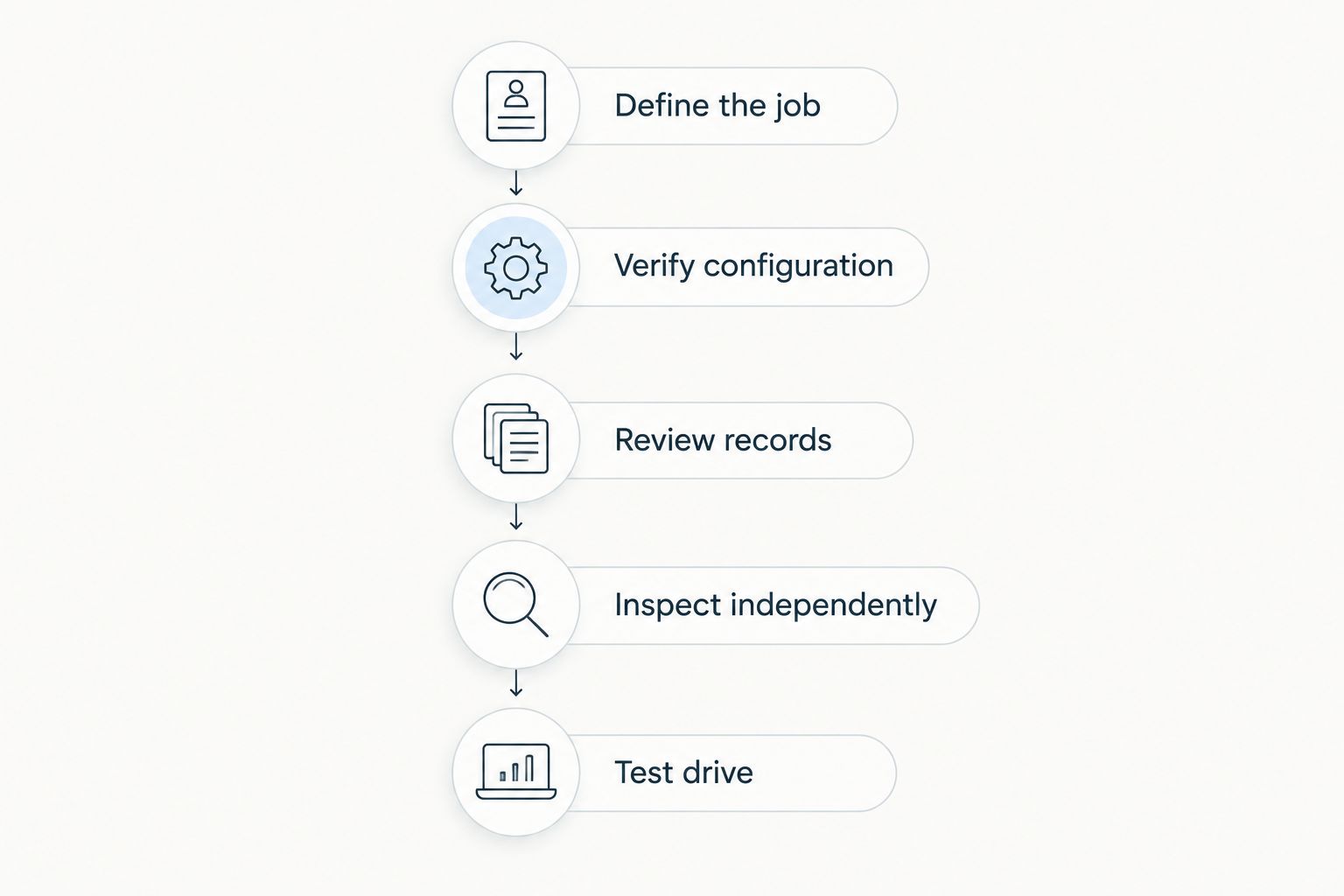
For your 2026 purchase, apply the same sequence to every candidate:
- Define the job: List passengers, cargo, trailer requirements, and parking constraints.
- Verify configuration: Check vehicle identification, equipment, and applicable capacity labels.
- Review records: Compare service history, title information, and recall status.
- Inspect independently: Ask a mechanic to examine structural condition, leaks, brakes, tires, and modifications.
- Test drive: Allow at least 20 minutes; plan 10 minutes of city driving and 10 minutes at highway speeds where safe and legal.
Do not let a quiet drive replace the inspection. Ask the mechanic which findings need repair now and which affect your intended use.
Which used pickup should you choose?
Choose the Ford F-150 as the default 2026 shortlist leader, not as an automatic purchase. Choose the Honda Ridgeline for family-led use, or the Nissan Frontier when straightforward midsize utility leads your decision.
Gmsautos is a used pickup truck dealership for local Placentia buyers who also need financing or trade-in services. Bring your workload requirements to the vehicle comparison; avoid choosing solely by monthly payment.
FAQ
What's the best used pickup truck to buy in 2026?
The Ford F-150 is this guide's best overall starting point for mixed work and everyday use. Buy only after verifying the individual truck's configuration, history, and condition.
Which used pickup is best for family driving?
The Honda Ridgeline is this guide's family-focused pick. Check passenger comfort and confirm that its bed and load limits fit your actual needs.
Is a Toyota Tacoma better than a Toyota Tundra?
The Toyota Tacoma is the better fit for smaller-truck priorities; the Toyota Tundra fits buyers wanting a full-size pickup. Choose by space, workload, and the condition of the individual vehicle.
Should I buy a used truck with high mileage?
Mileage alone should not decide the purchase. Review maintenance records, prior use, and an independent inspection before accepting the truck's condition.
How do I check a used truck's towing capacity?
Verify towing information for the exact vehicle configuration using applicable manufacturer documentation and vehicle labels. Do not substitute a model's advertised maximum for the truck you are buying.
Does Gmsautos offer financing and trade-ins?
Gmsautos offers financing and trade-in services for local car buyers. Review the terms of your proposed transaction before committing.
One last thing
Check payload as well as towing. Passengers, cargo, accessories, and trailer tongue weight all matter to the truck's load. Before buying in 2026, write down what will actually ride in the truck and confirm that the individual vehicle can handle it.