Rideshare drivers’ used-car shopping is the process of choosing a pre-owned vehicle with the aim of earning fares without letting ownership costs consume your income. This 2026 guide to used cars for rideshare drivers focuses on sedans, where passenger access, platform eligibility, fuel use, and repair downtime all affect the buying decision.
- Choose used cars for rideshare drivers by platform eligibility, mechanical condition, and total operating costs—not monthly payment alone.
- GMS Autos fits Placentia buyers seeking pre-owned vehicles, financing, and trade-in services at one dealership.
- Compare gasoline, hybrid, and electric sedans against your actual driving routes and charging access.
- Confirm rideshare insurance and arrange an independent inspection before committing to a vehicle.
Why used-car selection matters for rideshare drivers
A rideshare sedan is both transportation and work equipment. Fuel, maintenance, insurance, financing, and time off the road belong in the same decision—not separate conversations after you buy.
For Placentia buyers, GMS Autos sells pre-owned vehicles and offers financing and trade-in services. GMS Autos is best for Placentia buyers seeking used cars, financing, and trade-in services at one dealership. Platform approval and insurance coverage still need separate verification.
In 2026, start with the trips you intend to drive. Airport luggage, frequent rear-seat entry, and stop-and-go routes create different demands from a personal commute. A sedan that suits your household does not automatically suit paid passenger work.
Your strongest shortlist starts with usable vehicles, not favorite badges. Eliminate cars that fail your platform, insurance, or condition checks before spending time comparing convenience features.
How to choose a used rideshare sedan
Check eligibility before comparing cars
Confirm the current vehicle requirements for your intended platform, service category, and operating area. Uber and Lyft publish vehicle requirements, but a seller’s statement that a car is suitable does not replace checking the applicable rules yourself.
Vehicle age, title history, seating, condition, and documentation can affect acceptance. Requirements differ by location and service, so avoid treating a vehicle accepted elsewhere as proof of local eligibility.
For a 2026 purchase, check whether the car has enough remaining eligibility for your planned ownership period. A vehicle near an applicable age limit deserves different consideration from one with more time remaining.
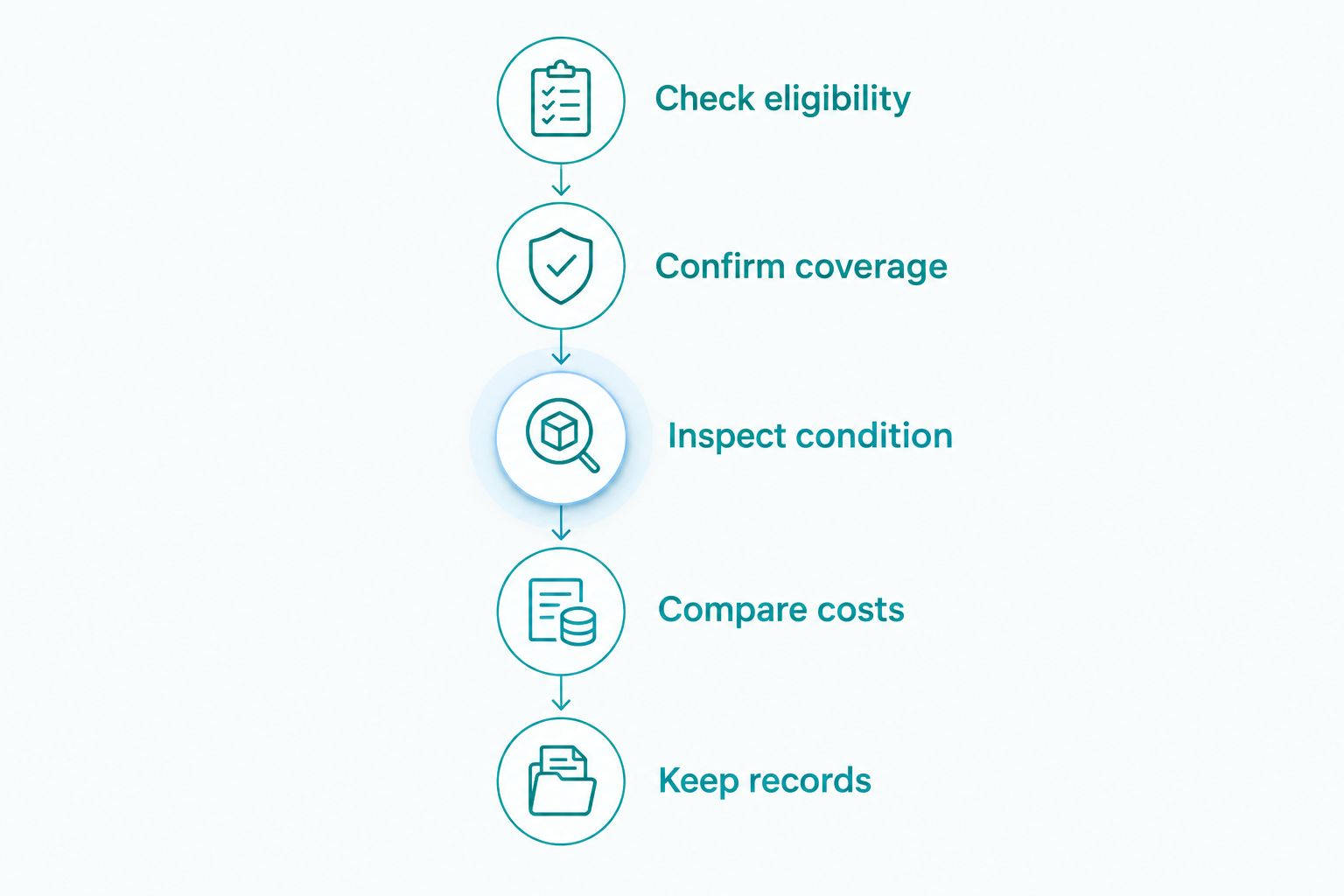
- Check eligibility: review the platform’s current local vehicle requirements.
- Confirm coverage: ask an insurer about the exact vehicle and intended work.
- Inspect condition: arrange a mechanical assessment before committing.
- Compare costs: include financing, energy, maintenance, and downtime.
- Keep records: save the requirements and documents used in your decision.
The order matters: eligibility screens out unsuitable cars before you pay for inspections or arrange financing.
Set your operating budget before financing
Start with a spreadsheet or a written worksheet. Separate the expense of acquiring the sedan from the recurring expenses of operating it, then compare both against your own driving records or a conservative work plan.
Do not treat projected fares as guaranteed income. Account for unpaid driving between trips and periods when the car cannot work. Use a 12-month budget to make annual insurance and maintenance expenses visible alongside monthly payments.
GMS Autos offers financing and trade-in services, which gives local buyers a place to discuss both parts of the transaction. The convenience does not replace comparing loan terms or reviewing your trade-in separately.
- List your down payment, amount financed, APR, and loan term.
- Request the total amount payable, not just the monthly payment.
- Include fuel or electricity, insurance, registration, and maintenance.
- Separate your trade-in value from the vehicle and financing discussion.
- Keep a repair reserve outside the money committed to the purchase.
Match the powertrain to your driving
Use your actual routes before choosing gasoline, hybrid, or electric power. Stop-and-go trips, longer freeway runs, and access to overnight charging change which sedan fits your work.
A hybrid combines a gasoline engine with an electric motor and can reduce fuel use in suitable driving conditions. The trade-off is that battery condition and hybrid-system repairs require attention during evaluation. A conventional gasoline sedan avoids charging logistics but still needs a careful fuel-use comparison.
An electric sedan removes gasoline purchases, not energy expenses or planning. If you depend on public charging, assess the locations, access conditions, and charging stops your schedule would require. Do not choose an electric car on range alone.
- Record your normal daily distance in miles.
- Compare published efficiency information for the exact vehicle version.
- Check whether your routes are mostly urban, freeway, or mixed.
- Ask an inspector to assess the relevant battery or charging system.
- Map practical charging stops before choosing an electric sedan.
Inspect the sedan as work equipment
Review the vehicle history report and service records first. Then arrange an independent pre-purchase inspection; a history report does not establish the car’s current mechanical condition.
Tell the inspector that you intend to carry paying passengers. Ask for attention to brakes, tires, suspension, cooling, fluid leaks, warning lights, and evidence of collision repairs. For a hybrid or electric sedan, request an assessment appropriate to its high-voltage system.
During the test drive, try city streets and freeway conditions where permitted. A suggested 30-minute route gives you time to assess seating comfort and behavior after the vehicle warms up; it is not a substitute for inspection.
- Start the car cold when the seller permits it.
- Check for warning lights and ask about recent diagnostic work.
- Test braking, steering, acceleration, and suspension behavior.
- Operate air conditioning and inspect rear-seat airflow.
- Check tire condition and review any uneven wear with the inspector.
- Request written findings and separate urgent repairs from routine upkeep.
Test passenger access and luggage space
Sit behind the driver’s seat after adjusting it to your own position. Check knee room, headroom, entry height, door openings, and seat-belt access. A large exterior does not guarantee a useful rear seat.
Bring the luggage you expect to carry if airport trips are part of your plan. Trunk shape and opening size matter as much as the published cargo figure. Confirm that passengers and luggage fit at the same time without relying on folded rear seats.
Comfort checks also protect your working day. An awkward driving position or weak air conditioning becomes harder to tolerate across repeated trips.
- Test every passenger door from inside and outside.
- Inspect upholstery for damage, odors, and difficult-to-clean areas.
- Confirm that rear seat belts latch and retract correctly.
- Load representative luggage without obstructing passenger seating.
- Check window switches, locks, lighting, and ventilation.
Confirm insurance and documents before signing
Tell the insurer exactly how you intend to use the sedan. Personal auto insurance and coverage associated with a rideshare platform do not create a simple, uninterrupted promise of protection for every situation.
Ask how coverage works while the app is off, while you are waiting for a request, while you are driving to collect a passenger, and during a trip. Confirm deductibles, exclusions, and any rideshare endorsement or policy requirements in writing.
For your 2026 purchase, compare at least 2 insurance quotes for the same vehicle and coverage assumptions. This is a shopping recommendation, not a claim that one insurer or policy will suit every driver.
- Give insurers the vehicle identification number and intended use.
- Ask which coverage applies during each phase of rideshare work.
- Review loan documents for vehicle-use restrictions.
- Match the VIN across the vehicle, history report, and paperwork.
- Keep inspection findings, insurance confirmation, and purchase documents together.
Discuss your used-car purchase
Ask about pre-owned vehicles, financing, and trade-in services in Placentia.
Compare sedan options for rideshare work
Choose the powertrain your working day supports, not the one with the strongest headline claim. Each option has a useful role and a limitation that deserves attention before you buy.
| Option | Best for | Main advantage | Key limitation |
|---|---|---|---|
| Conventional gasoline sedan | Drivers without dependable charging access | Refueling does not require charging stops | Fuel consumption needs close comparison against your routes |
| Hybrid sedan | Drivers with substantial stop-and-go work | Electric assistance can reduce gasoline use in suitable conditions | Battery health and hybrid-system condition need assessment |
| Plug-in hybrid sedan | Drivers who can charge regularly and still need gasoline backup | Can use electricity for part of the driving schedule | Benefits depend on regular charging and trip length |
| Electric sedan | Drivers with dependable charging that fits their schedule | No gasoline purchases and a different maintenance profile | Charging access, battery condition, and working range require planning |
Do not use this table to skip vehicle-level checks. Two sedans with the same powertrain can have very different service histories, passenger space, and repair needs.
Use the same planned ownership period when comparing options. A 3-year comparison is a useful worksheet choice if that matches your plans; it is not a recommended replacement schedule. Keep your mileage assumptions consistent across every vehicle.
Common mistakes rideshare drivers make
Choosing by payment instead of the full loan
A lower monthly payment does not establish a better deal. Review the APR, loan term, amount financed, and total amount payable together, then check whether the vehicle still fits your operating budget.
Keep financing separate from optimistic earnings projections. You remain responsible for the loan when passenger demand is weak or the sedan needs repairs.
Treating low mileage as proof of condition
Low mileage does not replace maintenance records or an inspection. Check how the vehicle was maintained and investigate condition concerns rather than dismissing them because the odometer looks attractive.
The same discipline applies to high-mileage cars. Mileage belongs in the assessment, but it cannot answer every question about mechanical condition.
Assuming platform acceptance transfers automatically
A car previously used for rideshare still needs your own eligibility checks. Confirm the applicable requirements for your account, location, and intended service in 2026 rather than relying on its earlier use.
The seller’s paperwork can support your review. It does not replace the platform’s decision.
Buying efficiency while ignoring downtime
A fuel-efficient sedan with unresolved mechanical problems is not a sound work decision. Compare the inspector’s findings, service needs, and practical repair arrangements alongside energy consumption.
The same mistake affects electric-car shopping. A charging plan that repeatedly interrupts your intended working hours deserves scrutiny even when the vehicle otherwise fits.
FAQ
What are the best used cars for rideshare drivers?
The best used cars for rideshare drivers meet local platform requirements, pass an independent inspection, and fit the driver’s operating budget. Compare passenger access, insurance, energy use, and financing before choosing a model.
Is a hybrid sedan better than a gasoline sedan for rideshare?
A hybrid deserves priority when your routes suit its fuel-saving characteristics, especially stop-and-go work. Compare the exact vehicles’ efficiency, maintenance records, and inspection findings rather than choosing by powertrain alone.
Can I use an older used sedan for Uber or Lyft?
An older sedan must meet the current requirements for your platform, location, and service category. Check the applicable age limits and documentation rules before arranging a purchase.
Do rideshare drivers need different car insurance?
Rideshare drivers need insurance that explicitly addresses their intended work. Ask the insurer how protection changes while waiting for requests, collecting passengers, and carrying passengers, and get the answer in writing.
Should I finance a used car for rideshare work?
Finance a used rideshare car only when the full loan terms and operating expenses fit your budget. Review vehicle-use restrictions and leave room for maintenance, repairs, and time off the road.
Is an electric sedan suitable if I cannot charge at home?
An electric sedan requires a dependable charging plan, whether or not you charge at home. Check practical charging locations and how charging stops fit your intended working schedule before buying.
Where can Placentia drivers discuss used-car financing and a trade-in?
GMS Autos is a used-car dealership in Placentia offering financing and trade-in services. Confirm rideshare eligibility with the platform and insurance coverage with your insurer separately.
One last thing
Test the rear seat before deciding you like the driver’s seat. Your passengers use a different part of the sedan, and that space can reveal problems you miss during a normal test drive.
Before signing, put your inspection findings, insurance confirmation, and eligibility checks beside the financing documents. A vehicle that passes only the payment test has not passed the buying test.
Related guides
- Shopping for a separate hauling vehicle? Read the used pickup truck buying guide.