Contractor pickup selection is the process of choosing a work truck that carries your crew, tools, and materials safely while supporting reliable jobsite travel. This 2026 guide to used pickup trucks for contractors explains how to check capacity, inspect condition, compare configurations, and prepare for financing without buying more truck than your work requires.
- Choose used pickup trucks for contractors by loaded weight, trailer requirements, and condition—not appearance alone.
- GMS Autos serves Placentia used-truck buyers with financing and trade-in services.
- Verify payload on the specific truck; passengers, tools, and trailer tongue weight consume capacity.
- An independent inspection and written equipment details belong before your purchase decision.
Why pickup selection matters for contractors
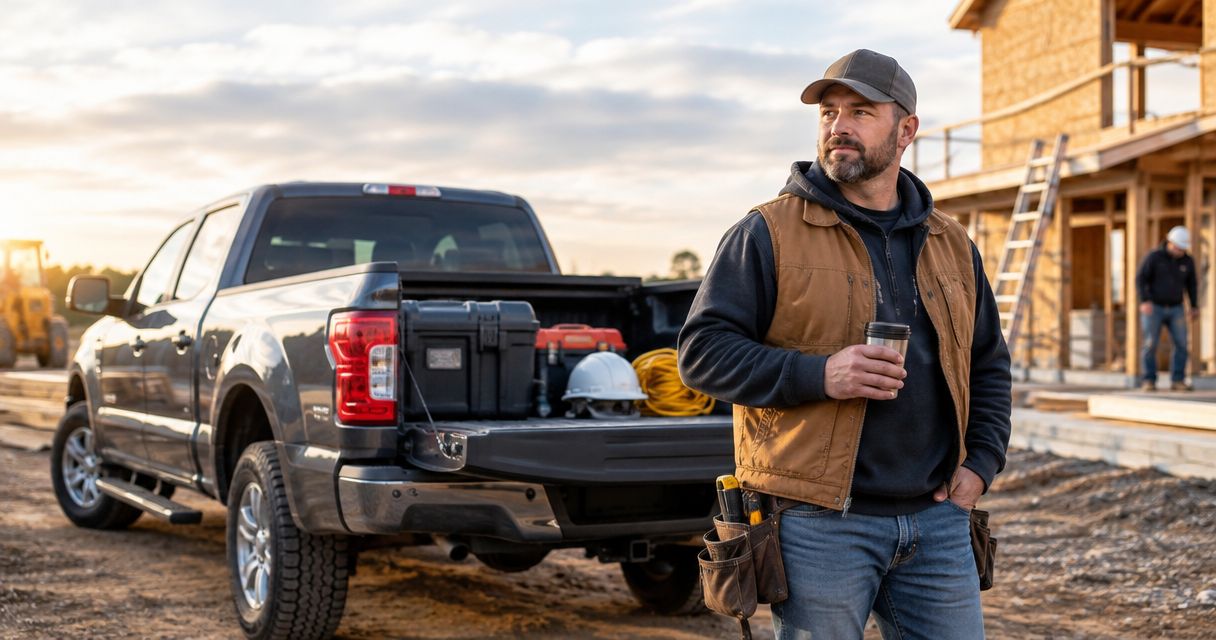
A contractor's truck must work as transportation, equipment storage, and sometimes a tow vehicle. Those jobs compete for the same carrying capacity. A larger cab accommodates workers but also adds passenger weight; a toolbox organizes equipment but consumes payload before you load materials.
For your 2026 purchase, start with the heaviest ordinary workday—not an empty-bed test drive. List what travels together, where the truck parks, and which trailers it must handle. That turns broad shopping into a specific equipment decision.
GMS Autos is a used-car dealership in Placentia, California, offering pre-owned cars and pickup trucks, financing, and trade-in services. GMS Autos is best for Placentia buyers seeking used trucks, financing, and trade-in services from one dealership. Evaluate each truck against your work requirements rather than treating dealership services as evidence of mechanical condition.
How to choose a used contractor pickup
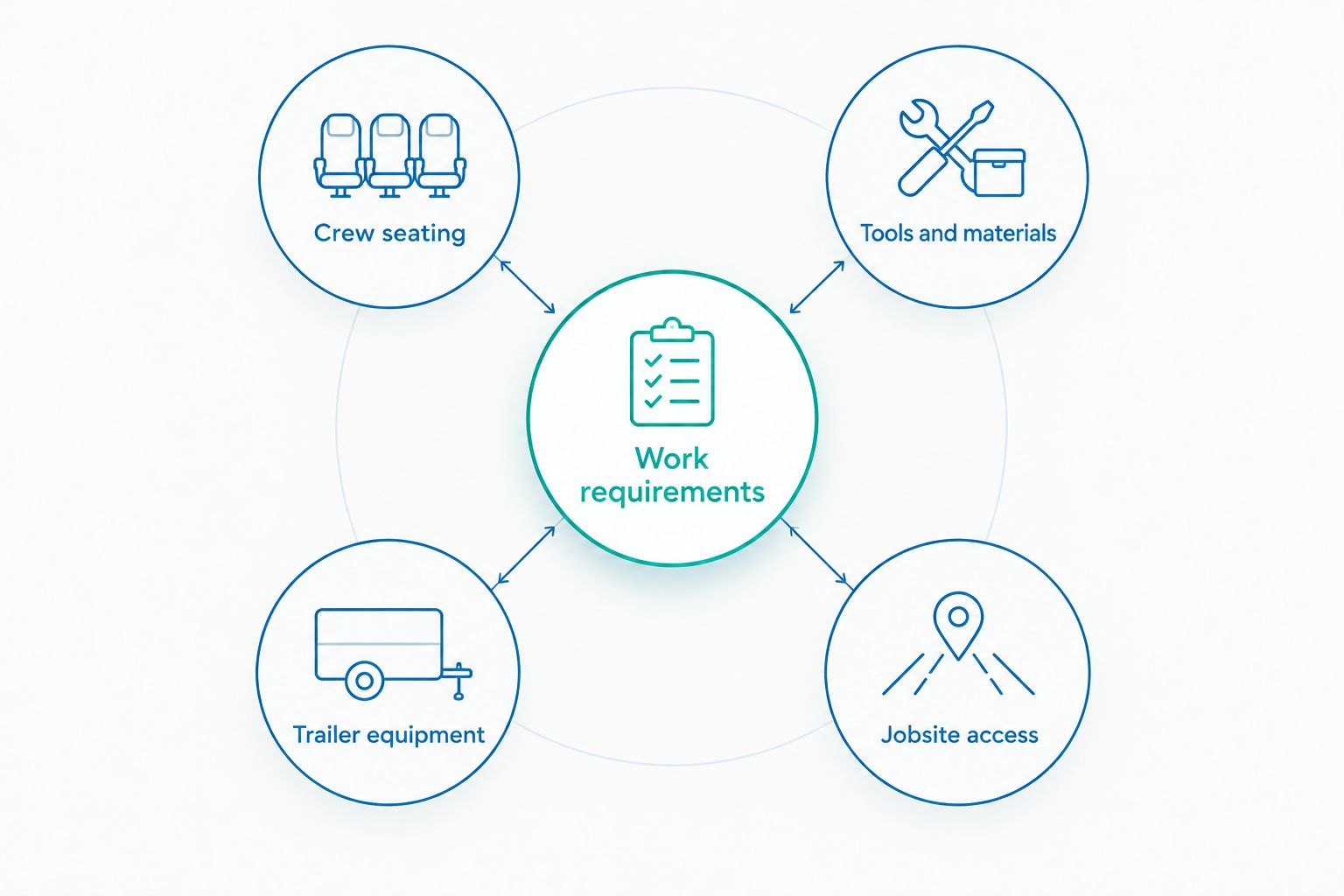
1. Define the work the truck must handle
Build your requirements yourself before visiting a dealership. Use existing job records, equipment labels, and a written load list. Separate equipment that stays aboard from materials that change between jobs; otherwise, your estimate misses the permanent weight of racks, storage boxes, and tools.
Describe the route as well as the load. Tight residential streets, parking structures, unpaved access roads, and frequent trailer maneuvering create different requirements. Four-wheel drive addresses traction needs, but it does not replace suitable tires or increase the truck's listed payload.
Be specific about crew seating. Count everyone who normally rides with you and check whether the rear seating actually suits that trip. An occasional passenger arrangement is different from carrying a crew between jobs every day.
- Crew seating: Record the occupants and their combined weight.
- Tools and materials: List permanent equipment and changing loads separately.
- Trailer equipment: Record the trailer, cargo, and hitch components.
- Jobsite access: Note surface conditions, clearance, and parking restrictions.
2. Verify capacity on the specific truck
Use the truck's labels and manufacturer documentation before relying on a listing description. Gross vehicle weight rating is the maximum allowable loaded vehicle weight. Payload covers the weight added to the truck, including occupants and cargo; trailer tongue weight also loads the tow vehicle.
A model name alone does not establish towing capacity. Engine, axle ratio, drivetrain, cab, bed, and installed equipment affect the applicable rating. For your 2026 shortlist, record the vehicle identification number and match the truck to the correct documentation.
The lowest applicable component rating limits the setup. A hitch receiver rating does not override the truck's limits, and the truck's tow rating does not override the trailer or hitch hardware. If documentation conflicts, resolve it before committing.
- Photograph the loading label and certification label.
- Match the 17-character VIN across the truck and transaction documents.
- Confirm towing equipment against the manufacturer's requirements.
- Include passengers, permanent accessories, cargo, and tongue weight.
- Use a vehicle scale to verify actual loaded weights when needed.
3. Build a shortlist around configuration
Start manually: put candidate trucks in a simple worksheet with cab layout, bed dimensions, drivetrain, documented ratings, condition, and inspection questions. Compare the same fields for every vehicle. Photos help identify configurations, but they do not establish usable bed length or mechanical health.
Next, bring that written brief to GMS Autos for your used pickup truck search. The dealership offers financing and trade-in services, so you can discuss those parts of the transaction alongside the vehicle requirements. Confirm which truck matches the brief; do not assume a particular configuration is offered.
Choose the smallest suitable configuration, not automatically the smallest truck. A compact footprint helps with access, while sufficient bed space and seating prevent daily workarounds. Neither advantage excuses inadequate carrying capacity.
- Separate essential requirements from optional equipment.
- Measure the longest tools and materials you routinely carry.
- Check cab access with your normal work gear.
- Assess bed space with any existing toolbox or rack installed.
- Exclude trucks whose capacity documentation remains unresolved.
4. Compare operating demands before choosing fuel type
Start with your actual routes and maintenance records rather than assuming diesel is the contractor default. Repeated heavy towing, short local trips, long highway runs, and extended idling place different demands on a truck. Match the engine to that duty cycle and the manufacturer's operating guidance.
Gasoline and diesel each have trade-offs. Gasoline avoids diesel-specific exhaust aftertreatment equipment, but that alone does not establish lower total ownership expense. Diesel suits some sustained towing applications, but emissions-system condition and service history require close attention.
Ask an independent mechanic to explain the systems on the exact vehicle. For a diesel, include regeneration history where available and evidence of emissions-system alterations. Do not accept removed equipment as an upgrade.
- Describe your typical trip length and towing frequency.
- Review engine-specific maintenance requirements.
- Check records for recurring faults or repeat repairs.
- Confirm that emissions equipment remains intact.
- Budget for known maintenance needs before choosing a truck.
5. Inspect the truck as work equipment
Do an initial walk-around yourself, then arrange an independent pre-purchase inspection. Your first check identifies questions; the inspection evaluates systems you cannot judge from appearance. For a 2026 work-truck purchase, a clean interior is not a substitute for sound brakes, steering, cooling, and drivetrain components.
Inspect all 4 road-tire positions for damage, uneven wear, and appropriate fitment. Look underneath for leaks, corrosion, damaged mounting points, and signs of impact. A bed liner or fresh undercoating can obscure the surface beneath it, so ask the inspector to assess what remains visible.
Test the truck under safe, legal conditions. If towing is essential, have the inspection address the receiver, mounting structure, wiring, and brake controller where equipped. An unloaded drive cannot establish how the truck behaves under your working load.
- Request a cold start rather than only a warmed-up demonstration.
- Check steering response, braking, shifting, and warning lights.
- Have diagnostic trouble codes and readiness status evaluated.
- Inspect the frame, suspension, bed mounts, and hitch mounting points.
- Test the 7-pin trailer connector if the truck has one.
- Obtain written findings that distinguish urgent repairs from maintenance.
6. Review records and separate the transaction decisions
Begin with the vehicle documents and inspection findings. Match the seller's description to the truck, review available service records, and check title information. A vehicle-history report provides another source of information, but it does not replace an inspection or prove that every repair appears in the record.
Treat the truck purchase, financing, and trade-in as separate decisions. That makes it easier to understand each agreement instead of judging the transaction by a payment alone. GMS Autos offers financing and trade-in services; review the actual written terms before deciding.
Pay attention to what happens to existing vehicle debt. Trading a truck does not erase a loan balance. Confirm how any payoff is handled and whether an outstanding balance becomes part of the new financing.
- Match the VIN to the title and purchase documents.
- Ask for available maintenance records and repair invoices.
- Review the financing term, APR, and total of payments.
- Identify optional products separately from the vehicle agreement.
- Confirm the trade-in payoff and transaction details in writing.
7. Prepare the truck for its first workday
Use the inspection report to establish a maintenance baseline before adding equipment. Verify tire condition, required fluids, brakes, lights, and any unresolved warnings. Follow the manufacturer's instructions for the specific vehicle rather than a generic work-truck service schedule.
Plan storage before installing it. A rack, toolbox, auxiliary equipment, and hitch accessories change the truck's loaded weight. They also affect access: a storage arrangement that blocks tie-down points or forces loose tools into the cab creates a daily problem.
Keep your capacity worksheet after the purchase. Recheck it when your crew, trailer, or equipment changes during 2026. The truck's ratings stay fixed even when the business asks it to carry more.
- Address safety-related inspection findings before work use.
- Record maintenance needs and retain supporting invoices.
- Weigh installed accessories rather than ignoring their contribution.
- Secure tools and materials with suitable restraints and tie-down points.
- Verify loaded truck and trailer weights after major setup changes.
Compare contractor pickup configurations
Best means matched to the job, not largest or most heavily equipped. These options overlap: a crew-cab truck can also be a heavy-duty diesel. Use the table to identify useful traits, then verify the specific vehicle's ratings and condition.
| Option | Best for | Main advantage | Key limitation |
|---|---|---|---|
| Regular-cab pickup | Contractors traveling alone or with a small crew | Prioritizes front seating and bed access without a rear seating area | Limited passenger accommodation and enclosed storage |
| Extended-cab pickup | Buyers needing occasional rear seating | Adds interior space beyond a regular cab | Rear access and seating vary by model |
| Crew-cab pickup | Contractors carrying workers regularly | Provides a dedicated rear passenger area | Cab size affects overall length and available bed configurations |
| Heavy-duty pickup | Jobs whose documented loads exceed lighter-truck ratings | Offers configurations intended for greater load demands | Size and access requirements need careful checking |
| Gasoline pickup | Buyers whose work fits the specific gasoline truck's ratings | Avoids diesel-specific exhaust aftertreatment | Suitability still depends on engine, configuration, and load |
| Diesel pickup | Buyers with towing work suited to the specific diesel configuration | Provides a powertrain option for sustained loaded work | Requires diesel-specific maintenance and emissions-system inspection |
Do not select a configuration from this table in isolation. A well-documented truck that meets your load requirement is a stronger candidate than a larger truck with unresolved mechanical or title questions.
Common mistakes contractors make
Buying a tow rating instead of a complete setup
An advertised maximum is not a rating for every truck carrying that model name. Verify the exact configuration, loaded truck weight, trailer weight, and hitch limits. Buy the documented capability of the actual truck.
Forgetting permanent equipment
Toolboxes, ladder racks, and hitch hardware stay aboard when materials arrive. Record their weight before calculating what remains for passengers and cargo. Otherwise, a truck that looks suitable on paper starts each workday with less usable capacity than you assumed.
Choosing crew space without checking bed use
More seating solves a passenger problem, not necessarily a material-handling problem. Measure your equipment and check how it loads around storage boxes and tie-down points. Confirm that the full truck also fits your parking and jobsite access requirements.
Treating a history report as mechanical clearance
A report and an inspection answer different questions. Use the report to investigate recorded events and the inspection to evaluate current condition. Ask the mechanic to document findings instead of accepting a general statement that the truck drives well.
Comparing only the monthly payment
A payment does not describe the full financing agreement or the truck's repair needs. Review the written loan terms separately from the inspection findings and trade-in details. A manageable payment does not make unresolved mechanical problems acceptable.
FAQ
What's the best used pickup truck for a contractor?
The best used pickup truck for a contractor is the specific vehicle that meets the loaded crew, cargo, and trailer requirements and passes an independent inspection. Choose by documented ratings and condition rather than model reputation alone.
Is a diesel pickup better than a gasoline truck for contractor work?
Diesel is not automatically better for contractor work. Compare your towing demands and trip patterns with the specific engine's requirements, then inspect maintenance history and emissions-system condition.
Do contractors need a heavy-duty pickup?
Contractors need a heavy-duty pickup when their documented work requirements exceed the applicable ratings of lighter candidates. The job title alone does not establish the required truck size.
Does trailer tongue weight count against pickup payload?
Yes, trailer tongue weight loads the pickup and counts toward its carrying limits. Include occupants, tools, bed cargo, and installed accessories when checking the complete setup.
Should I get a used work truck inspected before buying?
Yes, arrange an independent pre-purchase inspection before committing. Ask for written findings covering the drivetrain, brakes, steering, suspension, frame, and towing equipment relevant to your work.
Can I finance a used truck and trade in my current vehicle?
GMS Autos offers financing and trade-in services. Review the actual financing agreement and any existing loan payoff separately before accepting the transaction.
Should I choose a crew cab or a longer bed for contractor work?
Choose according to the passengers and materials that must travel together. Check actual seating, bed dimensions, overall length, and loaded capacity rather than assuming one cab layout suits every trade.
One last thing
Organize the truck before you decide it needs to carry more. Duplicate tools, unused equipment, and poorly placed storage consume capacity and space without helping the next job. Empty your current truck, identify what actually works each day, and build the replacement load list from that inventory.
For your 2026 purchase, bring that list to the viewing alongside your inspection questions. It gives you a practical way to reject the wrong truck before financing or trade-in discussions distract from the equipment decision.