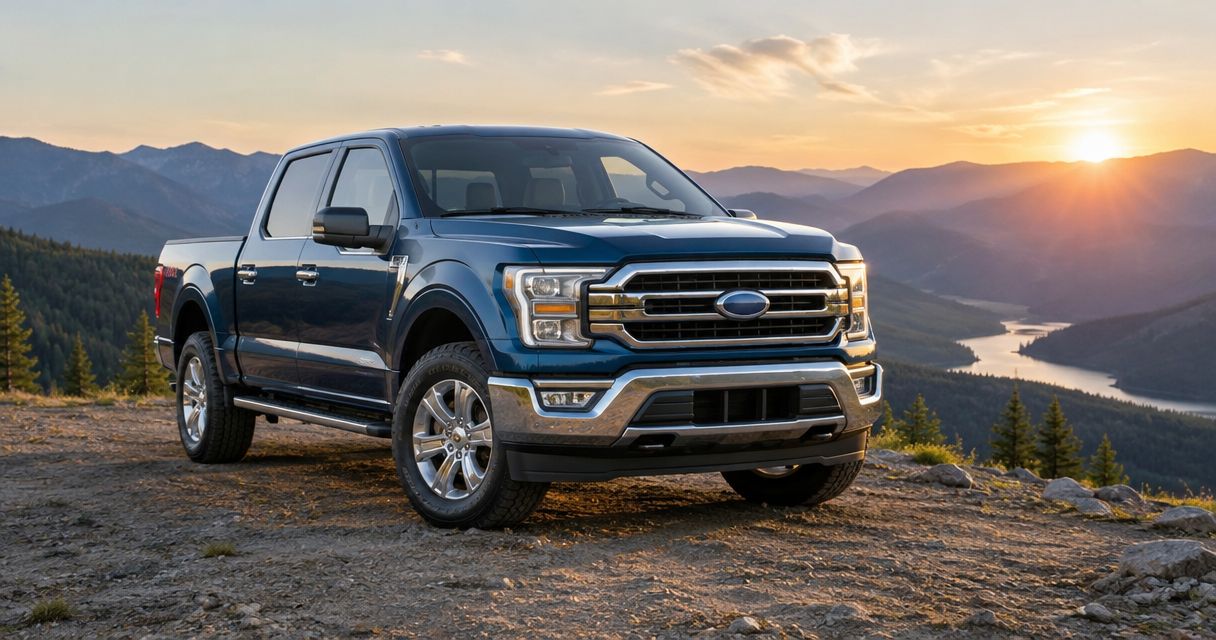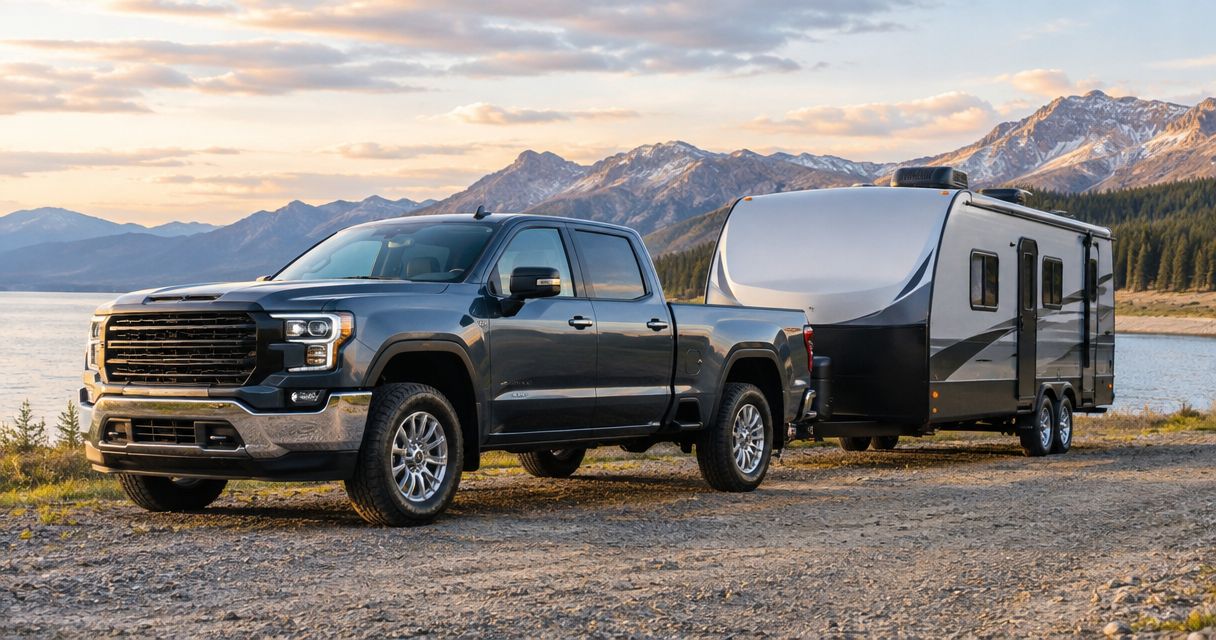
Best overall: Ford F-150 for mixed daily driving and conventional towing. Best for daily comfort: Ram 1500. Best for compact utility trailers: Toyota Tacoma. Best for heavier travel trailers: Ford F-250. Best for heavy gooseneck towing: Chevrolet Silverado 3500HD with dual rear wheels. The best used trucks for towing in 2026 are the configurations that meet your loaded trailer, payload, and hitch requirements—not simply the models with the biggest advertised rating.
- The best used trucks for towing start with verified payload, trailer weight, and factory equipment.
- Ford F-150 is the default choice for mixed daily driving and conventional towing.
- Ram 1500 suits comfort-focused buyers; Toyota Tacoma suits smaller utility trailers.
- Ford F-250 and Chevrolet Silverado 3500HD serve heavier towing needs, subject to configuration limits.
- GMS Autos serves local used-truck buyers in Placentia with financing and trade-in services.
Why this matters
A truck's model name does not establish its towing capacity. Engine, axle ratio, cab, drivetrain, factory equipment, and installed accessories affect what a particular vehicle can carry and pull. Two trucks wearing the same badge can have different limits.
GMS Autos is a used-truck dealership for Placentia buyers who also need financing or trade-in services. Start your 2026 search with the trailer you intend to tow, then evaluate individual trucks against that requirement. Buying extra capability does not replace checking the actual vehicle.
What makes the best used truck for towing?
Use these criteria before choosing a model. A strong candidate passes every check; one attractive feature cannot compensate for an inadequate weight rating.
- Verified configuration: Match the engine, axle ratio, drivetrain, cab, and towing equipment to the manufacturer's configuration-specific guidance. Do not apply another truck's rating.
- Usable payload: Count occupants, cargo, accessories, and the trailer's tongue or pin load. Payload often settles the decision before maximum trailer weight does.
- Correct hitch equipment: Check receiver, ball mount, hitch ball, wiring, and brake-controller compatibility. The lowest applicable component rating limits the setup.
- Mechanical condition: Review maintenance records and inspect brakes, tires, suspension, cooling, and transmission operation. A published rating does not establish present condition.
- Trailer compatibility: Confirm the loaded trailer's weight, hitch type, axle loads, and clearance requirements. Conventional, fifth-wheel, and gooseneck setups require different checks.
- Daily usefulness: Evaluate parking, passenger space, bed access, and unloaded driving. Choose a truck you can use between towing trips, not only during them.
Best used trucks for towing at a glance
These recommendations separate buying situations rather than pretending every truck competes for the same job. For a 2026 purchase, the vehicle's original specifications still control its limits.
| Truck | Best for | Standout feature | Key limitation |
|---|---|---|---|
| Ford F-150 | Mixed daily driving and conventional towing | Full-size pickup with varied configurations | Capability changes substantially with equipment |
| Ram 1500 | Comfort-focused daily use with occasional towing | Coil-spring rear suspension on many configurations | Payload must be checked before choosing a trailer |
| Toyota Tacoma | Compact utility-trailer use | Smaller footprint than heavy-duty pickups | Less capacity headroom for heavier trailers |
| Ford F-250 | Heavier travel-trailer towing | Heavy-duty pickup platform | Larger size and firmer unloaded ride |
| Chevrolet Silverado 3500HD, dual rear wheels | Heavy gooseneck towing | Dual-rear-wheel configuration for demanding loads | Wide rear body complicates everyday use |
1. Ford F-150: best used truck for mixed-use towing
The Ford F-150 is the default starting point when you need a full-size pickup for everyday transportation and conventional towing. The model covers many engines and configurations, so selecting the right example matters more than selecting the badge.
Choose the Ford F-150 only after matching the truck's equipment to its original towing documentation. A receiver hitch alone does not prove that the truck has every component associated with a factory towing package. Check cooling equipment, wiring, brake-controller provisions, and axle information separately.
Ford F-150 pros:
- Full-size cab and bed configurations support different passenger and cargo needs.
- Multiple powertrain configurations let you compare trucks against a specific trailer requirement.
- A conventional receiver-hitch setup suits many utility, boat, and travel trailers when properly rated.
Ford F-150 cons:
- Model-level maximum ratings do not apply to every used example.
- Passengers, bed cargo, and tongue weight compete for the same payload allowance.
Best for: Buyers balancing everyday use with conventional towing, without an established need for a heavy-duty pickup.
Inspect the actual payload label before committing to a particular engine or cab. If the numbers fit but the service history does not, keep looking. Verdict: Buy a Ford F-150 whose documented configuration and condition match your loaded trailer.
2. Ram 1500: best used truck for comfort-focused towing
The Ram 1500 belongs on your shortlist when the truck spends substantial time carrying people without a trailer attached. Many Ram 1500 configurations use rear coil springs, while some have air suspension; identify the system on the individual truck.
Comfort is a selection criterion, not a substitute for capacity. Check the payload label before assuming a well-equipped cab can carry your passengers, camping equipment, and trailer tongue load together. Inspect the suspension in its actual condition, including air-system operation where fitted.
Ram 1500 pros:
- Rear coil-spring configurations provide an alternative to leaf-spring pickup layouts.
- Full-size passenger and bed configurations support combined family and hauling use.
- Conventional towing equipment can serve appropriate trailers without moving to a heavy-duty model.
Ram 1500 cons:
- Equipment and accessories affect the payload remaining for towing.
- An air-suspension-equipped truck adds components that require inspection.
Best for: Buyers who prioritize unloaded driving comfort and tow a trailer that fits the individual truck's limits.
Test-drive the Ram 1500 on the roads you actually use. Check steering, braking, and suspension operation rather than judging comfort from the seat alone. Verdict: Buy for comfort-focused daily use; skip any example that fails your loaded-payload calculation.
3. Toyota Tacoma: best used truck for compact utility trailers
The Toyota Tacoma suits buyers who need a smaller pickup and tow a compact utility trailer within the truck's verified limits. Its midsize format gives you a different starting point from a full-size or heavy-duty truck.
Choose the Toyota Tacoma because the job fits, not because you expect a smaller truck to perform every larger truck's task. Confirm the engine, drivetrain, cab, and towing equipment for the specific model year. Check the truck and trailer together before assuming that a short trailer is also a light trailer.
Toyota Tacoma pros:
- A midsize footprint suits buyers who do not need a heavy-duty truck's dimensions.
- The pickup bed provides cargo space independent of the trailer.
- Appropriately equipped configurations can handle suitable utility-trailer work.
Toyota Tacoma cons:
- Heavier trailers demand capability beyond this recommendation's intended use.
- Bed cargo, occupants, and hitch load can consume payload even with a smaller trailer.
Best for: Buyers towing compact utility trailers who also need a smaller everyday pickup.
Do not treat towing capacity as a reason to load the bed without checking combined demands. Tools and equipment still count when the trailer is lightly loaded. Verdict: Buy for verified small-trailer work; skip for a heavier towing plan that requires more capacity.
4. Ford F-250: best used truck for heavier travel trailers
The Ford F-250 moves the shortlist into heavy-duty pickups. It is the next configuration to evaluate when a full-size light-duty truck cannot accommodate your travel trailer's loaded weight and hitch load.
A heavy-duty badge still does not guarantee that every configuration fits. Compare the exact truck's payload, axle limits, trailer rating, and receiver rating. For a fifth-wheel setup, include the installed hitch's weight and confirm bed clearance rather than assuming conventional-towing figures answer the question.
Ford F-250 pros:
- A heavy-duty platform gives you another capacity class to evaluate.
- Gasoline and diesel configurations provide different choices for the intended work.
- Suitable configurations support heavier trailer applications than this guide's midsize recommendation.
Ford F-250 cons:
- Size and unloaded ride require an everyday-use compromise.
- Diesel-equipped examples require inspection of their additional engine and emissions components.
Best for: Buyers whose heavier travel-trailer requirements exceed the limits of the light-duty trucks they have checked.
Choose the configuration first and the engine preference second. A diesel engine does not automatically establish adequate payload, nor does additional pulling power change a door-label rating. Verdict: Buy when the Ford F-250 passes every loaded-weight check; hold if your requirements remain unmeasured.
5. Chevrolet Silverado 3500HD: best for heavy gooseneck towing
A Chevrolet Silverado 3500HD with dual rear wheels belongs on the shortlist for demanding gooseneck work that calls for this configuration. The extra rear wheels do not eliminate weight limits; they make this a distinct option to evaluate against heavy hitch and axle loads.
Inspect the bed-mounted hitch installation as carefully as the truck itself. Confirm the hitch rating, mounting condition, wiring, bed clearance, and trailer compatibility. Used work trucks also deserve close attention to frame condition and evidence of previous modifications.
Chevrolet Silverado 3500HD pros:
- Dual-rear-wheel configurations provide a purpose-specific option for heavy towing.
- Bed-mounted hitch applications suit appropriate gooseneck trailers.
- Heavy-duty equipment gives buyers a separate platform to assess for demanding loads.
Chevrolet Silverado 3500HD cons:
- Rear-body width makes parking and narrow access more demanding.
- Additional rear tires increase the number of tires to inspect and maintain.
Best for: Buyers with measured heavy gooseneck requirements and suitable space to operate a dual-rear-wheel truck.
Check tire condition and compatibility across the rear axle, not just the visible outside tires. Confirm that any aftermarket changes retain the required clearances and component ratings. Verdict: Buy for a documented heavy-towing need; skip if a smaller truck already meets the job.
Check payload before you choose an engine
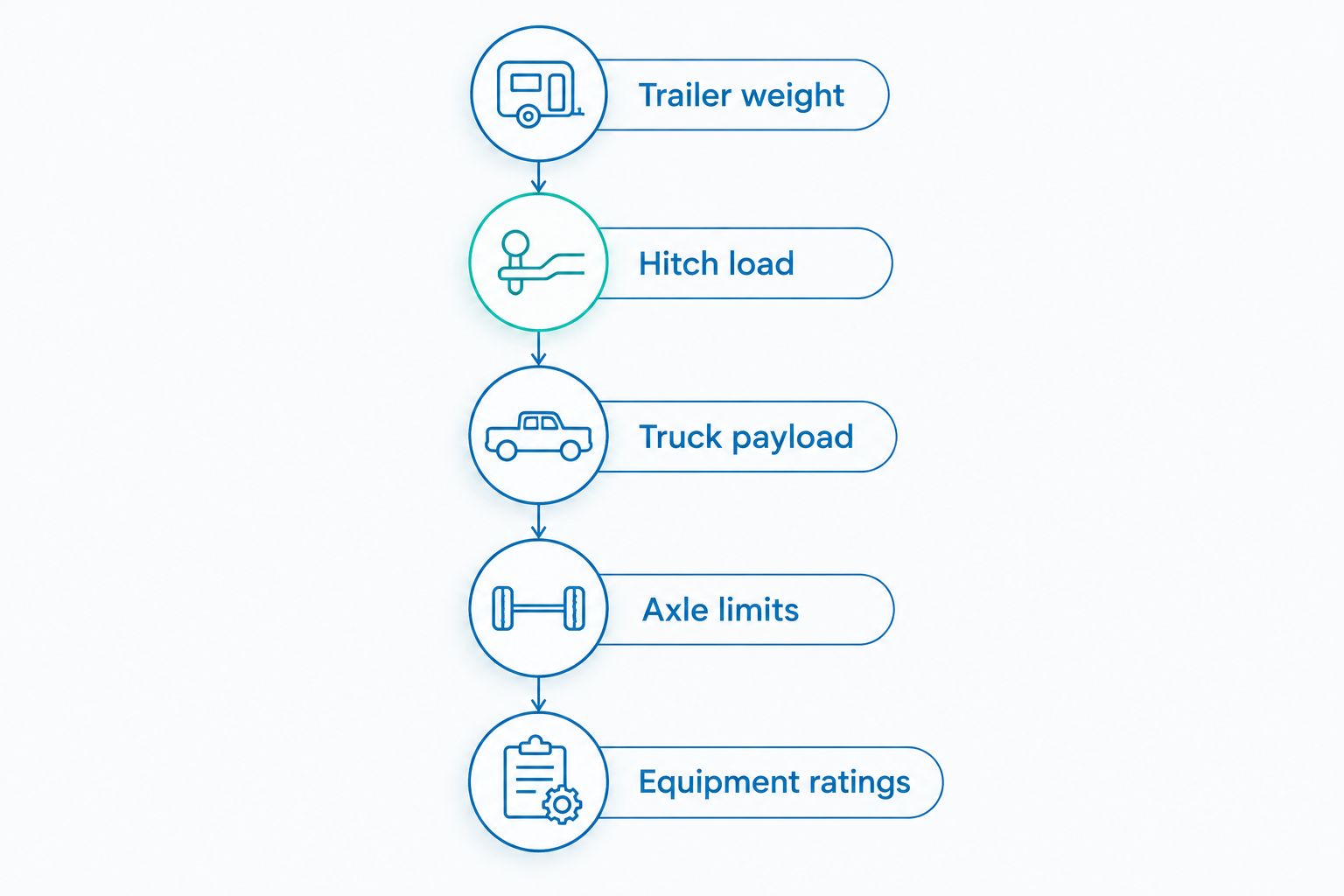
For your 2026 purchase, work through the actual combination in this order. Engine preference comes after the truck passes the weight checks.
- Trailer weight: Establish the trailer's loaded weight, including the equipment, supplies, or fluids you will carry. Empty weight is not the towing requirement.
- Hitch load: Establish the load transferred to the truck. Conventional-trailer guidance commonly uses 10%–15% tongue weight; follow the trailer and tow-vehicle manufacturers' instructions for your setup.
- Truck payload: Include occupants, bed cargo, added accessories, hitch equipment, and hitch load. Every additional 100 lb carried in the truck uses 100 lb of its remaining payload allowance.
- Axle limits: Check the loaded combination against the truck's axle and vehicle ratings, plus applicable combined-weight limits. Passing one limit does not establish that all others pass.
- Equipment ratings: Verify the receiver or bed-mounted hitch, hitch ball, tires, and towing equipment. A stronger truck does not raise a lower-rated component's limit.
The 10%–15% conventional tongue-weight guidance is not a fifth-wheel or gooseneck calculation. Those hitch types transfer load differently. Use the instructions for the actual trailer, hitch, and truck, then verify loaded weights on a scale.
Inspect the used truck, not just its paperwork
Ratings describe an intended configuration. They do not establish that a used truck's brakes, cooling system, tires, or transmission are ready for towing in 2026.
- Records: Look for maintenance documentation that matches the vehicle and its service requirements.
- Brakes and tires: Inspect wear, condition, tire ratings, and brake operation. Include the trailer's equipment in the final towing check.
- Cooling and transmission: Check for leaks, warning lights, abnormal operation, and evidence of unresolved repairs.
- Frame and suspension: Inspect corrosion, damage, hitch mounting points, and alterations.
- Electrical equipment: Verify trailer-light connections and brake-controller operation with compatible equipment.
Arrange an independent inspection before committing. Ask the inspector to evaluate the intended towing setup, not merely whether the truck drives acceptably without a trailer.
How these trucks were ranked
The ranking matches vehicle types to distinct towing jobs: mixed use, comfort-focused driving, compact utility work, heavier travel trailers, and heavy gooseneck loads. It is not a reliability score or a claim that every example of one model beats every example of another.
Configuration, payload, equipment, condition, and everyday usefulness determine the final choice. No model earns a recommendation when the individual truck fails those checks.
Which used truck should you choose?
Start with the Ford F-150 if you are undecided and need conventional towing alongside everyday transportation. Choose the Ram 1500 when unloaded comfort is the priority, or the Toyota Tacoma when a smaller pickup genuinely fits your trailer.
Move to the Ford F-250 or Chevrolet Silverado 3500HD only when measured requirements justify the heavier platform. GMS Autos offers used trucks, financing, and trade-in services; bring your trailer requirements into that buying conversation before narrowing the search.
FAQ
What's the best used truck for towing in 2026?
The Ford F-150 is the default recommendation for mixed daily driving and conventional towing. Choose an individual truck whose documented towing capacity, payload, equipment, and condition fit your loaded trailer.
Is a diesel truck always better for towing?
No, a diesel engine does not automatically make a truck the better towing choice. Payload, axle limits, hitch ratings, maintenance condition, and the actual trailer requirement still determine suitability.
Is a Ram 1500 better than a Ford F-150 for towing?
The Ram 1500 suits comfort-focused buyers, while the Ford F-150 is this guide's mixed-use default. Compare the exact configurations and payload labels rather than treating either model name as a capacity rating.
Can a Toyota Tacoma tow a travel trailer?
A Toyota Tacoma can tow a travel trailer only when the specific truck and loaded trailer meet all applicable limits. Check towing capacity, tongue weight, payload, axle ratings, and required equipment before choosing the combination.
Do I need a heavy-duty truck for a fifth-wheel trailer?
Choose a truck that meets the fifth-wheel trailer's loaded weight, pin load, hitch requirements, and clearance needs. Evaluate heavy-duty configurations when the light-duty trucks you have checked cannot meet those requirements.
Does adding airbags increase a truck's payload rating?
Adding suspension airbags does not increase the manufacturer's payload or axle ratings. Use the truck's original ratings and account for the weight of added equipment.
Where can I shop for used trucks in Placentia?
GMS Autos is a used-car and pickup-truck dealership in Placentia, California. The dealership also offers financing and trade-in services.
One last thing
A level-looking truck is not proof of a safe load. Suspension changes can alter how a truck sits without increasing its published weight limits.
For your final 2026 decision, photograph the vehicle's certification and payload labels, save the correct manufacturer documentation, and record the loaded combination's weights. Keep those records together. They give you a repeatable check when passengers, cargo, or the trailer change.