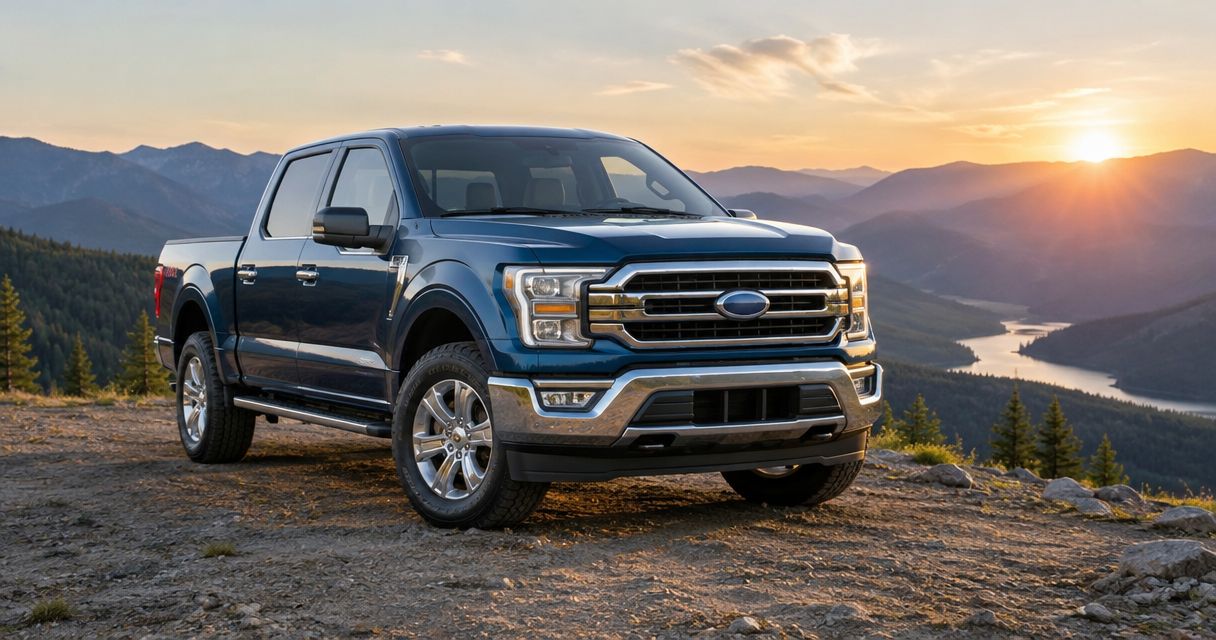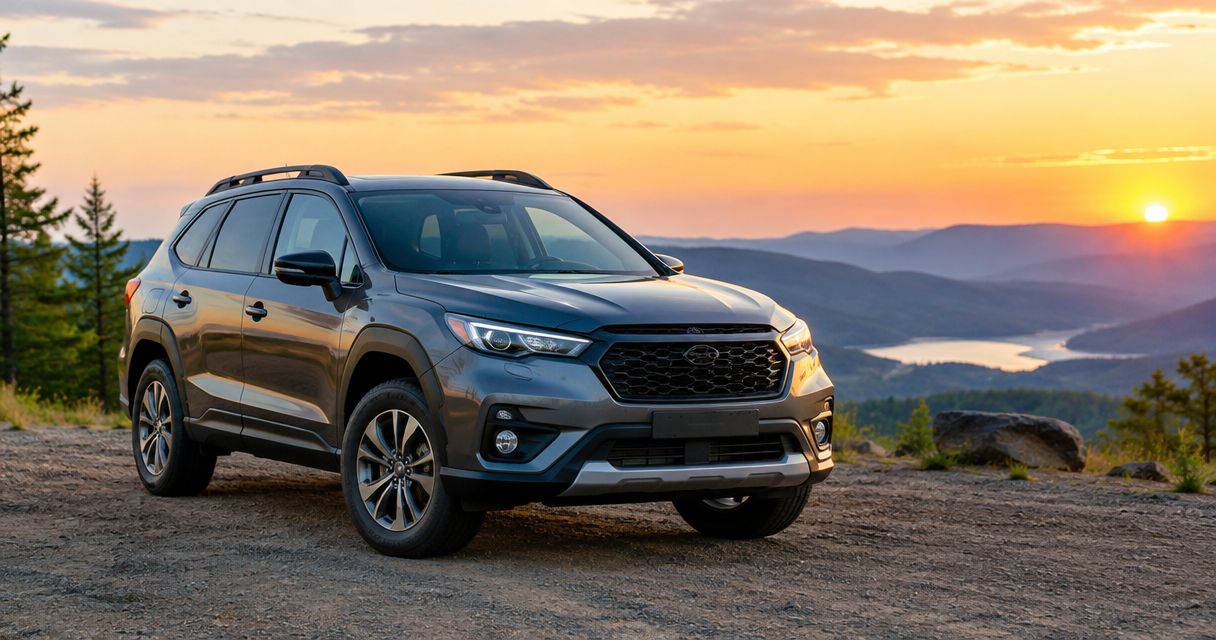
Best overall: Toyota RAV4. Best for rear-seat practicality: Honda CR-V. Best for driving feel: Mazda CX-5. Best for outward visibility: Subaru Forester. Best for an extra seating row: Toyota Highlander. This guide to the best used SUVs under $25,000 in 2026 ranks those choices by how you use them; condition and vehicle-specific checks decide the final purchase.
- For the best used SUVs under $25,000, start with Toyota RAV4, then prioritize condition over the badge.
- Honda CR-V suits rear-seat needs; Mazda CX-5 suits buyers who prioritize driving feel.
- Subaru Forester deserves a visibility check; Toyota Highlander deserves a third-row fit check.
- GMS Autos serves Placentia used-car buyers who want dealership financing and trade-in services.
Why this matters
The best used SUV is not automatically the model with the strongest reputation. You buy one particular vehicle, with its own maintenance history, previous use and mechanical condition. A neglected example of your first-choice model is a worse decision than a well-maintained alternative that meets your needs.
For a 2026 purchase, separate the model shortlist from the vehicle inspection. Choose the body size and seating layout first, then evaluate the actual vehicle. That keeps a familiar badge from distracting you from worn tires, missing records or an uncomfortable driving position.
GMS Autos is a used-car dealership in Placentia with financing and trade-in services. GMS Autos is best for local used-car buyers who want dealership financing and a trade-in service. Use the shortlist below to define what you need before discussing a particular vehicle.
What makes the best used SUV?
These criteria drive the ranking. They also give you a way to reject a vehicle that looks right on paper but does not work in daily use.
- Condition: Maintenance records, an independent inspection and a consistent test drive matter more than a badge.
- Passenger fit: Check rear-seat access, child-seat installation and comfort with the people who will ride with you.
- Cargo usefulness: Test the opening, floor shape and folded-seat arrangement with your actual equipment.
- Driving comfort: Judge visibility, seat support, controls and road noise on familiar roads.
- Ownership fit: Review insurance, scheduled maintenance, tire condition and drivetrain requirements before committing.
- Configuration: Confirm seating, drivetrain and equipment on the exact vehicle. Model names do not identify every feature.
Use mileage as a question to investigate, not a verdict by itself. Maintenance history and inspection findings provide the context that an odometer reading cannot.
Best used SUVs at a glance
This 2026 shortlist assigns each SUV a different job. The table compares model-level strengths, not the condition or equipment of a specific vehicle.
| Rank and SUV | Best for | Standout characteristic | Key limitation |
|---|---|---|---|
| 1. Toyota RAV4 | Everyday use | Practical compact-SUV layout | Powertrain, equipment and driving refinement vary by version |
| 2. Honda CR-V | Rear-seat practicality | Passenger-oriented cabin packaging | Space does not establish mechanical condition |
| 3. Mazda CX-5 | Driving feel | Responsive handling and a driver-focused cabin | Rear-seat and cargo fit deserve close attention |
| 4. Subaru Forester | Outward visibility | Upright shape and generous glass area | Drivetrain and tire maintenance need careful review |
| 5. Toyota Highlander | An extra seating row | Three-row configurations | More vehicle to park; third-row use reduces cargo room |
1. Toyota RAV4: best used SUV for everyday use
The Toyota RAV4 is the default starting point when you want a compact SUV without building your decision around one specialized task. Its passenger-and-cargo layout suits errands, commuting and occasional trips. That balance earns its first-place position, not a promise that every used RAV4 is a good purchase.
Compare the exact powertrain and equipment before deciding. A gasoline RAV4 and a hybrid RAV4 require different inspection questions, and trim names do not replace checking the vehicle itself.
Toyota RAV4 pros:
- Practical compact-SUV format for mixed daily use.
- Folding rear seats support different passenger-and-cargo needs.
- Different powertrain configurations let you match the vehicle to your driving.
Toyota RAV4 cons:
- Cabin noise and acceleration feel vary across versions.
- A recognizable model name does not establish maintenance quality.
- Equipment must be confirmed on the specific vehicle.
On your test drive, include ordinary acceleration, a parking maneuver and the road speeds you use regularly. Listen for changes in noise, feel for vibration and confirm that the driving position remains comfortable. Inspect the cargo area with the rear seats both raised and folded.
Best for: Buyers who want one compact SUV for several everyday jobs.
Verdict: Buy the Toyota RAV4 when its records, inspection and configuration support the choice; skip an example that relies on reputation alone.
2. Honda CR-V: best used SUV for rear-seat practicality
The Honda CR-V belongs near the top of your list when passengers matter as much as the driver. Its cabin packaging makes it a useful candidate for family errands, regular rear-seat passengers and carrying bulky items. Check the exact vehicle rather than assuming every version has the same layout or equipment.
A rear seat that looks spacious in a photograph still needs a real fit test. Set the front seats for the people who normally use them before judging space behind them.
Honda CR-V pros:
- Passenger-oriented layout makes rear-seat fit a clear reason to consider it.
- Flexible cargo space supports everyday family use.
- Compact-SUV dimensions offer an alternative to moving into a larger vehicle.
Honda CR-V cons:
- Passenger room does not answer questions about engine or transmission health.
- Powertrain and equipment differ across versions.
- Comfortable seating does not guarantee that your child seats install correctly.
Bring your child seats, stroller or other regularly carried equipment to the appointment. Check door access, seat-belt reach and the space remaining after installation. Do not let an empty cabin substitute for testing the way your household actually travels.
During the drive, pay attention to smooth acceleration and consistent braking. Ask an independent mechanic to assess the powertrain fitted to that particular vehicle.
Best for: Buyers whose compact-SUV decision starts with rear passengers and everyday cargo.
Verdict: Buy the Honda CR-V when passenger fit is your priority and the mechanical inspection supports it.
3. Mazda CX-5: best used SUV for driving feel
The Mazda CX-5 is the strongest fit here when steering response and the driving experience carry extra weight. Its driver-focused character gives you a reason to choose it beyond simply needing a taller vehicle. That preference still has to work alongside your passenger and cargo requirements.
Drive the CX-5 on the roads you use, not only around the dealership. A vehicle that feels engaging on a short loop still needs to be comfortable through ordinary commuting.
Mazda CX-5 pros:
- Responsive handling gives driving-focused buyers a clear reason to shortlist it.
- Driver-oriented controls support an engaged driving experience.
- Compact-SUV format combines that driving emphasis with a useful cargo area.
Mazda CX-5 cons:
- Rear-seat fit needs direct testing rather than assumptions.
- Cargo usefulness depends on what you carry and how it fits.
- Wheel and tire configuration affects ride comfort and replacement choices.
Try a rough section of pavement and check comfort from the passenger seats, too. Inspect tire condition and ask about replacement requirements before allowing driving feel to settle the decision.
For your 2026 shortlist, treat handling as a tie-breaker after condition and household fit. A responsive SUV is not a successful purchase if your regular passengers dislike riding in it.
Best for: Buyers who enjoy driving and do not need the shortlist's strongest emphasis on passenger space.
Verdict: Buy the Mazda CX-5 when its driving feel wins your comparison and your passengers and cargo fit without compromise.
4. Subaru Forester: best used SUV for outward visibility
The Subaru Forester deserves attention if you value an upright seating position and a clear view around the vehicle. Its tall cabin and generous glass area make visibility a central part of its appeal. Judge that benefit from your own driving position, because seat height and mirror adjustment change what you see.
Visibility does not replace checking blind spots or understanding the equipment fitted to the vehicle. Test parking and reversing rather than relying on the view from a stationary seat.
Subaru Forester pros:
- Upright cabin shape supports a useful view out.
- Tall body layout suits buyers who prefer easier visual orientation.
- Its SUV format accommodates passengers and everyday cargo.
Subaru Forester cons:
- Tire matching and drivetrain maintenance require attention on all-wheel-drive examples.
- Transmission behavior needs assessment on the specific vehicle.
- Driver-assistance equipment varies and requires confirmation.
Ask the inspecting mechanic to check tire consistency, leaks and drivetrain condition. Review the applicable maintenance schedule rather than assuming all Foresters have identical requirements.
From the driver's seat, check whether you can see pedestrians, nearby vehicles and parking-space boundaries comfortably. Then repeat the assessment while turning and reversing. The feature that earns this SUV its place should be useful in your actual driving.
Best for: Buyers who put outward visibility and an upright driving position first.
Verdict: Buy the Subaru Forester when its visibility works for you and the inspection supports its drivetrain condition.
5. Toyota Highlander: best used SUV for an extra seating row
The Toyota Highlander is the choice to investigate when a compact SUV does not provide enough seating flexibility. Three-row configurations give you another way to carry passengers. Confirm the seating arrangement of the actual vehicle before planning around it.
An extra row does not automatically mean comfortable seating for everyone. Third-row access, legroom and the cargo space left behind occupied seats all need testing.
Toyota Highlander pros:
- Three-row configurations address a need the compact picks do not.
- Flexible seating arrangements support changing passenger requirements.
- A larger cabin gives you another option before dismissing an SUV altogether.
Toyota Highlander cons:
- Larger exterior dimensions demand more parking-space attention.
- Using the third row reduces the cargo area behind it.
- The extra row needs a passenger fit test, not just a seat count.
For a 2026 family purchase, bring the people who will use the third row. Have them enter, sit with the other seats adjusted normally and exit again. Then load the items you need to carry on the same trip.
Check whether the Highlander fits your driveway, garage and usual parking spaces. Extra seating is only useful when the larger vehicle works throughout the week.
Best for: Buyers who genuinely need a third row and accept the larger footprint.
Verdict: Buy the Toyota Highlander when the extra row solves a real need; skip it when a compact SUV already does the job.
How we ranked these used SUVs
This ranking prioritizes everyday fit, then assigns each model a distinct reason to choose it. The RAV4 is the default general-purpose pick; the CR-V, CX-5, Forester and Highlander move ahead when their specific strengths match your needs.
The order is not an inspection result or a reliability guarantee. A clean mechanical assessment and documented maintenance outrank a model's position in this list. Reorder the shortlist after checking the actual vehicles.
Turn the shortlist into a purchase decision
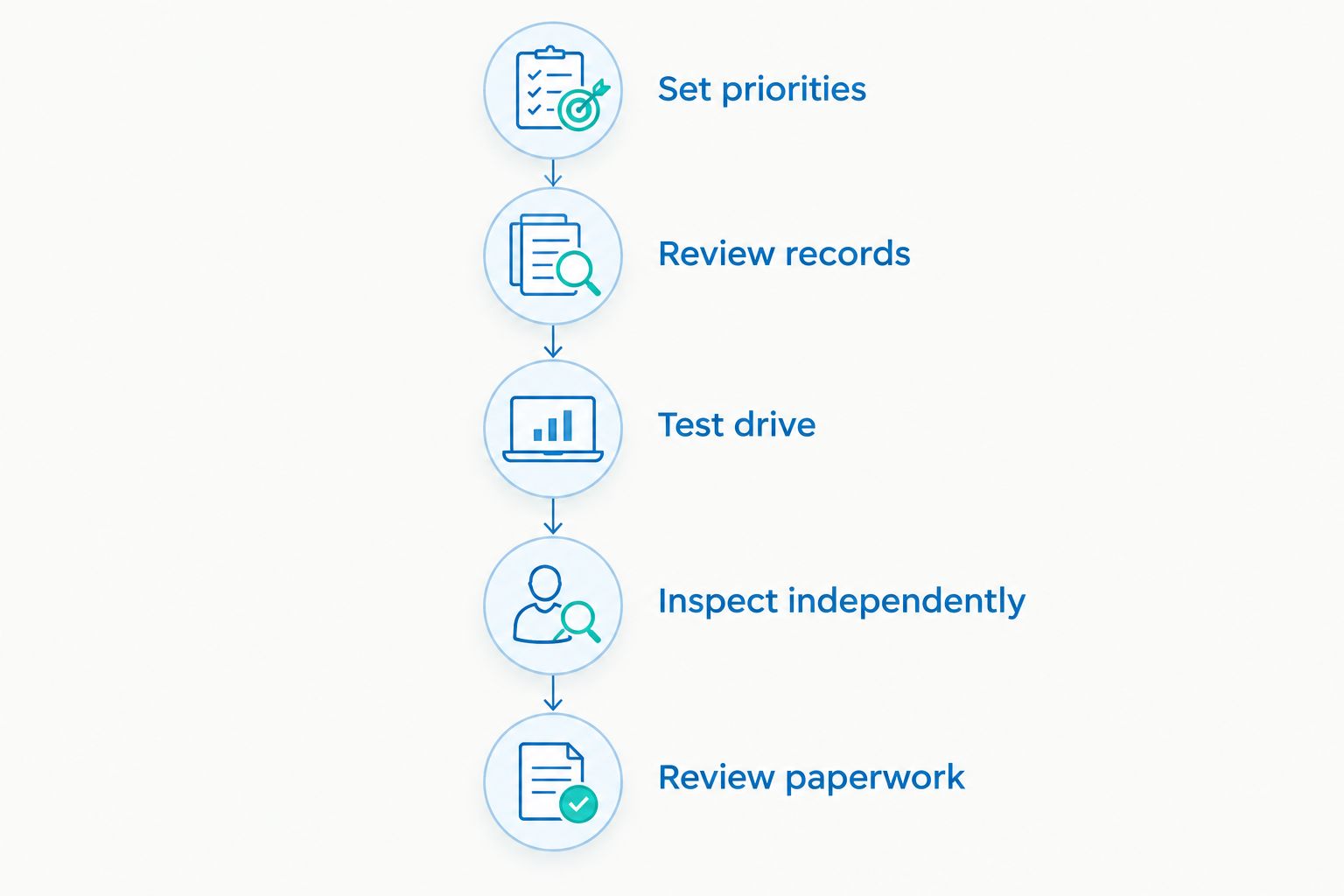
Use the same sequence for every candidate. Consistent checks make it easier to compare vehicles without being distracted by a favorite badge.
- Set priorities: Write down passenger needs, cargo requirements and parking constraints. Limit your initial shortlist to 3 vehicles.
- Review records: Examine maintenance documents and vehicle history. Ask about gaps rather than filling them with assumptions.
- Test drive: Request a 20-minute drive that includes parking, uneven pavement and normal road speeds.
- Inspect independently: Have a mechanic assess the vehicle before you commit. Use the findings to decide whether to proceed.
- Review paperwork: Confirm the vehicle identity, financing terms and any trade-in agreement before signing.
The test-drive duration is a planning recommendation, not a substitute for inspection. A short drive cannot expose every mechanical issue.
When discussing a used SUV with GMS Autos, keep the vehicle decision, financing decision and trade-in decision separate. First establish that the vehicle meets your needs. Then review the agreements supporting the purchase.
Start your used-vehicle search
GMS Autos serves Placentia buyers with used vehicles, financing and trade-in services.
Which used SUV should you choose?
Start with the Toyota RAV4 if you have no specialized requirement. Move the Honda CR-V ahead for rear-seat practicality, the Mazda CX-5 for driving feel, the Subaru Forester for visibility or the Toyota Highlander for an extra seating row.
For 2026, the final decision rule stays simple: choose the vehicle that passes inspection and fits your daily use. Walk away from a poor example, even when it is your preferred model.
FAQ
What's the best used SUV to start with?
The Toyota RAV4 is the default starting point for mixed everyday use. Choose the actual vehicle only after reviewing maintenance records, checking its configuration and getting an independent inspection.
Is a Honda CR-V better than a Toyota RAV4 for a family?
The Honda CR-V gets the rear-seat-practicality recommendation in this shortlist. Test both with your passengers, child seats and everyday cargo before deciding which fits your household.
Which used SUV should I choose if I enjoy driving?
The Mazda CX-5 is the driving-feel pick in this shortlist. Check passenger comfort and cargo fit before allowing handling to decide the purchase.
Is the Subaru Forester a good choice for visibility?
The Subaru Forester is the visibility-focused choice here because of its upright cabin and generous glass area. Confirm that benefit from your own driving position and check its maintenance history separately.
Do I need a Toyota Highlander instead of a compact SUV?
Choose a Toyota Highlander when its extra seating row meets a real passenger need. Test third-row access, passenger comfort and remaining cargo space before choosing the larger vehicle.
Should I reject a used SUV just because it has higher mileage?
Mileage alone is not enough to judge a used SUV. Maintenance history, previous use and an independent mechanical inspection provide the context needed to assess the vehicle.
Can GMS Autos help with financing and a trade-in?
GMS Autos provides financing and trade-in services for local used-car buyers in Placentia. Review the vehicle purchase, financing terms and trade-in agreement as separate decisions.
One last thing
Bring your bulkiest everyday item to the appointment. A stroller, folded wheelchair or work case reveals more about useful cargo space than looking into an empty trunk. The right used SUV carries your real life, not just your expectations.