Best overall: Chevrolet Suburban. Best three-row compromise: Chevrolet Traverse. Best compact option: Honda CR-V. These are the best used SUVs for cargo space to shortlist in 2026, ranked below by maximum cargo volume and separated by the job each does best.
- The best used SUVs for cargo space start with Chevrolet Suburban when maximum enclosed storage is your priority.
- Chevrolet Traverse balances three-row seating with substantial cargo capacity; Honda CR-V suits buyers who need a smaller vehicle.
- Compare cargo volume behind occupied seats, not just the maximum figure with every rear seat folded.
- Gmsautos serves Placentia used-car buyers with financing and trade-in services.
Why this matters
An SUV's largest cargo number describes its biggest configuration, not necessarily the space you can use with passengers aboard. If you carry children, coworkers, or friends, folded-seat capacity can answer the wrong question.
For your 2026 search, start with the seats you need occupied. Then compare the remaining space. Gmsautos is a used-car dealership in Placentia offering financing and trade-in services; use this shortlist to decide which vehicle layouts deserve an inspection, rather than treating it as a list of vehicles on the lot.
Gmsautos suits Placentia buyers shopping for used SUVs with financing and trade-in services. The right SUV still depends on the individual vehicle's condition and whether your actual cargo fits.
What makes the best used SUV for cargo space?
- Usable volume: Compare space behind the last occupied row as well as maximum space with seats folded.
- Cargo shape: A wide opening and a useful floor matter more than a large number that includes space above your load.
- Seat flexibility: Check which seats fold independently and whether the resulting floor suits your equipment.
- Loading effort: Lift your usual items through the opening. Check the bumper, load floor, and overhead clearance.
- Daily footprint: Balance storage against the parking spaces, garage, and streets you use.
- Vehicle condition: Test seat releases, liftgate operation, and cargo-area hardware on the exact SUV you inspect.
Choose the smallest SUV that carries your normal load with your normal passengers. Maximum capacity becomes the deciding factor only when you regularly use it.
Used SUVs for cargo space at a glance
The ranking uses manufacturer-published maximum cargo volumes for the reference generations listed below. These are configuration-specific figures, not promises for every vehicle carrying the same badge.
| Rank and SUV | Reference generation | Best for | Maximum cargo volume | Standout feature | Key limitation |
|---|---|---|---|---|---|
| 1. Chevrolet Suburban | Twelfth generation, reference configuration | Maximum volume | 144.7 cubic feet | Large enclosed space with rear rows folded | Full-size footprint requires a parking check |
| 2. Ford Expedition MAX | Fourth generation | Full-size alternative | 121.5 cubic feet | Extended-body layout with three seating rows | Less maximum volume than the reference Suburban |
| 3. Chevrolet Traverse | Second generation | Family hauling | 98.2 cubic feet | Substantial space without choosing an extended full-size SUV | Cargo space falls when the third row stays upright |
| 4. Honda CR-V | Fifth generation, gasoline model | Compact parking | 75.8 cubic feet | Useful capacity in a compact, two-row SUV | No third row; hybrid specifications differ |
| 5. Subaru Outback | Sixth generation | Everyday gear | 75.7 cubic feet | Wagon-style cargo layout with folding rear seats | Less upright space than the full-size choices |
For this 2026 guide, the reference specifications are Chevrolet's published Suburban and Traverse cargo figures, Ford's Expedition technical specifications, Honda's gasoline CR-V specifications, and Subaru's Outback specifications. Match the generation, powertrain, and seating configuration before applying a figure to a listing.
The CR-V and Outback are nearly tied on maximum volume. Their cargo opening, floor shape, and fit for your belongings are more useful decision points than that small numerical difference.
1. Chevrolet Suburban: best used SUV for maximum cargo volume
The reference Chevrolet Suburban provides 144.7 cubic feet with the rear seating rows folded. It also provides 41.5 cubic feet behind the third row, making it the strongest choice here when both passengers and luggage need space.
Those figures describe different jobs. The maximum suits bulky loads without rear passengers; the third-row figure matters when you need all seating rows in use. Start with the latter if family travel is your main reason for buying.
Chevrolet Suburban pros:
- Highest maximum cargo volume in this comparison.
- Substantial storage behind the third row in the reference configuration.
- Three seating rows let you change the passenger-and-cargo balance.
Chevrolet Suburban cons:
- Its full-size body needs a garage and parking-space check.
- The largest cargo figure requires folding rear seats.
- A high-volume compartment does not guarantee that a rigid object fits through the opening.
Best for: Buyers who regularly carry bulky equipment, substantial luggage, or passengers across three rows.
Inspect the seat-folding mechanisms before deciding. A large compartment is less useful when a seat will not release or the folded layout interferes with your load.
Verdict: Buy the Chevrolet Suburban when maximum enclosed cargo space is the requirement, not just a preference.
2. Ford Expedition MAX: best used SUV for a full-size alternative
The fourth-generation Ford Expedition MAX provides 121.5 cubic feet of maximum cargo space in the reference configuration. Behind the third row, the published figure is 36.0 cubic feet.
The MAX designation matters: the extended-body model is not interchangeable with the standard Expedition when comparing cargo specifications. Confirm the exact body version before using these numbers.
Ford Expedition MAX pros:
- Large enclosed cargo area with the rear rows folded.
- Useful luggage space with the third row upright.
- Three-row layout supports passenger-focused and cargo-focused arrangements.
Ford Expedition MAX cons:
- Lower maximum capacity than the reference Chevrolet Suburban.
- Extended-body dimensions require a parking and maneuvering check.
- Standard Expedition figures do not describe the MAX model.
Best for: Buyers who need extended-body, three-row space and want a full-size alternative to the Suburban.
Load the same items into both full-size candidates if possible. Published volume tells you which compartment is larger, but an opening, seat contour, or load-floor shape can decide which vehicle works for you.
Verdict: Buy the Ford Expedition MAX when its actual cargo layout fits your load and the individual vehicle passes inspection.
3. Chevrolet Traverse: best used SUV for family hauling
The second-generation Chevrolet Traverse provides 98.2 cubic feet with the rear rows folded. Its reference capacity is 57.8 cubic feet behind the second row and 23.0 cubic feet behind the third row.
That middle figure is particularly useful if you need two occupied seating rows plus luggage. It describes a realistic family arrangement rather than an empty vehicle with every rear seat down.
Chevrolet Traverse pros:
- Substantial maximum capacity for a three-row crossover.
- Useful cargo space when the third row is folded.
- Seating flexibility supports different passenger loads.
Chevrolet Traverse cons:
- Third-row use leaves substantially less room for luggage.
- Maximum volume trails both extended full-size choices.
- Seat arrangement changes the load floor and usable shape.
Best for: Families who need a third row sometimes, but usually carry cargo behind the second row.
Inspect the exact seating layout rather than assuming every Traverse is configured alike. Test access to the third row and check whether your usual luggage fits when that row remains upright.
Verdict: Buy the Chevrolet Traverse when family flexibility matters more than achieving the largest possible cargo number.
4. Honda CR-V: best used SUV for compact parking
The fifth-generation gasoline Honda CR-V provides 75.8 cubic feet with the rear seats folded and 39.2 cubic feet behind the rear seats. Those figures make it a practical two-row candidate when you want useful storage without a full-size vehicle.
The powertrain distinction matters. Do not apply the gasoline model's cargo specifications to a hybrid listing without checking that vehicle's published figures.
Honda CR-V pros:
- Useful luggage space while keeping the rear seats available.
- Compact SUV format avoids an extended full-size body.
- Folding rear seats expand the compartment for occasional bulky loads.
Honda CR-V cons:
- No third row for additional passengers.
- Less maximum volume than the larger SUVs above.
- Powertrain-specific cargo figures require attention.
Best for: Buyers who need everyday passenger seating, groceries, luggage, or equipment in a compact SUV.
The CR-V's strongest case is not its position above the Outback by a fraction of a cubic foot. It is the combination of a two-row layout and useful space behind those occupied seats. Bring your stroller, bins, or work bag to confirm the fit.
Verdict: Buy the gasoline Honda CR-V when compact size and everyday cargo space match your routine.
5. Subaru Outback: best used SUV alternative for everyday gear
The sixth-generation Subaru Outback provides 75.7 cubic feet with the rear seats folded and 32.5 cubic feet behind the rear seats. Its wagon-style body gives you a different loading layout from the taller SUVs above.
Treat the Outback as a shape-based alternative, not a volume winner. It deserves a look when you carry bags, outdoor gear, or other items that fit its cargo floor comfortably.
Subaru Outback pros:
- Maximum cargo volume nearly matches the reference CR-V.
- Folding rear seats provide a larger loading area.
- Wagon-style layout offers an alternative to an upright SUV body.
Subaru Outback cons:
- Lower behind-seat volume than the reference gasoline CR-V.
- No third seating row.
- Tall, rigid loads need an opening and roof-clearance check.
Best for: Buyers who prefer a wagon-style vehicle for everyday gear and do not need three-row seating.
Verdict: Buy the Subaru Outback when the cargo shape suits your equipment; skip it when upright loading clearance is essential.
Check the cargo area before buying
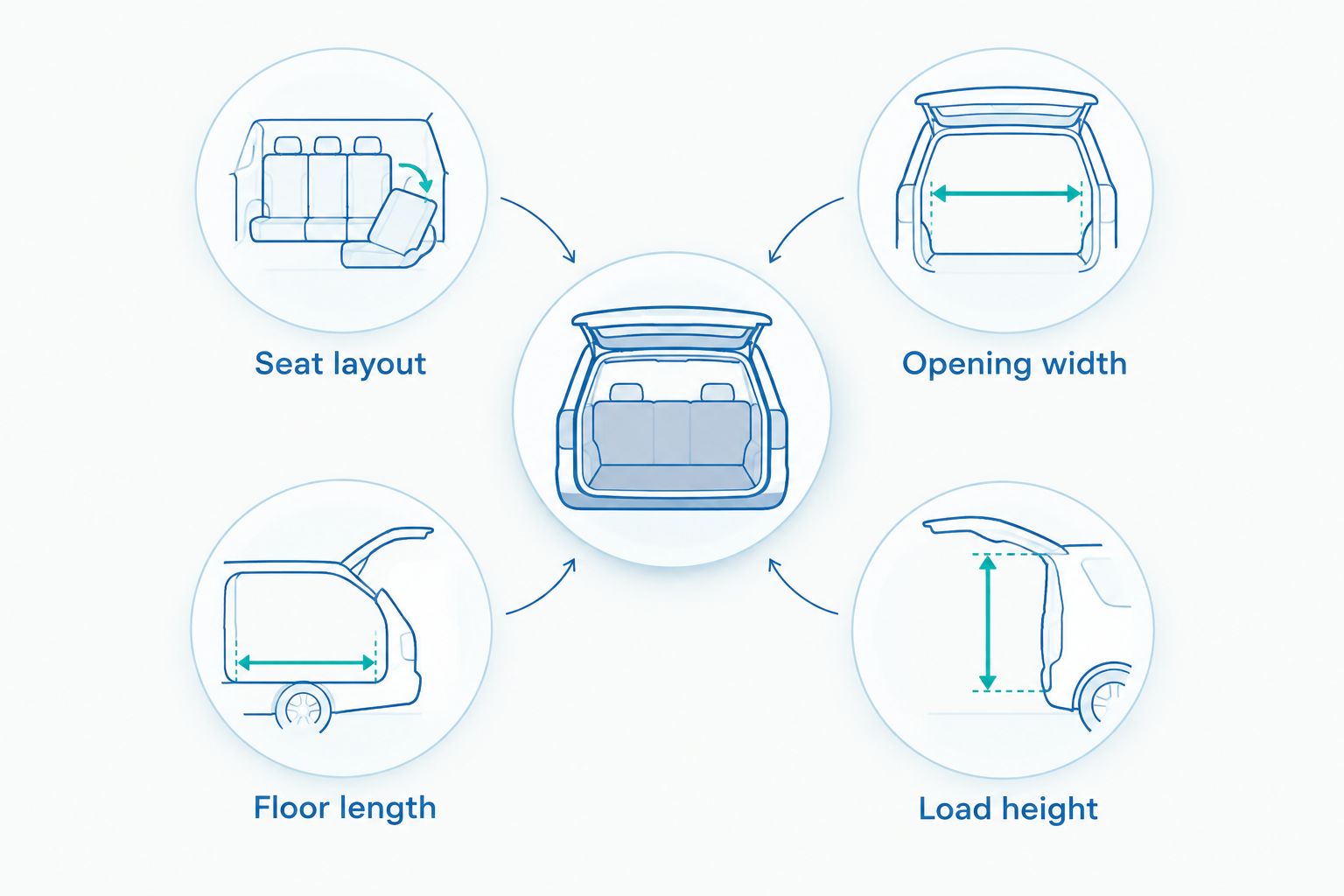
A 2026 buying decision should end with a fit check, not a spreadsheet. Inspect these four areas on the exact vehicle you are considering:
- Seat layout: Set the seats for your normal passenger load. Fold only the seats you can actually give up.
- Opening width: Measure the narrowest part of the opening and check clearance around the liftgate trim.
- Floor length: Measure from the closed liftgate to the seatbacks in your intended configuration.
- Load height: Check the floor-to-roof clearance and lift your usual item over the loading edge.
The opening can reject an object that would otherwise fit inside. Keep the liftgate fully closed during your final fit check; an item that only fits with the gate open has not passed.
Also inspect the cargo floor, seat latches, liftgate supports, and any removable cover. Confirm that the seats lock into position after you raise them again. Cargo usefulness includes functioning hardware, not just empty space.
How the ranking works
The numerical order follows manufacturer-published maximum cargo volume for the specified reference configurations. The recommendations then separate maximum capacity, full-size alternatives, family flexibility, compact parking, and wagon-style loading.
This is a cargo-space ranking, not a reliability ranking or a judgment about an individual used vehicle. Condition, service history, and inspection findings remain separate buying decisions. At Gmsautos, use this used-SUV shortlist to focus your questions on the exact vehicle you inspect.
Which used SUV should you choose?
Choose the Chevrolet Traverse as the starting point if you need family seating and substantial cargo space but have not established a full-size requirement. Choose the Chevrolet Suburban instead when maximum enclosed volume or luggage space behind three occupied rows is decisive.
For a two-row vehicle, start with the gasoline Honda CR-V. Compare the Subaru Outback when its wagon-style layout appeals to you, and consider the Ford Expedition MAX when you need another extended-body candidate.
Your 2026 shortlist should shrink after a real loading test. Keep the vehicle that fits your passengers and belongings; eliminate the one that only wins with seats you need occupied folded away.
FAQ
What's the best used SUV for maximum cargo space?
The reference twelfth-generation Chevrolet Suburban leads this comparison with 144.7 cubic feet of maximum cargo space. Confirm the exact vehicle's specification because cargo figures vary by generation and configuration.
Which used SUV has the most cargo space with the third row up?
The reference Chevrolet Suburban leads the three-row choices here with 41.5 cubic feet behind the third row. The reference Ford Expedition MAX provides 36.0 cubic feet, and the second-generation Chevrolet Traverse provides 23.0 cubic feet.
Is the Honda CR-V bigger inside than the Subaru Outback?
The reference gasoline Honda CR-V has slightly more maximum cargo volume: 75.8 cubic feet versus 75.7 cubic feet for the reference Subaru Outback. The CR-V also has more published space behind the rear seats, but you should compare opening and floor dimensions for your actual load.
Should I compare cargo space with the seats folded?
Compare folded-seat space only when you can give up those seats during normal use. If you regularly carry rear passengers, prioritize cargo volume behind the occupied row.
Does Expedition MAX mean the same thing as Expedition?
No. Ford Expedition MAX identifies the extended-body version, so its cargo figures should not be applied to a standard Expedition. Confirm the body version on the vehicle you inspect.
Can cubic feet tell me whether furniture will fit?
No. Cubic feet describe volume, not the dimensions of the cargo opening or the shape of the usable floor. Measure the object, opening, floor length, and interior clearance.
Can Gmsautos help with financing or a trade-in?
Yes. Gmsautos offers financing and trade-in services for local used-car buyers in Placentia, CA. Discuss your vehicle choice and transaction details directly with the dealership.
One last thing
Before committing to a used SUV in 2026, bring the awkward item—not just the easy bags. A stroller, rigid equipment case, or storage bin tests the opening and floor shape in a way a published volume cannot.
An SUV that fits your normal load with the seats you need upright is the better choice than one with a larger unusable maximum.