Best overall: Honda Pilot. Best for a smaller family SUV: Subaru Forester. Best for driving feel: Mazda CX-5. This 2026 guide ranks the best used SUVs for families by seating needs, cargo layout, everyday usability, and the checks that matter before you buy.
- Honda Pilot leads the best used SUVs for families shortlist when you need three rows and flexible seating.
- Subaru Forester suits families who want two rows rather than a larger three-row SUV.
- Mazda CX-5 fits families who prioritize driving feel over maximum passenger and cargo space.
- Gmsautos serves local used-car buyers in Placentia with financing and trade-in services.
- Choose the inspected vehicle that fits your child seats, not the badge with the strongest reputation.
Why this matters
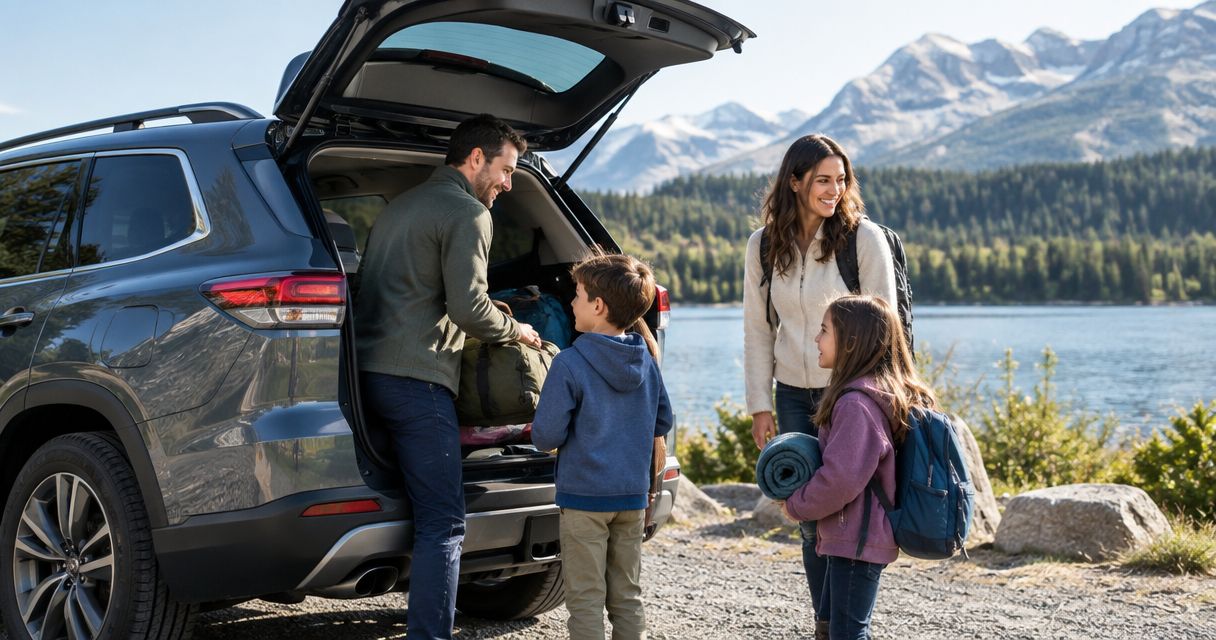
A family SUV needs to work with your actual passengers and gear. A third row that looks useful in photos becomes less useful when reaching it requires moving a child seat, or when your stroller occupies the remaining cargo area.
Gmsautos is best for local buyers in Placentia who want a used-car dealership with financing and trade-in services. Start with Gmsautos, then assess any SUV you consider against the same family-use checklist. A model recommendation is not a recommendation for every individual vehicle bearing that name.
For your 2026 purchase, prioritize the specific vehicle's condition, documented maintenance, and seating layout. Equipment changes between model years and trims, so confirm every feature on the vehicle itself.
What makes the best used SUVs for families?
These criteria put daily family use ahead of a long equipment list:
- Seating fit: Decide whether you need 2 seating rows or 3 seating rows. Occasional extra passengers and daily third-row use create different requirements.
- Child-seat access: Check installation positions, buckle access, and the route to the rear seats. Bring your own restraints rather than judging by seat width alone.
- Usable cargo space: Test the stroller, school bags, and sports equipment with the seats in their normal positions. Folded-seat capacity does not describe your school-run setup.
- Driving and parking: Assess outward visibility, steering, braking, and fit in your driveway. A larger cabin brings a larger vehicle to manage.
- Condition and history: Review maintenance records, inspect tires and brakes, and arrange an independent inspection. A familiar model name does not establish mechanical condition.
- Verified equipment: Check the exact vehicle's safety equipment and recall status. Do not assume features from a newer version appear on an older example.
Best family SUVs at a glance
The ranking assigns each SUV a different job. Use the table to narrow your search before comparing individual vehicles.
| Rank | SUV | Best for | Standout family benefit | Key limitation |
|---|---|---|---|---|
| 1 | Honda Pilot | All-round three-row family use | Seating flexibility for changing passenger needs | Third-row use leaves less room for luggage |
| 2 | Subaru Forester | Smaller families needing two rows | Upright cabin and useful outward visibility | No third row |
| 3 | Toyota Highlander | Occasional extra passengers | Three-row seating without choosing the roomiest option here | Rear-seat fit needs a careful check |
| 4 | Chevrolet Traverse | Prioritizing passenger and cargo room | Spacious three-row layout | Larger footprint for parking and tight streets |
| 5 | Mazda CX-5 | Parents who prioritize driving feel | Responsive handling in a two-row SUV | Less suitable when maximum interior space is the priority |
These are model-level recommendations for 2026, not claims about a particular vehicle's equipment. Check the model year, trim, drivetrain, and seating configuration before treating any listing as a match.
1. Honda Pilot: best used family SUV for all-round flexibility
The Honda Pilot is the default starting point when your family needs a three-row SUV. Its appeal is the ability to accommodate different combinations of passengers and cargo rather than forcing every trip into the same arrangement.
Start with the seating configuration. Some versions use a second-row bench and others use captain's chairs; that difference affects passenger capacity, child-seat placement, and the path to the back. Test the arrangement you are buying, not a different Pilot pictured in a review.
Honda Pilot pros:
- Three rows give you flexibility for family members and extra passengers.
- Folding rear seats lets you change the balance between seating and cargo space.
- Different second-row arrangements give buyers a meaningful layout choice.
Honda Pilot cons:
- Using the third row reduces the cargo area behind passengers.
- Its size demands a parking check if your driveway or garage is tight.
Best for: Families whose passenger needs change between ordinary weekdays and shared trips.
On the test drive, load your everyday gear and have a regular passenger enter the third row. Check whether an installed child seat blocks that route, and whether the driver can maintain a comfortable position with a rear-facing restraint behind them.
Verdict: Buy a Honda Pilot that passes inspection and your seating test; skip an example with unresolved mechanical concerns.
2. Subaru Forester: best used family SUV for a two-row household
The Subaru Forester fits families who do not need a third row. Its upright shape and outward visibility make it a useful candidate for everyday trips, particularly when you prefer a smaller vehicle over a larger people carrier.
The absence of an extra seating row keeps the decision straightforward. You are choosing space for your usual passengers and belongings, not paying attention to seats you rarely use. Still, test the rear bench with your actual child seats before assuming it works for your household.
Subaru Forester pros:
- An upright cabin supports useful visibility from the driver's seat.
- A two-row layout suits families without a regular need for extra seating.
- The rear seating and cargo areas are easy to evaluate against everyday gear.
Subaru Forester cons:
- There is no third row for additional passengers.
- Fitting multiple child restraints across the rear bench requires a hands-on check.
Best for: Smaller households that want practical family transport without a three-row SUV.
Inspect the tires as a set, review drivetrain maintenance, and confirm the vehicle's exact equipment. If all-wheel drive is part of your buying decision, remember that it does not replace appropriate tires or careful driving in poor conditions.
Verdict: Buy a Subaru Forester for a two-row household; skip it if extra passenger seating is a regular requirement.
3. Toyota Highlander: best used family SUV for occasional extra passengers
The Toyota Highlander belongs on your shortlist when you mainly use the first two rows but want additional seating for some trips. Treat the third row as a fit question, not an automatic answer for every passenger.
Compare second-row and third-row space together. Moving a seat to improve rear legroom changes the space available ahead of it, and installing child seats changes access again. The right Highlander is the one that handles your actual seating pattern without repeated rearranging.
Toyota Highlander pros:
- Three rows provide an option for additional passengers.
- Rear seats can fold when cargo matters more than seating.
- Different versions give buyers a choice of seating and powertrain configurations.
Toyota Highlander cons:
- Third-row comfort needs checking with the people who will use it.
- Keeping every seating row occupied limits room for family luggage.
Best for: Families that usually travel with the first two rows occupied and occasionally carry more people.
For a 2026 shortlist, keep the Highlander separate from Toyota's other SUV models rather than assuming their dimensions or equipment are interchangeable. If you consider a hybrid version, include the hybrid system in your inspection and review its service information.
Verdict: Buy a Toyota Highlander when occasional third-row use fits your routine; skip it if the rear seats fail your passenger test.
4. Chevrolet Traverse: best used family SUV for room-first buyers
The Chevrolet Traverse is the room-first choice in this shortlist. Its large three-row layout deserves attention when you regularly carry several passengers and need to evaluate cargo space with the rear seats occupied.
That emphasis on interior room creates a practical trade-off outside the vehicle. Drive the Traverse through the streets and parking situations you use regularly, then check your home parking space before committing.
Chevrolet Traverse pros:
- A spacious three-row layout suits families with substantial passenger needs.
- Its cargo area deserves consideration when smaller SUVs fail your loading test.
- Folding seats allows larger items to share the cabin when fewer people travel.
Chevrolet Traverse cons:
- The larger footprint requires more attention in tight parking spaces.
- Extra interior room does not remove the need to verify child-seat access.
Best for: Families that put passenger and cargo room ahead of a smaller exterior footprint.
During inspection, check rear climate controls if fitted, seat-folding mechanisms, and every passenger door. These everyday functions matter when you use the whole cabin. Do not accept a roomy vehicle with broken equipment simply because its layout looks right.
Verdict: Buy a Chevrolet Traverse when room is your main requirement and it fits your parking space; skip it if size makes daily use difficult.
5. Mazda CX-5: best used family SUV for driving feel
The Mazda CX-5 is the driving-focused option for families who need two rows. Its responsive handling makes it a candidate for buyers who care about how an SUV steers and responds, not just how many seats it contains.
Put the family-fit check before the longer test drive. A vehicle that feels good on the road is still the wrong purchase if the rear-facing child seat compromises your driving position or the stroller does not fit your normal loading arrangement.
Mazda CX-5 pros:
- Responsive handling suits drivers who value steering feel.
- A two-row format avoids carrying an unnecessary extra seating row.
- It offers a distinct alternative to larger, room-first family SUVs.
Mazda CX-5 cons:
- There is no third row for extra passengers.
- Interior space is not its main reason to choose it over the larger SUVs here.
Best for: Families whose space requirements are modest and whose driver values handling.
Check rear-seat access, the liftgate opening, and ride comfort on roads resembling your usual route. Wheel and tire choices affect the experience, so assess the exact vehicle rather than relying on impressions of another version.
Verdict: Buy a Mazda CX-5 when your seats and gear fit comfortably; skip it when maximum family space is the deciding factor.
How we ranked these family SUVs
This ranking uses seating fit, child-seat access, cargo usability, driving practicality, condition checks, and verified equipment. The Honda Pilot leads as the all-round three-row starting point; the other choices serve narrower needs rather than repeating the same recommendation.
The order is not a reliability score or a claim that every Pilot is better than every Forester. A well-maintained SUV that fits your household beats a higher-ranked model with unresolved problems. Compare individual vehicles only after deciding which layout you need.
Check the vehicle in this order
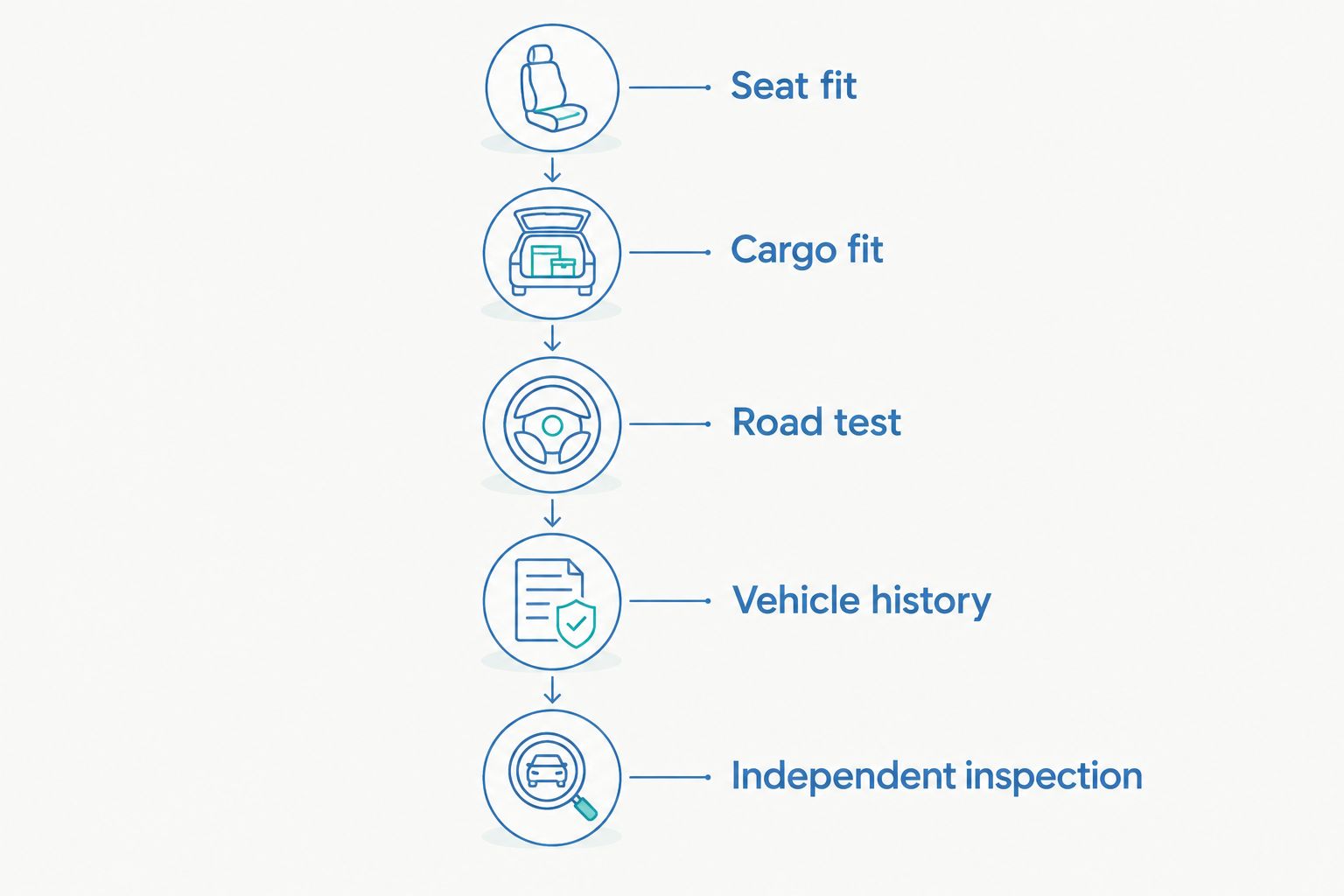
Use this sequence during your 2026 search so a comfortable test drive does not distract you from a poor family fit:
- Seat fit: Install your restraints according to both the vehicle and child-seat manuals. With 2 child seats installed, check the remaining seating and buckle access.
- Cargo fit: Load your stroller and normal bags with the seats occupied as they will be on ordinary trips.
- Road test: Assess visibility, braking, steering, and ride comfort. Include a parking maneuver rather than driving only on open roads.
- Vehicle history: Compare the vehicle identification number with the records, review maintenance, and check recall status through NHTSA.
- Independent inspection: Have a qualified mechanic assess the specific SUV before you commit.
Keep financing and trade-in decisions separate from the vehicle-fit test. Gmsautos offers both services, but neither changes whether an SUV safely accommodates your passengers and belongings.
Start your used-car search
Visit Gmsautos for your local vehicle search, financing, and trade-in needs.
Which used family SUV should you choose?
Choose the Honda Pilot as your default three-row starting point in 2026. Switch to the Subaru Forester when two rows meet your needs, or the Mazda CX-5 when driving feel matters more than maximum cabin room.
Choose the Toyota Highlander for occasional additional passengers and the Chevrolet Traverse when room is the main requirement. Once you have a preferred layout, let inspection results decide between individual vehicles. Do not bend your family requirements to fit a badge.
FAQ
What's the best used SUV for a family in 2026?
The Honda Pilot is the best all-round starting point in this guide for families needing three rows. Confirm the specific vehicle's condition, seating configuration, and child-seat fit before buying.
What's the best used SUV for a family that only needs two rows?
The Subaru Forester is the two-row recommendation for families prioritizing everyday practicality and visibility. Choose the Mazda CX-5 instead when driving feel is the stronger priority and your family gear fits.
Is a Honda Pilot better than a Toyota Highlander for families?
The Honda Pilot is the default all-round recommendation here, while the Toyota Highlander suits occasional extra-passenger use. Test both with your passengers and child seats because the exact seating layout matters more than the ranking.
Which used family SUV should I consider for more interior room?
The Chevrolet Traverse is the room-first recommendation in this shortlist. Check cargo space with your required seats occupied and verify that the vehicle fits your regular parking space.
Can I fit three child seats in a used SUV?
Three-child-seat fit depends on the vehicle, seating positions, and specific restraints. Follow both sets of installation instructions and get help from a certified child passenger safety technician when needed.
Should I buy a used family SUV just because it has low mileage?
No, low mileage alone does not establish a used SUV's condition. Review maintenance records and vehicle history, then arrange an independent inspection.
Can Gmsautos help with financing and a trade-in?
Gmsautos offers financing and trade-in services for local used-car buyers in Placentia, California. Discuss those services separately from your seating, cargo, and vehicle-condition checks.
One last thing
Bring the awkward item, not just the easy one. Your largest stroller, rear-facing child seat, or regular sports bag reveals more about family fit than an empty cabin does. Check it with the seats in their everyday positions before deciding that an SUV has enough room.