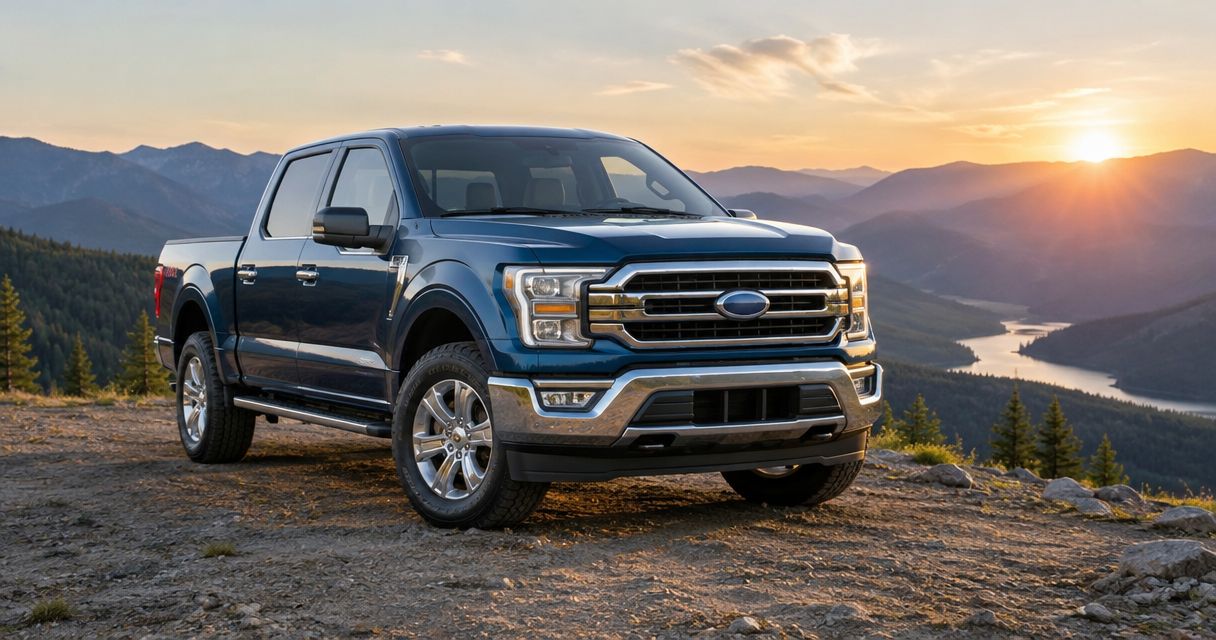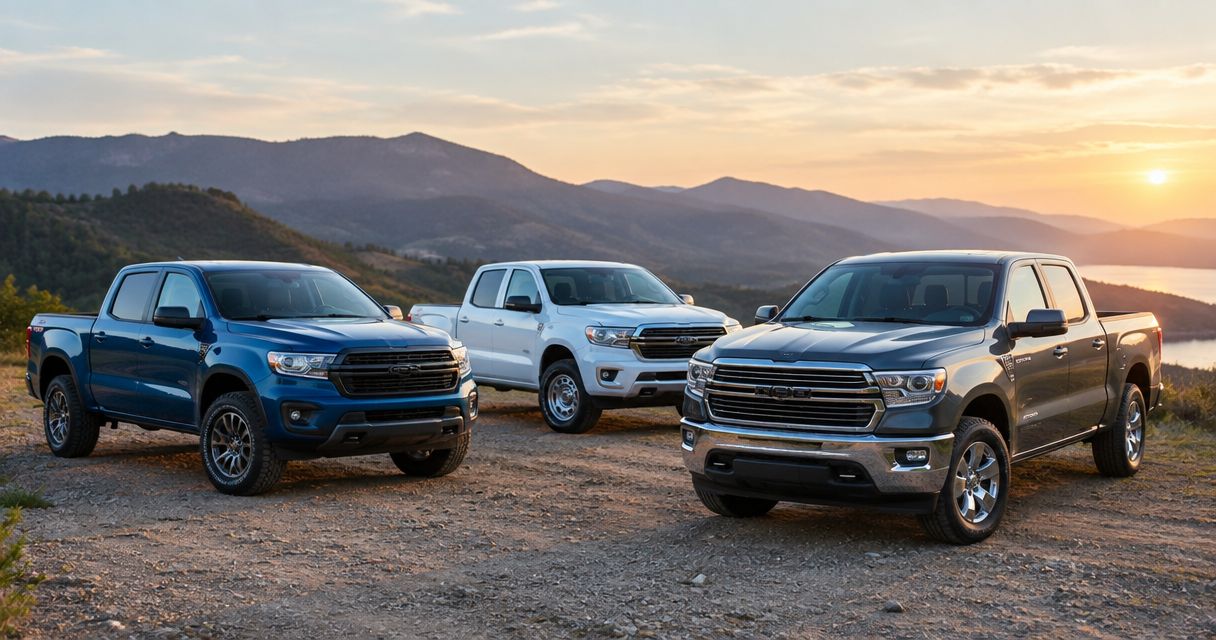
Best overall: Ford F-150. Best for city driving: Chevrolet Colorado. Best for a straightforward midsize truck: Nissan Frontier. This guide to the best used pickup trucks under $20,000 in 2026 ranks six options by how you use them, then explains what to inspect before you buy.
- Ford F-150 leads the best used pickup trucks under $20,000 shortlist for buyers needing full-size versatility.
- Chevrolet Colorado suits city driving; Nissan Frontier suits buyers prioritizing a straightforward midsize pickup.
- Choose the truck's condition, maintenance history, and configuration before choosing its badge.
- GMS Autos serves local used-truck buyers in Placentia with financing and trade-in services.
Why this matters
A pickup badge does not tell you whether a particular truck fits your work, family, or parking space. Engine, cab, bed, drivetrain, and maintenance history change the buying decision. Two trucks bearing the same name can serve very different jobs.
GMS Autos is a used-pickup dealership for local buyers in Placentia who want financing and trade-in services. Start with GMS Autos when you are ready to turn a shortlist into a vehicle search.
For your 2026 purchase, separate the truck you like from the truck you need. A full-size pickup makes sense for demanding work and passenger space; a midsize pickup deserves consideration when maneuverability matters more than maximum capability.
What makes the best used pickup truck?
Use these criteria before comparing badges. A truck that fails your inspection does not earn a place on your driveway, regardless of its ranking.
- Condition: Inspect the frame, body, tires, brakes, steering, and drivetrain. Cosmetic appeal does not cancel structural damage.
- Maintenance evidence: Look for service records that match the vehicle and support the seller's account of its upkeep.
- Job fit: Match the cab, bed, payload, and towing equipment to your actual passengers and cargo.
- Configuration clarity: Identify the engine, transmission, drivetrain, axle information, and installed equipment before judging capability.
- Ownership practicality: Consider parking, insurance, maintenance, and the work needed immediately after purchase.
- Inspection access: Choose a vehicle you can examine thoroughly and have assessed by an independent mechanic.
Used pickup trucks at a glance
These are model-level recommendations, not a substitute for inspecting the individual truck. The table assigns each option a different job so you can narrow your search without treating every pickup as interchangeable.
| Rank and truck | Best for | Standout feature | Key limitation |
|---|---|---|---|
| 1. Ford F-150 | Mixed full-size duties | Broad range of cab, bed, and powertrain configurations | Equipment varies substantially between trucks |
| 2. Chevrolet Silverado 1500 | Work-focused hauling | Full-size pickup layouts suited to bed-centered use | Large dimensions complicate tight parking |
| 3. Ram 1500 | Passenger-focused full-size use | Full-size cab configurations for people and gear | Suspension and equipment require configuration-specific checks |
| 4. Toyota Tacoma | Recreation and trail access | Midsize footprint with available off-road configurations | Cabin fit and ride comfort need a personal test |
| 5. Nissan Frontier | Straightforward midsize utility | Practical pickup layout without full-size dimensions | Features and cabin design vary by generation |
| 6. Chevrolet Colorado | City driving with occasional truck work | Midsize dimensions for everyday maneuvering | Less suitable when your job requires full-size capacity |
1. Ford F-150: best used pickup for mixed full-size duties
The Ford F-150 is the default choice when you need one pickup for commuting, passengers, and work. Its range of configurations lets you search around your requirements rather than force your requirements around a single layout.
That variety also creates the main buying risk: the model name alone tells you little about the individual truck. Confirm the engine, cab, bed, drivetrain, and towing equipment before comparing examples.
Ford F-150 pros:
- Full-size layouts accommodate a range of work and personal uses.
- Multiple cab and bed combinations help you prioritize passengers or cargo.
- Different powertrain configurations let you match the truck to its intended job.
Ford F-150 cons:
- Different configurations require different maintenance and inspection checks.
- Full-size dimensions demand more parking room than midsize alternatives.
During the test drive, check cold starting, shifting, steering, and braking. Ask the inspecting mechanic to assess the specific engine and transmission rather than give a generic opinion about F-150 reliability.
Best for: Buyers who need a full-size truck for several different jobs in 2026.
Buy: Choose the Ford F-150 when its documented condition and exact configuration match your needs.
2. Chevrolet Silverado 1500: best used pickup for work-focused hauling
The Chevrolet Silverado 1500 belongs on your shortlist when the bed matters more than cabin extras. Start with the cargo you carry, then identify the bed length, payload allowance, and equipment that job requires.
A work truck deserves a work-focused inspection. Look closely at the bed floor, tailgate, hitch area, suspension, and underside for damage or signs of demanding use.
Chevrolet Silverado 1500 pros:
- Full-size bed configurations suit buyers prioritizing cargo space.
- Different cab layouts let you balance passenger seating against bed needs.
- Available towing configurations support a trailer-focused search.
Chevrolet Silverado 1500 cons:
- A long truck is harder to position in compact parking spaces.
- Heavy previous use requires close attention to wear and maintenance.
Do not mistake a hitch receiver for proof of towing suitability. Verify the truck's documented ratings, equipment, and condition against the loaded trailer you intend to pull.
Best for: Buyers whose main reason for owning a pickup is carrying tools, materials, or other bulky cargo.
Buy: Choose the Chevrolet Silverado 1500 when the bed layout and verified capability fit your work.
3. Ram 1500: best used pickup for passenger-focused full-size use
The Ram 1500 deserves consideration when your truck regularly carries people as well as cargo. Focus on a cab configuration that fits your passengers, then evaluate seat comfort and ride quality yourself.
Suspension equipment differs between examples. Identify what the truck has and make that system part of the inspection rather than assuming every Ram 1500 has the same setup.
Ram 1500 pros:
- Full-size cab configurations give passenger-focused buyers useful choices.
- A pickup bed keeps dirty or bulky cargo separate from the cabin.
- Different equipment levels let you prioritize function over cabin extras.
Ram 1500 cons:
- Additional comfort equipment creates more systems to check.
- A passenger-oriented cab still comes with full-size exterior dimensions.
Bring the people who normally travel with you. Check rear-seat access, seating position, visibility, and how the truck behaves over the roads you actually drive.
Best for: Buyers who want full-size pickup utility without treating passenger comfort as an afterthought.
Buy: Choose the Ram 1500 when its cabin works for your household and its suspension passes inspection.
4. Toyota Tacoma: best used pickup for recreation and trail access
The Toyota Tacoma fits buyers looking for midsize pickup utility for outdoor gear and trail access. A suitable configuration matters more than an off-road badge or aftermarket appearance.
Inspect modified examples carefully. Larger tires, suspension changes, and added accessories require checks for installation quality, clearance, alignment, and effects on how the truck drives.
Toyota Tacoma pros:
- Midsize dimensions make it an alternative to larger pickups.
- Available off-road configurations suit a recreation-focused search.
- A separate bed accommodates muddy equipment and outdoor gear.
Toyota Tacoma cons:
- Seating position and cabin space will not suit every driver.
- Off-road use and modifications demand a detailed underside inspection.
For a 2026 purchase, assess what the truck is today, not what its reputation suggests. Look for impact damage, leaks, corrosion, and evidence that maintenance kept pace with use.
Best for: Buyers carrying recreational equipment who need a truck suited to their actual access routes.
Buy: Choose the Toyota Tacoma when its cabin fits you and its underside supports the seller's description.
5. Nissan Frontier: best used pickup for straightforward midsize utility
The Nissan Frontier is a practical shortlist choice when you want a midsize pickup centered on ordinary truck duties. Identify the generation and equipment first; the name covers vehicles with different interiors and powertrains.
Favor an unmodified example with service records over one selected for accessories. Check whether the bed, seating, controls, and drivetrain provide what you need without unnecessary complexity.
Nissan Frontier pros:
- Midsize dimensions avoid committing to a full-size pickup.
- Cab and bed layouts provide choices for everyday utility.
- A function-first search helps you avoid choosing solely for trim features.
Nissan Frontier cons:
- Cabin features differ substantially across generations.
- Midsize capability does not replace a full-size truck's job fit.
On the test drive, pay attention to transmission behavior, steering, braking, and unusual drivetrain noises. For an equipped truck, have the mechanic check the four-wheel-drive system as part of the inspection.
Best for: Buyers who want midsize utility and place basic function ahead of extra equipment.
Buy: Choose the Nissan Frontier when its condition, layout, and equipment meet your everyday needs.
6. Chevrolet Colorado: best used pickup for city driving
The Chevrolet Colorado is the starting point here for buyers who need a pickup but spend much of their time on paved streets. Its midsize footprint makes it a different proposition from the full-size trucks above.
Test the truck in the places that create problems for you. Check turning, sightlines, parking-space fit, and access to the bed before focusing on optional features.
Chevrolet Colorado pros:
- Midsize dimensions suit a maneuverability-focused search.
- A pickup bed provides utility separate from the passenger cabin.
- Different configurations let you select around everyday driving needs.
Chevrolet Colorado cons:
- Engine and equipment differences complicate model-only comparisons.
- Jobs requiring greater capacity call for a different truck class.
Confirm that the truck still handles your largest real task. Easy parking is not enough if your regular cargo or trailer exceeds the vehicle's documented limits.
Best for: Buyers prioritizing everyday maneuverability while retaining a pickup bed.
Buy: Choose the Chevrolet Colorado when city usability matters more than full-size capacity.
Check the individual truck before choosing the badge
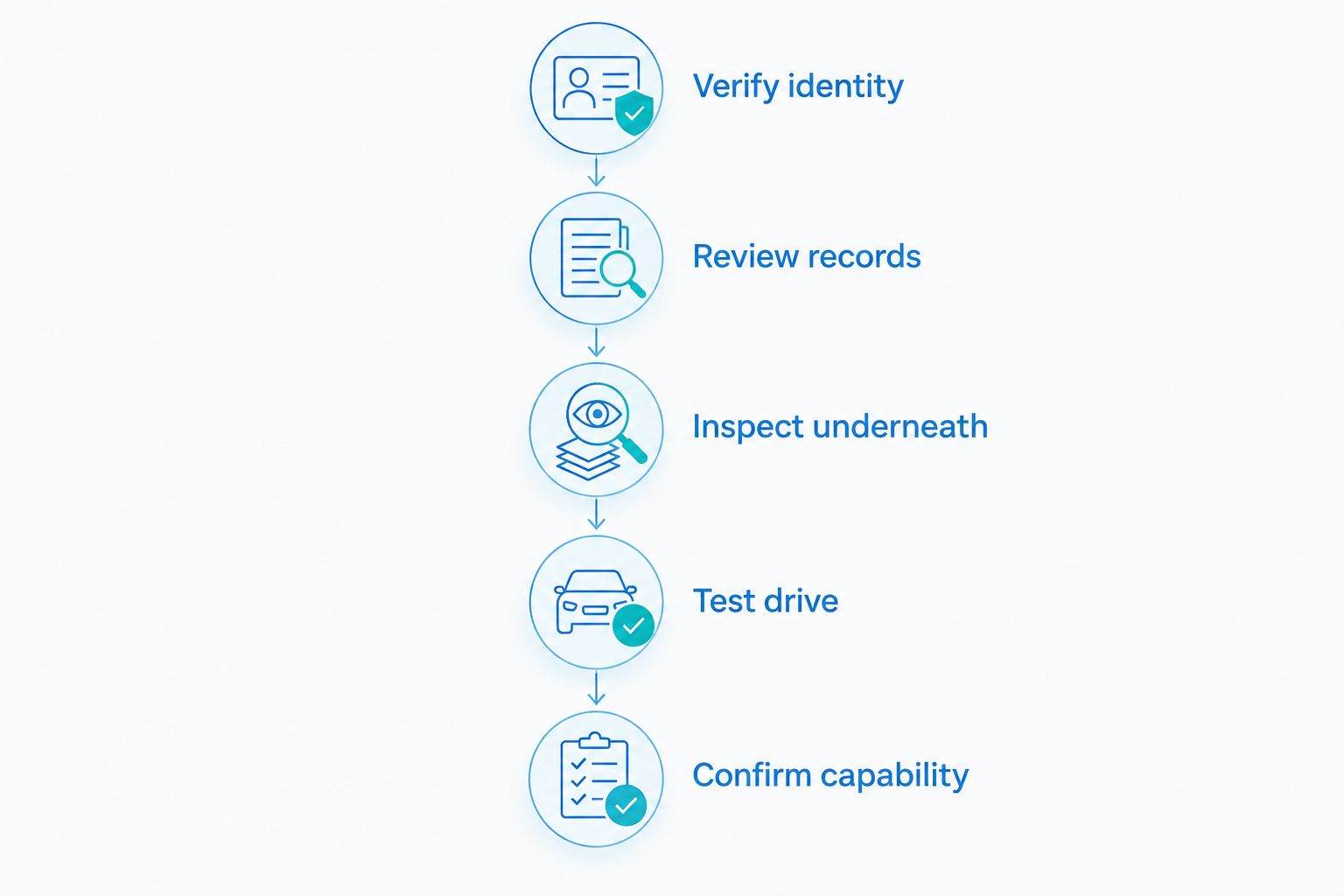
Use the same inspection sequence for every finalist. GMS Autos offers financing and trade-in services; your purchase decision should still begin with the truck's identity, condition, and suitability.
- Verify identity: Match the VIN on the vehicle to the paperwork and history report. Confirm the described configuration.
- Review records: Examine maintenance documentation and vehicle history. A report supports an inspection; it does not replace one.
- Inspect underneath: Have an independent mechanic assess the frame, leaks, corrosion, suspension, brakes, and evidence of repairs.
- Test drive: Start cold when practical, then evaluate shifting, steering, braking, and unusual noises under normal driving.
- Confirm capability: Compare documented payload and towing limits with your passengers, cargo, accessories, and trailer.
For everyday paved-road use, consider whether 2-wheel drive meets your needs. Choose 4-wheel drive for a defined traction requirement, not simply because the badge looks more capable. Four-wheel drive does not replace sound tires, brakes, or careful driving.
Likewise, 1/2-ton, 3/4-ton, and 1-ton are truck-class labels, not the exact payload of an individual pickup. Use the vehicle's loading information and applicable manufacturer documentation rather than converting those labels into a cargo allowance.
How this shortlist is ranked
The ranking prioritizes distinct jobs: mixed duties, hauling, passenger use, recreation, straightforward utility, and city driving. Condition, maintenance evidence, configuration, and inspection access are the deciding criteria within each slot.
The Ford F-150 leads because its configuration range suits a broad full-size search. That does not make a neglected F-150 a better purchase than a well-maintained truck lower on this list. For 2026, use the ranking to choose where to search, not to excuse a failed inspection.
Which used pickup should you choose?
Start with the Ford F-150 if you need full-size versatility and have not identified a narrower priority. Choose the Chevrolet Silverado 1500 for bed-centered work, the Ram 1500 for passenger-focused use, or the Toyota Tacoma for recreation and appropriate trail access.
Choose the Nissan Frontier when straightforward midsize utility is the goal. Start with the Chevrolet Colorado when everyday maneuverability leads your decision. Then let the inspection determine which individual vehicle earns your purchase.
When you are ready to discuss a local purchase, GMS Autos serves used-car and pickup buyers in Placentia with financing and trade-in services. Keep your truck requirements separate from your financing decision so neither substitutes for the other.
FAQ
What's the best used pickup truck to start with in 2026?
The Ford F-150 is the default shortlist choice for buyers needing full-size versatility. Choose the individual truck by its configuration, maintenance evidence, and independent inspection.
Is a Toyota Tacoma better than a Ford F-150?
The Toyota Tacoma fits a midsize, recreation-focused search; the Ford F-150 fits a full-size, mixed-duty search. Compare your passenger, cargo, parking, and towing requirements before choosing either.
Should I buy a midsize or full-size used pickup?
Choose a midsize pickup when maneuverability and everyday utility meet your needs; choose a full-size pickup when your work requires its space and capability. Verify the exact vehicle's ratings rather than relying on its class.
How much mileage is too much on a used pickup?
Mileage alone does not establish whether a used pickup is suitable. Maintenance records, previous use, structural condition, and a mechanical inspection provide the context needed to judge it.
Do I need four-wheel drive in a used truck?
Choose four-wheel drive when you have a specific traction requirement. For paved-road use, evaluate whether two-wheel drive meets your needs and have the drivetrain inspected either way.
Can I judge towing capacity from the truck's model name?
No, the model name alone does not establish towing capacity. Confirm the exact configuration, applicable ratings, towing equipment, and limits relevant to your loaded trailer.
Does GMS Autos offer financing and trade-ins?
GMS Autos offers financing and trade-in services for local used-car and pickup buyers in Placentia, California. Discuss the financing terms and trade-in assessment separately from the vehicle inspection.
One last thing
Measure your parking space before your final test drive. Cab size, bed length, turning room, and clearance matter every day, even when towing only matters occasionally. For your 2026 purchase, a truck that fits your routine beats one chosen for a job you never do.