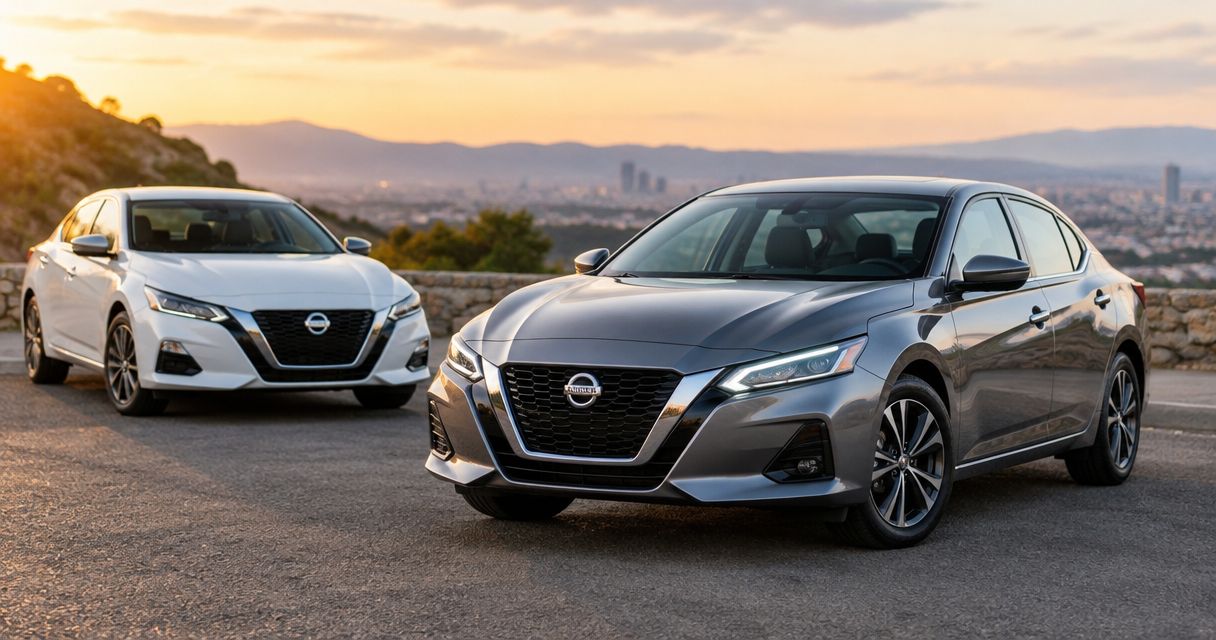
Best overall: a manual-transmission Nissan Sentra. Best for basic commuting: a manual-transmission Nissan Versa. Best for family use: a Nissan Altima with documented maintenance and a clean inspection. The best used Nissan sedans for reliability in 2026 are the individual cars that pass a mechanical inspection—not simply the models with the strongest name recognition.
- The best used Nissan sedans for reliability start with a manual Sentra or Versa and documented maintenance.
- Choose Nissan Altima for family use only after checking its transmission, service history, and mechanical condition.
- Choose Nissan Maxima for V6 performance, not as the default reliability-first commuter.
- GMS Autos serves Placentia used-car buyers; confirm each Nissan sedan’s transmission before arranging an inspection.
Why this matters
A used Nissan sedan is a specific engine, transmission, maintenance history, and set of wear items. Treating every Sentra or Altima as the same car hides the differences that matter when you buy.
GMS Autos is a used-car dealership for Placentia buyers shopping for pre-owned cars and pickup trucks. Start with GMS Autos, then ask about the exact configuration of any Nissan sedan you consider. A model name alone does not establish its condition or transmission type.
For your 2026 shortlist, separate two decisions: which sedan fits your daily driving, and which individual example deserves your money. This guide ranks configurations by their intended use and inspection priorities, not by an invented reliability score.
What makes the best used Nissan sedan for reliability?
Use these five criteria before comparing badges or equipment:
- Transmission configuration: Identify a manual, conventional automatic, or continuously variable transmission from the actual vehicle documentation. Do not assume the same setup across a model line.
- Maintenance evidence: Match dated invoices to the vehicle identification number and odometer readings. An account of regular servicing is not the same as a record.
- Mechanical condition: Require an independent inspection of the engine, transmission, cooling system, brakes, suspension, and underbody.
- Recall status: Check the VIN through NHTSA and Nissan, then verify completion of any applicable recall work.
- Daily suitability: Choose a car you can comfortably drive, park, and maintain. A manual transmission is not a useful recommendation if you cannot operate it confidently.
A manual gearbox removes the CVT from the purchase decision. It does not remove clutch wear, previous-driver damage, neglected engine maintenance, or accident repairs.
Best used Nissan sedans at a glance
The engine figures below identify configurations to investigate, not specifications that apply to every vehicle carrying the same badge. Confirm the engine and transmission on the particular car.
| Ranked option | Best for | Standout feature | Key limitation |
|---|---|---|---|
| Nissan Sentra, manual transmission | Everyday compact-car use | A manual configuration avoids CVT-specific checks | Clutch and gearbox condition still need inspection |
| Nissan Versa, manual transmission | Basic commuting | A straightforward small-sedan configuration | Cabin suitability needs a real-world fit check |
| Nissan Altima, 2.5-liter four-cylinder configuration | Family and mixed daily use | Midsize sedan format | CVT condition is a central purchase check |
| Nissan Maxima, 3.5-liter V6 configuration | Drivers who specifically want a V6 sedan | V6 engine configuration | More engine is not evidence of greater reliability |
1. Nissan Sentra: best used Nissan sedan for compact daily use
A manual-transmission Nissan Sentra is the default shortlist choice if you want a compact sedan and can drive a manual. Older configurations include a 1.8-liter four-cylinder engine paired with a manual gearbox; confirm the actual combination rather than applying that specification to every Sentra.
The appeal is the configuration, not a promise that the car will never break. You can assess the clutch and gearbox without also evaluating a CVT, while still checking the engine and the rest of the vehicle.
Nissan Sentra pros:
- A manual configuration eliminates CVT-specific concerns from this particular purchase.
- The compact sedan format suits buyers who do not need a midsize car.
- A four-cylinder configuration fits a straightforward daily-driver shortlist.
Nissan Sentra cons:
- Clutch wear or damage can turn an apparently sound purchase into a repair job.
- A neglected manual Sentra remains a poor choice despite its transmission type.
- Buyers who need an automatic must assess a different configuration separately.
Best for: A driver who wants a compact daily car and is comfortable using a clutch.
During the inspection, ask the mechanic to check clutch engagement, gear selection, leaks, engine operation, and suspension wear. During your test drive, reject unexplained grinding, slipping, or difficulty selecting gears until a mechanic identifies the cause.
For a reliability-first purchase in 2026, do not substitute a sporty trim badge for maintenance evidence. Verdict: Buy a manual Nissan Sentra only after its records and independent inspection support the purchase.
2. Nissan Versa: best used Nissan sedan for basic commuting
A manual-transmission Nissan Versa belongs on your list when you want a small sedan for routine trips. A 1.6-liter four-cylinder manual configuration is one identifiable option; engine and transmission combinations still require vehicle-specific confirmation.
Keep the decision practical. Sit in the car, adjust the driving position, and check the space you actually use before deciding that a smaller sedan meets your needs.
Nissan Versa pros:
- A manual configuration avoids CVT-specific inspection questions.
- The small-sedan format suits buyers who prioritize a basic daily vehicle.
- A manual test drive lets you directly assess clutch engagement and gear changes.
Nissan Versa cons:
- Rear-seat and luggage requirements need an in-person check.
- A worn clutch remains a repair concern even without a CVT.
- The manual configuration does not suit every driver or commute.
Best for: A commuter who wants a simple sedan and does not need the space of a midsize model.
Check more than the drivetrain. Operate the air conditioning, inspect the tires, test the brakes, and have the mechanic examine the cooling system. These checks matter on a basic commuter because the car still has to handle your complete daily routine.
Do not rank a Versa above a better-maintained Sentra just because it appears simpler. Verdict: Buy a manual Nissan Versa when its condition and cabin fit meet your needs; skip an example with unexplained mechanical symptoms.
3. Nissan Altima: best used Nissan sedan for family use
The Nissan Altima is the midsize choice on this list. A 2.5-liter four-cylinder configuration is a useful starting point for buyers who want a family sedan without specifically seeking a V6.
Transmission verification is essential. Many Altima configurations use a CVT, and a purchase decision needs more than a short drive around the block.
Nissan Altima pros:
- The midsize sedan format provides an alternative to the compact Sentra and small Versa.
- A four-cylinder configuration lets you focus on everyday transport rather than V6 performance.
- The cabin can be evaluated directly with your passengers and child seats, if applicable.
Nissan Altima cons:
- CVT condition requires a focused inspection and a review of relevant service records.
- A smooth brief test drive does not establish long-term transmission condition.
- Different engines and equipment make badge-only comparisons unreliable.
Best for: A buyer whose passenger and daily-use needs justify a midsize sedan.
Have an independent mechanic evaluate the transmission at operating temperature and scan the vehicle for diagnostic codes. Ask about hesitation, shuddering, abnormal noises, and previous repairs; do not accept a blanket explanation that every CVT behaves that way.
For a 2026 purchase, use the exact vehicle’s maintenance schedule to judge the records. Generic advice about all Nissan transmissions is not a substitute. Verdict: Hold a Nissan Altima purchase until the transmission assessment and service history are satisfactory.
4. Nissan Maxima: best used Nissan sedan for V6 buyers
A Nissan Maxima with a 3.5-liter V6 belongs on a different shortlist from a basic manual commuter. Choose this configuration because you specifically want a V6 sedan, not because a larger engine proves better reliability.
The engine, transmission, and supporting systems all need inspection. CVT-equipped examples require the same attention to transmission behavior and maintenance documentation discussed for the Altima.
Nissan Maxima pros:
- The V6 configuration serves buyers who specifically want that engine type.
- The sedan layout offers an alternative to choosing an SUV for daily transport.
- It provides a distinct performance-oriented option within this shortlist.
Nissan Maxima cons:
- A V6 badge does not establish better durability than a four-cylinder car.
- CVT-equipped examples need a transmission-focused inspection.
- Equipment appeal can distract you from overdue maintenance or mechanical faults.
Best for: A driver who deliberately wants a V6 sedan and will assess its complete condition.
Inspect engine operation from a cold start, check for fluid leaks, and confirm that the cooling system works correctly. Evaluate the transmission separately rather than treating strong engine response as proof that the whole drivetrain is healthy.
Verdict: Hold a Nissan Maxima purchase until the inspection is complete; skip it as your default choice if basic commuting is your only requirement.
How these Nissan sedan recommendations are ranked
The ranking follows the five criteria above: transmission configuration, maintenance evidence, mechanical condition, recall status, and daily suitability. Sentra and Versa manual configurations lead the reliability-focused shortlist because they remove CVT evaluation from the decision—not because this guide assigns them a measured failure rate.
Altima and Maxima fill different use cases. A well-maintained, inspected example of either deserves consideration; an abused manual car does not win simply by having a clutch pedal.
Check the individual car before you choose
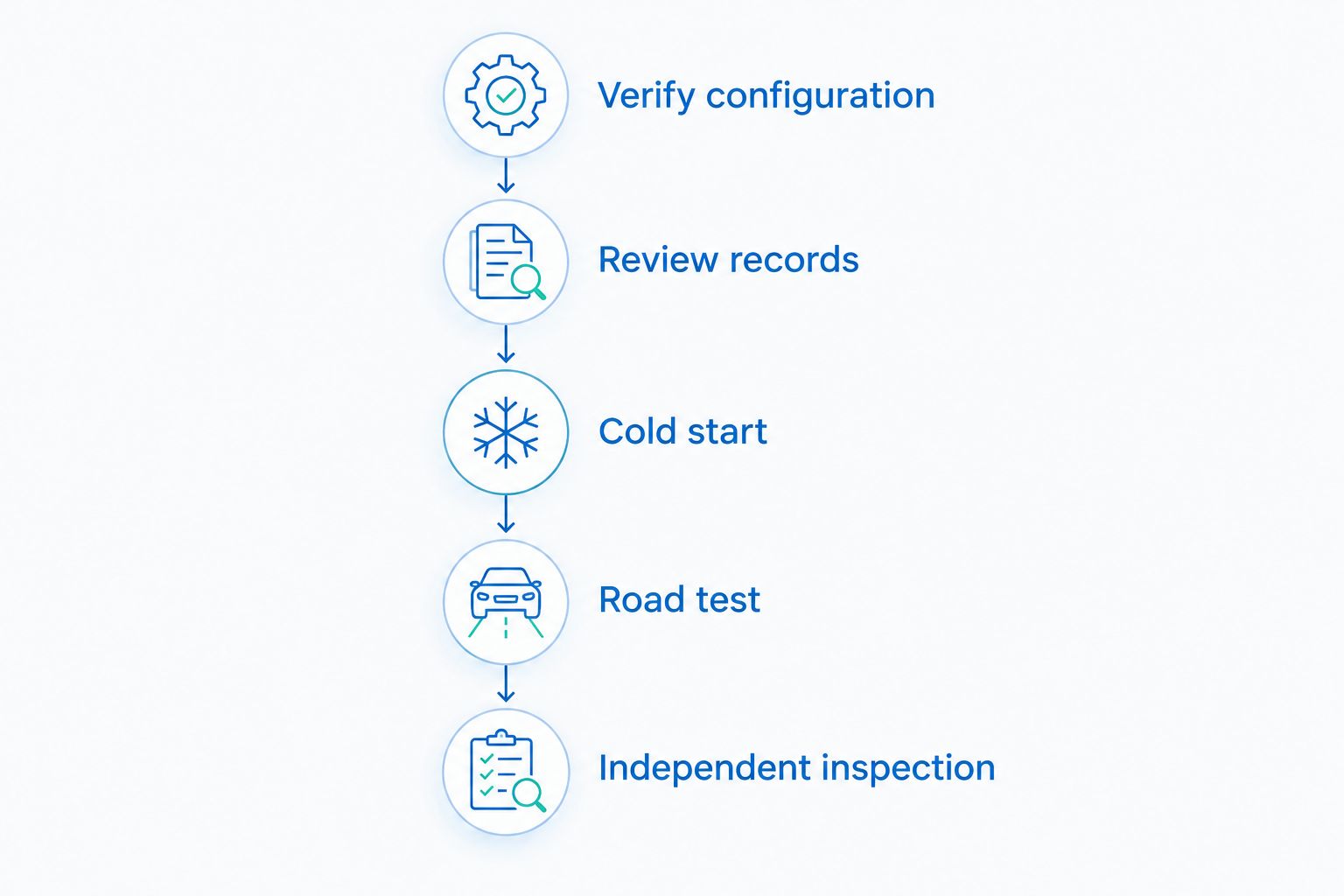
Use this sequence on every Nissan sedan you investigate in 2026. Keep your observations separate from the seller’s explanations so the inspection answers specific questions.
- Verify configuration: Match the VIN, engine, transmission, and paperwork to the car.
- Review records: Look for dated maintenance invoices, repair descriptions, and consistent odometer entries.
- Cold start: Listen for abnormal noises and watch for persistent warning lights or smoke.
- Road test: Evaluate starting, acceleration, shifting, braking, steering, and operation after warm-up.
- Independent inspection: Have a mechanic examine the vehicle and explain any required repairs before you commit.
The order matters: identifying the configuration first tells you which maintenance records and transmission checks apply. A road test then gives the mechanic specific symptoms to investigate.
A vehicle-history report adds context, but it does not replace a mechanical inspection. Compare it with invoices and the physical car, especially when dates, mileage, or repair descriptions do not line up.
Before discussing financing or a trade-in with GMS Autos, settle the vehicle decision. Financing terms do not correct a drivetrain fault, and an appealing trade-in arrangement does not establish the replacement car’s reliability.
Start your used-car search
Review GMS Autos, then ask about the exact engine, transmission, and records for any Nissan sedan you consider.
Which used Nissan sedan should you choose?
Start with a manual Nissan Sentra if you want a compact daily driver and can operate a manual confidently. Put a manual Nissan Versa beside it when basic commuting matters more than midsize space.
Choose an Altima when your passenger needs justify its format, and choose a Maxima when a V6 is a deliberate requirement. Neither recommendation overrides the inspection.
For buyers visiting GMS Autos in 2026, the next move is specific: identify a candidate, verify its drivetrain, request its records, and arrange an independent inspection. Reject any car whose unresolved symptoms make the purchase depend on guesswork.
FAQ
What are the best used Nissan sedans for reliability in 2026?
Start with manual-transmission Nissan Sentra and Nissan Versa configurations, then assess each car’s records and mechanical condition. Nissan Altima and Nissan Maxima fit different space and engine preferences, but CVT-equipped examples need focused transmission checks.
Is a manual Nissan Sentra more reliable than a CVT Sentra?
A manual Nissan Sentra removes CVT-specific concerns, but that alone does not prove greater overall reliability. Clutch wear, engine maintenance, previous damage, and current mechanical condition still determine whether the individual car is a sound purchase.
Should I avoid every used Nissan with a CVT?
Do not reject or approve every used Nissan solely because it has a CVT. Verify the exact transmission, review the relevant service history, and require an independent assessment before buying.
Is a Nissan Versa a good choice for daily commuting?
A manual Nissan Versa is a practical shortlist option for basic commuting when its condition and cabin fit suit you. Check clutch operation, cooling, brakes, tires, and air conditioning rather than judging only the engine.
Is a used Nissan Altima better than a used Sentra?
Choose a Nissan Altima for midsize passenger needs and a Nissan Sentra for compact daily use. Neither model is automatically the better reliability purchase; compare the actual drivetrain, records, and inspection findings.
Should I choose a Nissan Maxima for reliability?
Choose a Nissan Maxima because you specifically want a V6 sedan, not because its engine size guarantees reliability. Inspect the engine, cooling system, and transmission independently before committing.
What should I ask before buying a used Nissan sedan?
Ask for the exact engine and transmission configuration, maintenance invoices, repair history, and permission for an independent inspection. Check the VIN for applicable recalls and confirm that any required recall work has been completed.
One last thing
A clean diagnostic scan is not a clean bill of mechanical health. Clutch wear, leaks, tire damage, and some drivability problems require physical examination or a road test, not just a code reader.
Take a written symptom list to the mechanic. An unresolved noise or hesitation deserves an explanation before you buy—not a promise that you will stop noticing it.