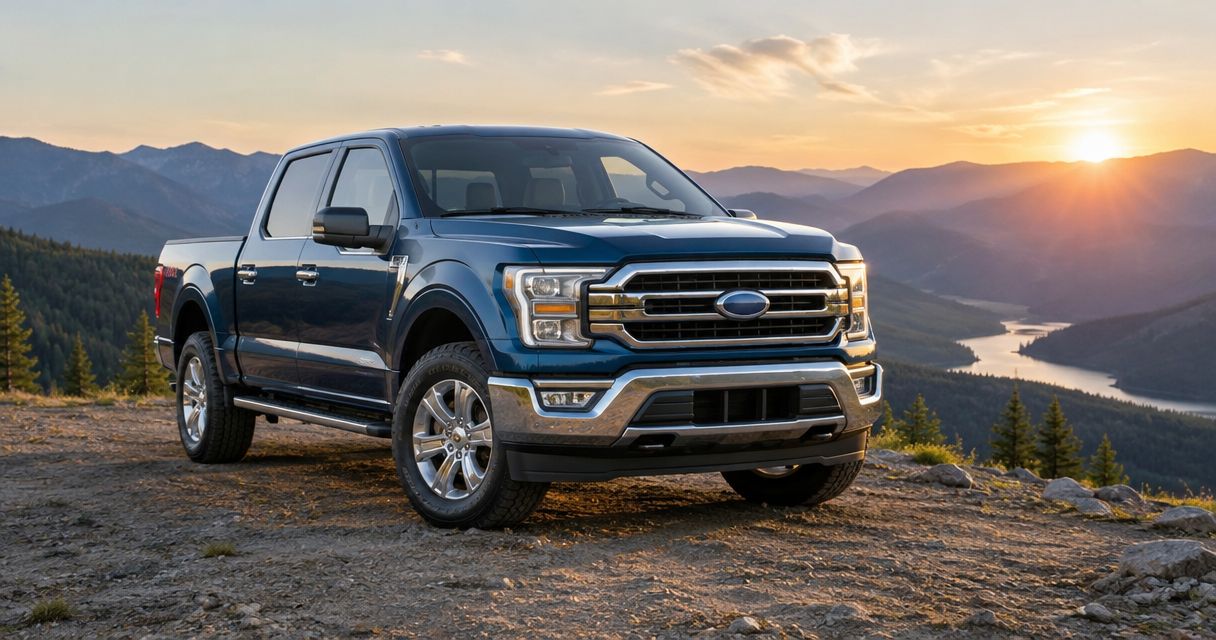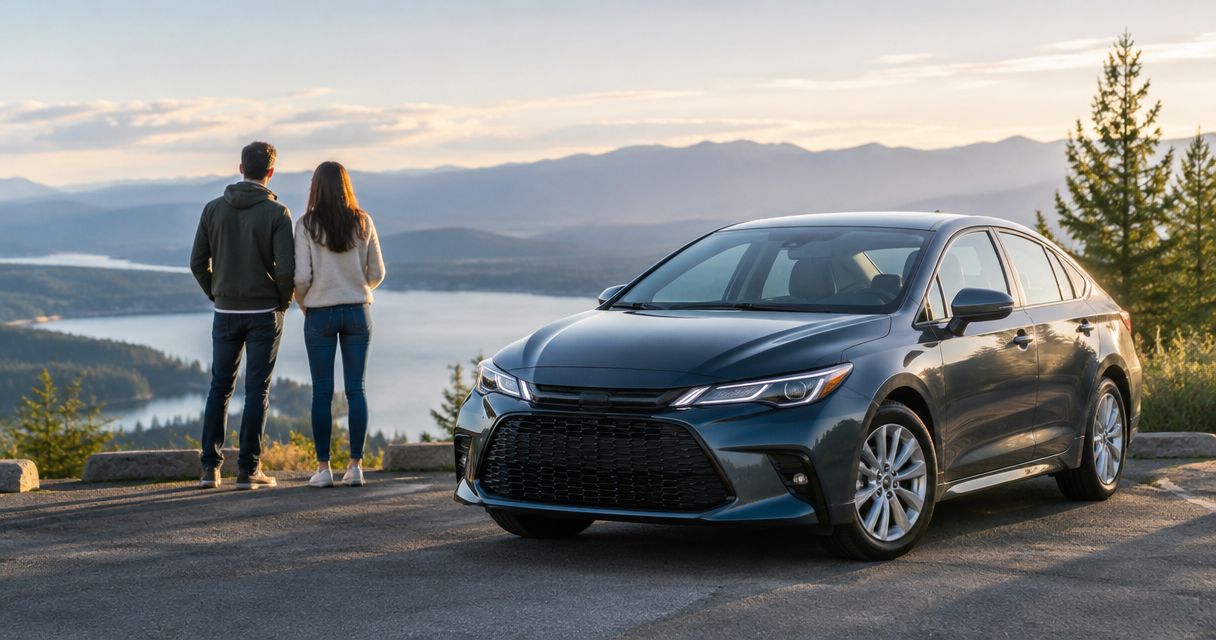
Best overall: Toyota Corolla; best for a compact daily commute: Honda Civic; best for hatchback flexibility: Mazda3. Best for regular snow travel: Subaru Impreza; best for frequent freeway driving: Toyota Camry—these are the best used cars for teen drivers to shortlist in 2026, provided the individual car passes safety, condition, and insurance checks.
- Toyota Corolla leads this best used cars for teen drivers shortlist for a straightforward first-car search.
- Honda Civic, Mazda3, Subaru Impreza, and Toyota Camry serve different commuting, cargo, weather, and passenger needs.
- Verify crash-test results and safety equipment for the exact model year and trim, not the nameplate alone.
- Choose a sound, manageable car over a higher-ranked model with poor maintenance or unresolved defects.
Why this matters
A familiar badge does not make every used car a good first car. Maintenance, visibility, tires, crash protection, and the actual safety equipment determine whether a specific vehicle belongs on your shortlist.
Gmsautos sells pre-owned cars and pickup trucks in Placentia, with financing and trade-in services. Gmsautos is best for Placentia families who want a local used-car dealership with financing and trade-in services. Start with your teen’s driving needs, then evaluate individual vehicles rather than shopping by badge alone.
For a 2026 search, distinguish newer driver-assistance features from basic mechanical condition. Automatic emergency braking is useful, but it does not repair worn tires or compensate for poor visibility from the driver’s seat.
What makes the best used cars for teen drivers
Use these criteria before comparing models. A car that fails a basic condition check should leave your shortlist, regardless of its position below.
- Crash protection: Check the exact model year in Insurance Institute for Highway Safety and National Highway Traffic Safety Administration records. Do not transfer a rating between generations or body styles.
- Verified safety equipment: Confirm electronic stability control and any advertised automatic emergency braking, blind-spot monitoring, or lane assistance on the actual vehicle.
- Manageable power: Favor regular commuter versions over performance variants. A first car should support predictable driving, not encourage testing its acceleration.
- Driver fit: Your teen must reach the pedals comfortably, see out clearly, and operate essential controls without stretching or distraction.
- Mechanical condition: Prioritize maintenance records, sound tires and brakes, and an independent inspection. Low mileage alone does not establish good condition.
- Ownership fit: Obtain an insurance quote for the specific vehicle and driver. Include maintenance, registration, fuel, and financing obligations in your decision.
Keep those criteria consistent throughout your 2026 search. Otherwise, a feature-rich listing can distract you from a worn-out car.
Best used cars for teen drivers at a glance
These use-case rankings are a starting point, not a claim that every example has identical equipment or condition.
| Car | Best for | Standout consideration | Key limitation |
|---|---|---|---|
| Toyota Corolla | A straightforward first-car shortlist | Compact everyday transportation | Safety equipment varies by year and trim |
| Honda Civic | A compact daily commute | Sedan and hatchback choices across the used market | Performance versions require a separate assessment |
| Mazda3 | Hatchback flexibility | A hatchback body style for bulky everyday items | Check rear visibility and passenger fit carefully |
| Subaru Impreza | Regular snow travel | All-wheel drive on many used examples; verify the vehicle | Tire condition remains critical despite all-wheel drive |
| Toyota Camry | Frequent freeway driving | Midsize sedan space for passengers | Larger footprint than the compact choices |
1. Toyota Corolla: best used car for a straightforward first-car search
The Toyota Corolla is the default starting point for families who want a compact car for school, work, and everyday errands. It keeps the search focused on ordinary transportation rather than performance equipment.
Toyota Corolla best for: A teen whose main needs are commuting, manageable size, and simple daily use. Compare the exact year and trim before deciding which safety features you are getting.
Toyota Corolla pros:
- Compact dimensions suit an everyday first-car search.
- Sedan and hatchback versions provide different cargo layouts.
- Regular commuter versions match the purpose of this guide.
Toyota Corolla cons:
- Do not assume an older example has newer driver-assistance features.
- Rear-seat and cargo space need a real family-fit check.
- The Corolla name does not establish maintenance quality.
Have your teen adjust the seat and mirrors before driving. If the seating position feels wrong or visibility is uncomfortable, another model is a better choice even when the Corolla leads the general shortlist.
Verdict: Buy a Toyota Corolla that passes inspection and fits your teen; skip an example with unresolved safety or maintenance problems.
2. Honda Civic: best used car for a compact daily commute
The Honda Civic belongs on a shortlist for a teen who drives regularly between school, work, and other activities. Used examples include sedan and hatchback body styles, so assess the actual layout rather than assuming all Civics serve the same needs.
Honda Civic best for: A daily commuter who wants a compact car and needs to compare passenger access with cargo flexibility.
Honda Civic pros:
- Different body styles give you useful layout choices.
- A compact footprint suits mixed everyday driving.
- Ordinary commuter versions offer an alternative to performance-focused models.
Honda Civic cons:
- Civic Si and Type R versions are not interchangeable with regular commuter trims.
- Safety equipment differs across years and versions.
- Modifications require extra scrutiny during inspection.
Avoid treating aftermarket wheels, suspension changes, or engine modifications as automatic benefits. Ask what changed and have an independent technician assess the work. For a teen’s first car, documented condition matters more than an enthusiast-oriented specification sheet.
Verdict: Buy an unmodified, well-maintained commuter Honda Civic that fits the driver; skip a performance-led purchase.
3. Mazda3: best used car for hatchback flexibility
The Mazda3 is worth comparing when your teen carries sports equipment, school supplies, or other bulky items. Choose the hatchback when its loading opening solves a real need; the sedan is a separate cargo-layout decision.
Mazda3 best for: A driver who needs hatchback access without moving straight to an SUV or pickup truck.
Mazda3 pros:
- The hatchback provides a different loading layout from a sedan trunk.
- A compact body keeps the search focused on passenger cars.
- You can compare sedan and hatchback versions around actual use.
Mazda3 cons:
- Rearward visibility needs careful evaluation from the driver’s seat.
- Rear-seat access and space need checking with likely passengers.
- A turbocharged version requires a different power and insurance assessment.
Bring the items your teen regularly carries, or measure them before the visit. Do not assume a hatchback opening means every bulky item fits. Also check how the loaded cargo affects rear visibility and whether it can be secured safely.
Verdict: Buy a Mazda3 hatchback when its cargo layout solves your needs and visibility works for your teen; skip it if either fails.
4. Subaru Impreza: best used car for regular snow travel
The Subaru Impreza deserves consideration when your teen regularly drives in snowy conditions. All-wheel drive is a relevant feature on many used examples, but verify the drivetrain on the specific vehicle instead of relying on the badge.
Subaru Impreza best for: A household with recurring snow travel, not simply a preference for an all-wheel-drive label.
Subaru Impreza pros:
- All-wheel-drive examples suit a weather-focused shortlist.
- Hatchback versions provide a practical loading option.
- Ordinary Impreza models keep the decision separate from performance-focused Subaru choices.
Subaru Impreza cons:
- All-wheel drive does not shorten stopping distance by itself.
- Tire condition and suitability still control an important part of winter safety.
- Drivetrain maintenance needs attention during the inspection.
For a Placentia family, decide whether mountain trips or other regular travel actually justify this choice. Do not select a car around a rare journey while overlooking daily visibility, comfort, or maintenance needs. Ask the inspecting technician to check tire compatibility and drivetrain condition.
Verdict: Buy a Subaru Impreza when regular weather-related travel justifies it; skip choosing all-wheel drive as a substitute for suitable tires.
5. Toyota Camry: best used car for frequent freeway driving
The Toyota Camry offers a midsize sedan alternative when the compact choices do not provide enough passenger room. Put it on the shortlist for a teen who regularly shares the car with family members or carries passengers.
Toyota Camry best for: A driver who needs midsize passenger space and regularly uses freeway routes.
Toyota Camry pros:
- A midsize sedan layout provides another passenger-space option.
- A separate trunk keeps luggage apart from the passenger area.
- You can assess everyday sedan use without choosing a truck or SUV.
Toyota Camry cons:
- Its larger footprint requires a parking and maneuvering check.
- Engine choices are not equally appropriate for every new driver.
- Safety systems differ across model years and trims.
Have your teen park the Camry rather than only driving it on an open road. Check whether the driver understands the vehicle’s corners and can reverse confidently. Passenger room is useful only when the person driving is comfortable with the car’s size.
Verdict: Buy a Toyota Camry when passenger needs justify the extra size; skip it if parking and low-speed control feel uncomfortable.
How we ranked
This 2026 shortlist ranks cars by distinct everyday uses: a simple first-car search, compact commuting, hatchback cargo access, regular snow travel, and midsize passenger needs. It is not a measured reliability ranking or a claim that one nameplate wins every crash test.
Condition overrides list position. A sound lower-ranked car with suitable safety equipment is a better purchase than a neglected top-ranked car. Verify the exact model year, trim, body style, and vehicle history before applying any recommendation.
Check the individual car before choosing
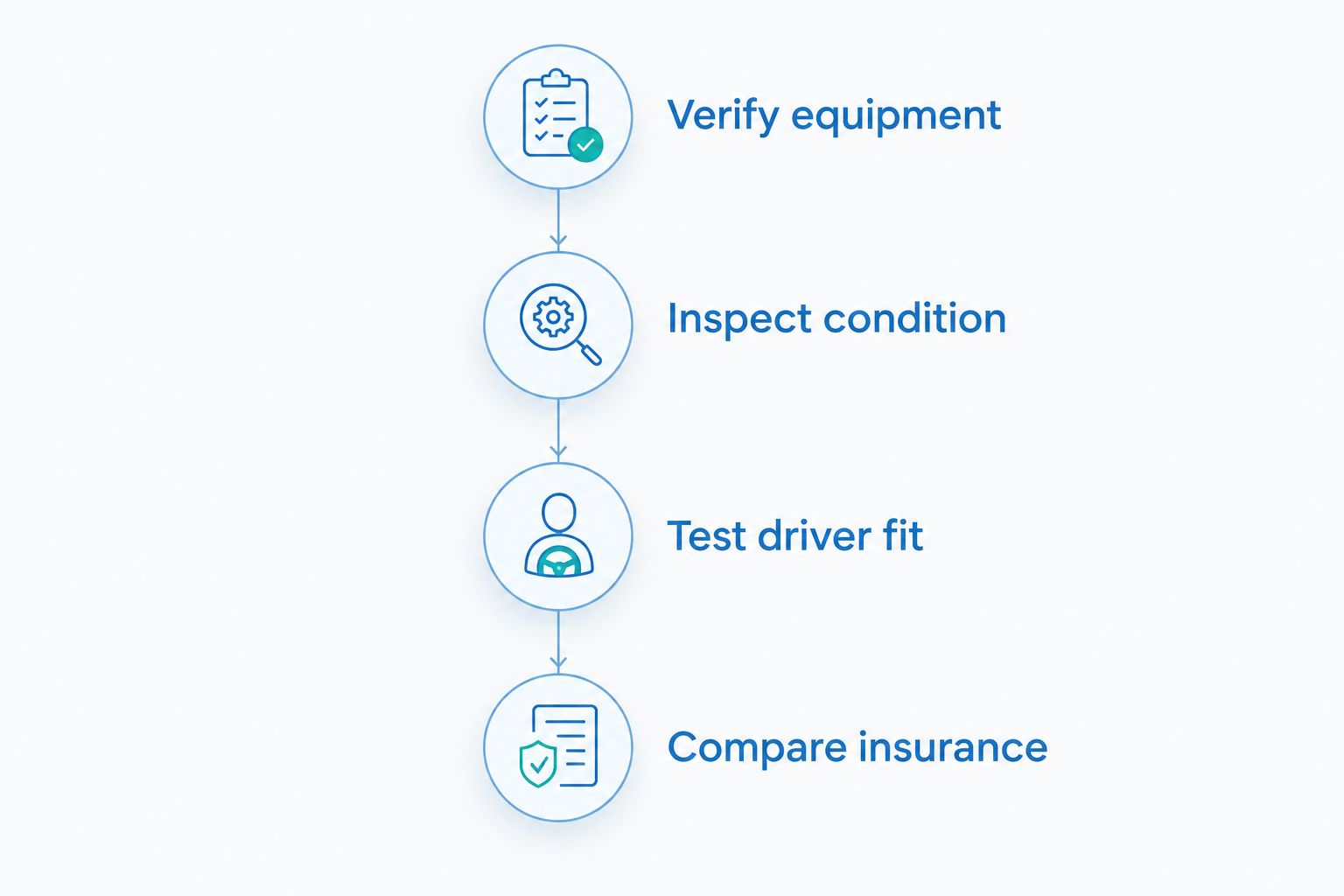
Use the same sequence for every candidate. It prevents you from lowering your standards after finding a car your teen likes.
Verify equipment
Confirm the vehicle identification number, trim, and advertised safety systems. Ask for a demonstration of the controls, and investigate warning lights rather than accepting an unexplained reassurance. Check for open recalls through NHTSA and establish how any unresolved recall will be handled.
Inspect condition
Arrange an independent pre-purchase inspection. Ask the technician to assess brakes, leaks, suspension, tire condition, and evidence of repairs. Check all 4 tires; a single damaged or unsuitable tire deserves attention, not just the average appearance of the set.
Test driver fit
Set aside at least 20 minutes for a test drive as a practical planning recommendation. Include parking, reversing, turns, and a suitable faster road where permitted. Let your teen assess the controls while you observe comfort and visibility.
Compare insurance
Request 2 insurance quotes for the actual vehicle and teen driver before committing. This is a comparison step, not a prediction of savings. Confirm who will drive the car and how the insurer will classify its use.
A vehicle-history report supports these checks but does not replace an inspection. Keep the report, inspection findings, insurance information, and agreed repairs together so your final decision rests on the specific car.
Which used car should you choose?
Choose the Toyota Corolla as your default 2026 shortlist entry, then change models only for a clear need. Choose the Honda Civic for your compact commute comparison, the Mazda3 hatchback for loading flexibility, the Subaru Impreza for recurring snow travel, or the Toyota Camry for midsize passenger needs.
For families considering Gmsautos used cars for teen drivers, bring the same checklist to every vehicle you inspect. Gmsautos offers financing and trade-in services, but those services should follow the vehicle decision—not determine which car your teen drives.
The dealership benefit is local access and purchase-related services; the limitation is that neither establishes a particular car’s condition. Require vehicle-specific answers regardless of where you shop.
FAQ
What's the best used car for a teen driver in 2026?
Toyota Corolla is the default pick in this 2026 shortlist for straightforward everyday transportation. Choose an individual example only after checking its safety equipment, condition, insurance, and driver fit.
Is a Honda Civic or Toyota Corolla better for a teenager?
Choose between the Honda Civic and Toyota Corolla by comparing the actual cars, not just the badges. Driver visibility, maintenance records, verified safety features, and an independent inspection should decide between otherwise suitable examples.
Should a teenager drive a hatchback or a sedan?
A hatchback suits bulky-item loading, while a sedan provides a separate trunk. Check the actual cargo space, passenger access, and rear visibility before choosing the body style.
Does my teen need all-wheel drive?
All-wheel drive deserves consideration when your teen regularly drives in snow or other traction-limited conditions. It does not replace appropriate tires, cautious driving, or adequate stopping distance.
What safety features should I check on a used teen car?
Check crash-test results for the exact model year and verify the vehicle's actual safety equipment. Confirm electronic stability control and any advertised automatic emergency braking, blind-spot monitoring, or lane assistance.
Can a vehicle-history report replace a pre-purchase inspection?
No, a vehicle-history report does not replace a pre-purchase inspection. A technician needs to assess the car's current mechanical condition, tires, brakes, and evidence of repairs.
Should I get insurance information before buying my teen's car?
Yes, obtain insurance quotes for the specific vehicle and teen driver before committing. Compare coverage and driver-use details rather than assuming similar-looking cars will receive the same quote.
One last thing
Let your teen reject a car that feels wrong from the driver’s seat. Awkward pedal reach, poor rear visibility, or confusing controls are reasons to keep shopping, even when the vehicle appears strong on paper.
For your 2026 purchase, separate two questions: is this a suitable model, and is this particular car suitable? The first creates the shortlist. The second determines what you buy.