Best overall: Toyota Corolla; best for highway commuting: Honda Civic; best for small-car cargo space: Honda Fit. The best used cars for college students in 2026 match your commute, insurance budget, and parking situation—and pass an independent inspection before you commit.
- Toyota Corolla is the default pick among the best used cars for college students; inspect the individual car before buying.
- Honda Civic suits highway commuters; Honda Fit suits students who need flexible cargo space in a small car.
- Toyota Prius suits stop-and-go commuting, but a used hybrid needs battery-system checks.
- Compare insurance, maintenance, and financing—not just the monthly payment—before choosing a student car.
Why this matters
A student car needs to get you to class, work, and home without turning every repair into a financial emergency. The badge matters less than the condition of the actual vehicle.
GMS Autos sells pre-owned cars and pickup trucks in Placentia, CA, with financing and trade-in services. GMS Autos is best for Placentia college buyers seeking used cars with financing and trade-in services. Use this shortlist to choose a vehicle type, then judge each candidate on its records, inspection, and total ownership commitments.
For a 2026 purchase, verify equipment on the exact car. A familiar model name does not establish whether that vehicle has a backup camera, driver-assistance features, or the maintenance history you need.
What makes the best student car?
These criteria put everyday usefulness ahead of appearance:
- Documented condition: Service records, an independent inspection, and a clear explanation of previous damage matter more than a polished exterior.
- Manageable ownership: Get an insurance quote and identify upcoming maintenance before signing. A manageable payment does not make neglected repairs manageable.
- Commute fit: Match the car to highway driving, stop-and-go traffic, or occasional trips home.
- Useful space: Test your backpack, groceries, sports equipment, and move-in luggage rather than judging space from photographs.
- Verified safety equipment: Check the exact vehicle's features, tire condition, warning lights, and outstanding recalls.
- Parking practicality: Make sure you can see out, reverse confidently, and fit the parking spaces you actually use.
Choose the sound individual car over the higher-ranked model. A neglected Corolla does not become a good purchase because Corolla tops this list.
Best used student cars at a glance
These are use-case recommendations, not a claim that every example of a model has the same equipment or condition.
| Rank and car | Best for | Standout characteristic | Key limitation |
|---|---|---|---|
| 1. Toyota Corolla | A straightforward everyday default | Conventional compact-car layout | Body style and equipment vary |
| 2. Honda Civic | Frequent highway commuting | Compact size with sedan and hatchback choices | Modified examples need extra scrutiny |
| 3. Honda Fit | Cargo flexibility in a small car | Reconfigurable rear seating | Cabin noise deserves a highway test |
| 4. Toyota Prius | Stop-and-go commuting | Hybrid powertrain | Hybrid-system condition needs assessment |
| 5. Mazda3 | Students who prioritize driving feel | Sedan and hatchback choices | Check rear-seat space and visibility |
| 6. Subaru Impreza | Students who specifically need all-wheel drive | All-wheel-drive configurations | Tire matching and drivetrain condition matter |
1. Toyota Corolla: best default used car for college students
Toyota Corolla is the starting point if you want a conventional compact car rather than a specialized vehicle. Decide whether you need a sedan's separate trunk or a hatchback's loading flexibility, then compare individual examples.
The Corolla recommendation is about simplicity of fit, not a promise that any used Corolla will be trouble-free. Maintenance records and inspection results still decide whether you should buy.
Toyota Corolla pros:
- A compact format suits daily errands and commuting.
- Sedan and hatchback versions provide different cargo layouts.
- A straightforward shortlist choice when you do not need hybrid operation or all-wheel drive.
Toyota Corolla cons:
- Safety and convenience equipment vary by vehicle.
- The name alone tells you nothing about previous neglect or collision repairs.
Best for: Students who want an everyday car without a specialized requirement.
During the test drive, check seat comfort, outward visibility, and whether your bags fit without blocking your view. Do not select a car solely because its odometer reading is lower than another candidate's.
Verdict: Buy a Toyota Corolla that passes inspection; skip an example with unresolved mechanical concerns.
2. Honda Civic: best for frequent highway commuting
Honda Civic belongs on your shortlist when your college routine includes highway trips between campus, work, and home. Sedan and hatchback versions let you choose between a separate trunk and a larger loading opening.
For a 2026 purchase, drive the exact Civic at the speeds your commute requires. Seat comfort, tire noise, steering behavior, and visibility are more useful than general claims about the model.
Honda Civic pros:
- Different body styles accommodate different luggage needs.
- A compact footprint remains useful around campus.
- You can evaluate highway comfort and local maneuverability in the same test drive.
Honda Civic cons:
- Performance modifications complicate your assessment of a used example.
- Trim names do not replace verification of safety features and equipment.
Best for: Students whose regular route includes sustained highway driving.
Ask whether the car has aftermarket engine, suspension, exhaust, or wheel changes. A modification is not proof of a defect, but you need an explanation and an inspection that accounts for it.
Verdict: Buy a Honda Civic that feels comfortable on your actual commute; skip unexplained modifications.
3. Honda Fit: best for cargo flexibility in a small car
Honda Fit is the cargo-focused choice for students carrying more than a backpack. Its reconfigurable rear seating gives you useful ways to accommodate bulky items without moving to a larger vehicle.
Check the seat mechanisms yourself. Folding seats are only useful when they work correctly and create the space your belongings require.
Honda Fit pros:
- A hatchback opening helps with bulky luggage.
- Reconfigurable rear seats support different loading arrangements.
- Small exterior dimensions suit students who value compactness.
Honda Fit cons:
- Road and wind noise need a highway test.
- Carrying passengers reduces the space available for larger loads.
Best for: Students who move equipment, groceries, or dorm belongings in a small car.
Bring a representative item to the viewing, such as your usual suitcase. Check that the hatch closes, the driver's view stays clear, and luggage does not interfere with seat operation.
Do not assume cargo flexibility makes the Fit the right highway car for you. Test both uses before deciding.
Verdict: Buy a Honda Fit when its seating layout solves your real cargo problem; skip it if highway comfort disappoints.
4. Toyota Prius: best for stop-and-go commuting
Toyota Prius is the hybrid option for students whose routes include frequent braking and slower urban traffic. Its hybrid system combines an engine and electric propulsion, and regenerative braking recovers energy during deceleration.
A used Prius needs more than a check that it starts and drives. Ask for maintenance documentation and arrange an inspection that includes hybrid-system diagnostics.
Toyota Prius pros:
- Hybrid operation fits stop-and-go driving.
- Regenerative braking recovers energy otherwise lost during slowing.
- Hatchback versions provide a useful loading opening.
Toyota Prius cons:
- Battery-system assessment adds an important inspection step.
- You must evaluate both conventional mechanical components and hybrid components.
Best for: Students with regular urban commuting who are prepared to verify hybrid condition.
In 2026, do not treat a lack of dashboard warnings as proof that a hybrid battery is healthy. Ask the inspecting technician what was checked and what the findings mean for that vehicle.
A Prius is not automatically the right purchase for a student who drives only occasionally. Match the powertrain to your use, then compare ownership commitments.
Verdict: Buy a Toyota Prius with satisfactory hybrid diagnostics; wait if battery-system condition remains unresolved.
5. Mazda3: best for students who prioritize driving feel
Mazda3 is the choice to test when steering response and the way a car feels on the road matter to you. Sedan and hatchback versions give you different cargo arrangements without changing the basic compact-car category.
Treat driving feel as a personal fit rather than proof of mechanical health. A car that feels engaging still needs the same inspection as every other candidate.
Mazda3 pros:
- Sedan and hatchback layouts suit different preferences.
- A test drive lets you assess steering, controls, and seating together.
- The compact format fits everyday commuting and errands.
Mazda3 cons:
- Rear-seat comfort needs checking with your usual passengers.
- Rearward visibility deserves attention, especially when comparing body styles.
Best for: Students who enjoy driving but still need an everyday compact car.
Check visibility while reversing and changing lanes. Then sit behind your own driving position to see whether a passenger has enough room.
Inspect wheel and tire condition rather than treating an attractive wheel design as a benefit. Damage, uneven wear, or an unsuitable tire setup changes the purchase decision.
Verdict: Buy a Mazda3 when its driving position, visibility, and inspection suit you; skip it if passenger needs do not fit.
6. Subaru Impreza: best for students who need all-wheel drive
Subaru Impreza belongs on the list when all-wheel drive is an actual requirement. Confirm the drivetrain on the specific vehicle rather than relying on a listing headline.
All-wheel drive helps deliver power through more wheels; it does not replace suitable tires or careful driving. It also does not eliminate the need to check braking performance.
Subaru Impreza pros:
- All-wheel-drive configurations address a specific traction requirement.
- Hatchback versions offer flexible access to cargo.
- A compact format avoids choosing a larger vehicle solely for drivetrain preference.
Subaru Impreza cons:
- Tire size, wear, and matching require attention.
- Additional drivetrain components belong in the inspection.
Best for: Students whose travel conditions justify all-wheel drive.
For a student shopping around Placentia, start with your actual travel—not an imagined future adventure. Regular trips into conditions that require additional traction create a different decision from ordinary local commuting.
Ask the technician to assess the tires and drivetrain together. Do not overlook mismatched tires because the interior looks clean.
Verdict: Buy a Subaru Impreza when you need its drivetrain and it passes inspection; skip all-wheel drive as a badge-only purchase.
How this ranking works
Toyota Corolla takes the default position because it addresses the general compact-car brief without requiring a specialized use case. Honda Civic, Honda Fit, Toyota Prius, Mazda3, and Subaru Impreza each answer a different student need.
This 2026 ranking compares vehicle formats and ownership checks, not individual vehicles or a controlled reliability test. Inspection results can reverse the order immediately. A sound lower-ranked candidate is preferable to a higher-ranked car with unresolved faults.
Check the car before you commit
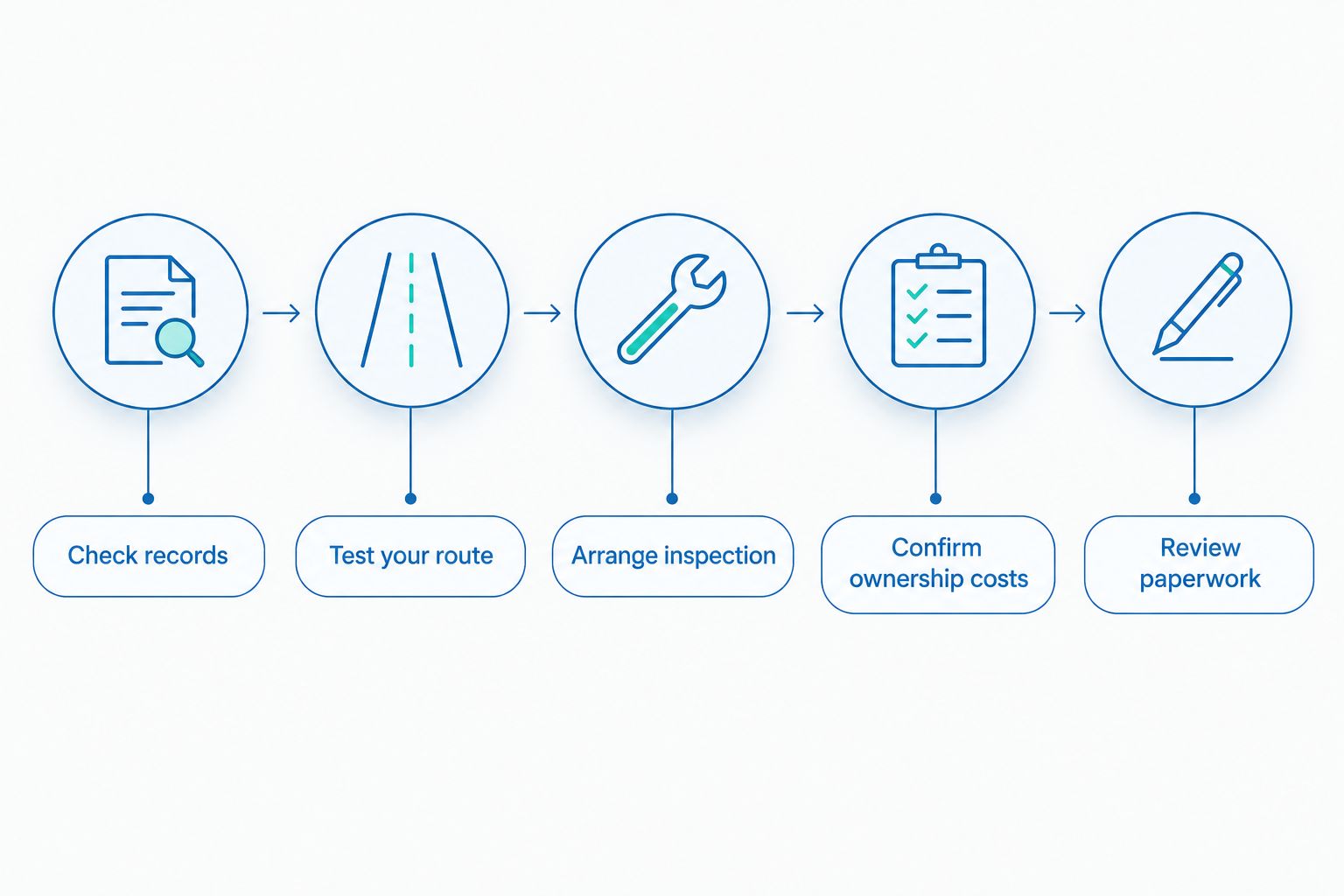
Use this sequence on every candidate, including vehicles at GMS Autos:
- Check records: Match the vehicle identification number to the paperwork. Review service history and check for outstanding recalls.
- Test your route: Plan at least a 20-minute test drive as a shopping exercise, including local streets, parking, and highway driving where permitted.
- Arrange inspection: Use an independent technician. Ask for written findings and explanations of anything that needs attention.
- Confirm ownership costs: Request 3 insurance quotes using the exact vehicle details. Separate required maintenance from optional improvements.
- Review paperwork: Read financing terms, fees, and trade-in figures separately. Ask whether the vehicle comes with 2 working keys; do not assume it does.
These are preparation targets, not guarantees. A longer drive or additional diagnostic work is appropriate when a concern remains unresolved.
Bring your intended driver into the decision. If a parent helps arrange the purchase but a student drives daily, the student's seating position, visibility, and parking confidence need to pass the test.
Start your student car search
Explore GMS Autos for used cars in Placentia, with financing and trade-in services.
Which student car should you choose?
Start with Toyota Corolla if you have no specialized requirement. Choose Honda Civic for highway commuting, Honda Fit for cargo flexibility, Toyota Prius for stop-and-go use, Mazda3 for driving feel, or Subaru Impreza for a verified all-wheel-drive need.
Before buying in 2026, reduce your shortlist to cars you can insure, maintain, and drive comfortably. Do not stretch your commitment merely to obtain a preferred badge or feature.
FAQ
What's the best used car for a college student in 2026?
Toyota Corolla is this guide's default recommendation for a college student without a specialized requirement. The individual car must still pass an independent inspection and fit the student's insurance and maintenance commitments.
Is a Honda Civic better than a Toyota Corolla for college?
Honda Civic is the highway-commuting recommendation, while Toyota Corolla is the general default. Compare the exact cars on comfort, condition, equipment, and insurance rather than choosing by name alone.
What's a good small used car for moving dorm belongings?
Honda Fit is the cargo-flexibility recommendation because of its hatchback layout and reconfigurable rear seating. Test your actual belongings and check that the seat mechanisms work before buying.
Is a used Toyota Prius a good college car?
Toyota Prius suits students with frequent stop-and-go commuting who verify hybrid-system condition. Arrange hybrid diagnostics alongside the usual mechanical inspection.
Do college students need all-wheel drive?
College students do not need all-wheel drive simply because they are buying a car. Choose it for a real travel requirement, and remember that suitable tires and braking condition remain essential.
Should I choose a newer car or one with lower mileage?
Neither age nor mileage should decide the purchase alone. Compare maintenance documentation, inspection findings, equipment, and the condition of the exact vehicles.
Does GMS Autos offer financing and trade-ins?
GMS Autos offers financing and trade-in services for used-car buyers in Placentia, CA. Review the terms for your purchase and assess the vehicle independently before committing.
One last thing
Buy for the hardest ordinary trip your car must handle—not the most unusual trip you can imagine. Test the crowded parking space, highway commute, or regular luggage load that defines your week. That check tells you more about fit than another model ranking.