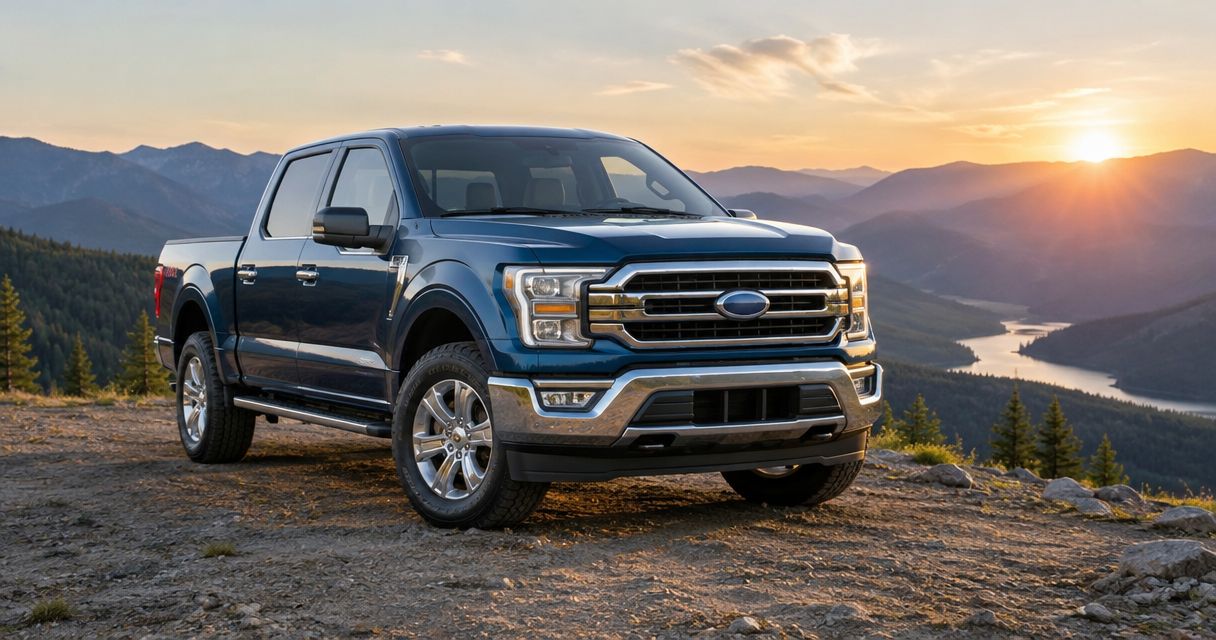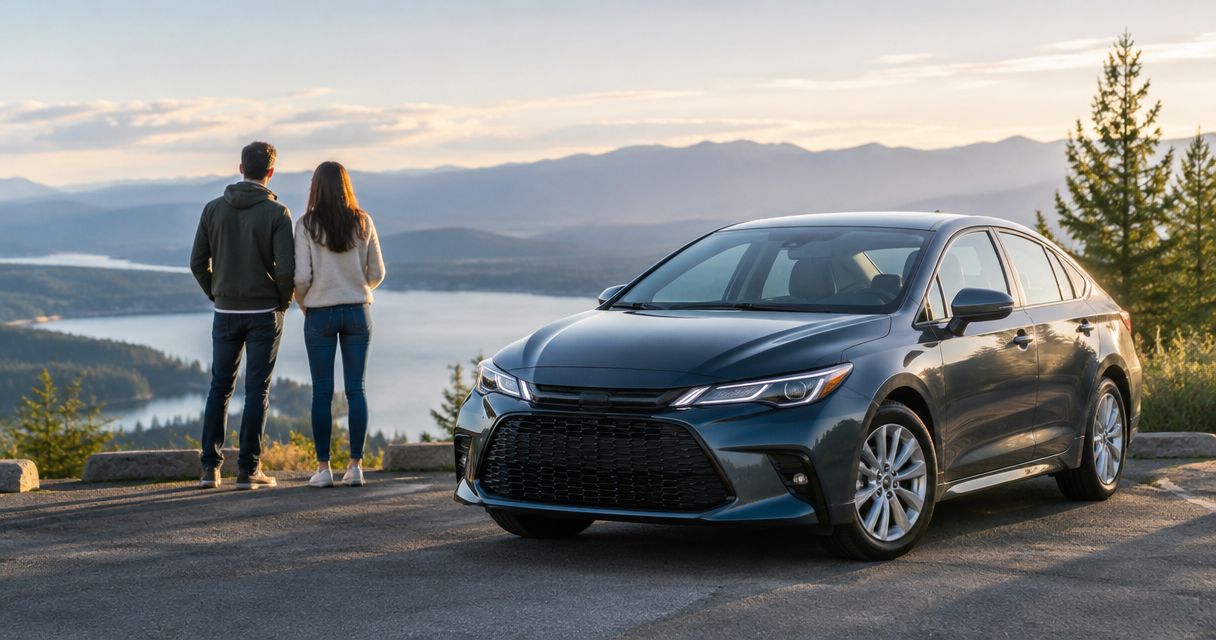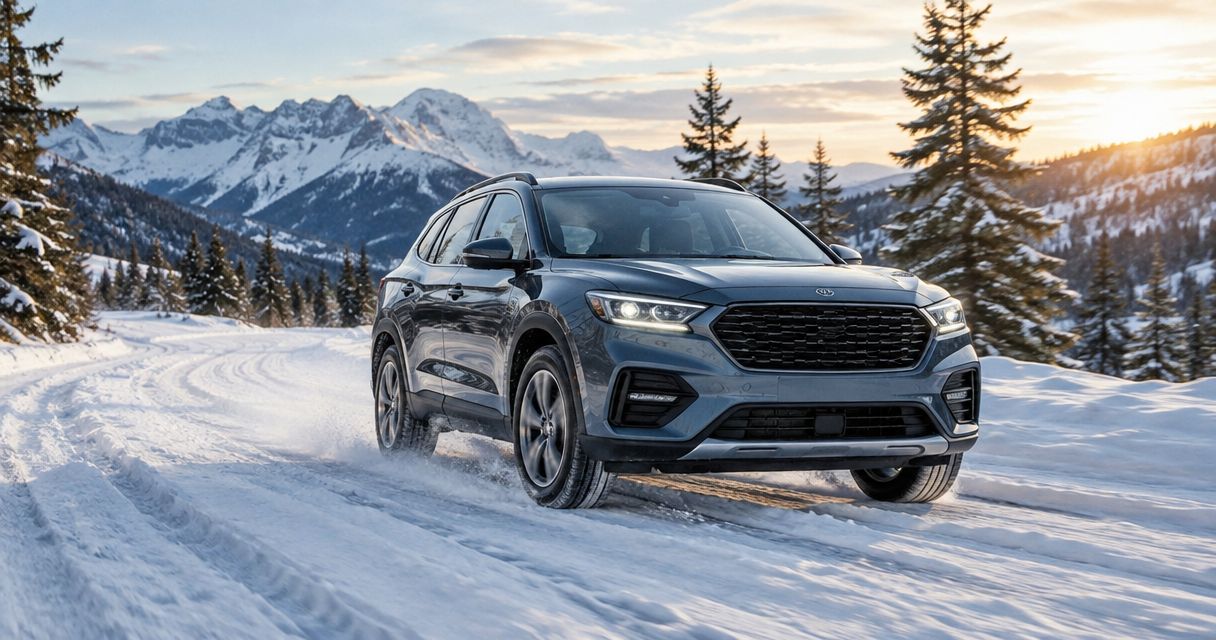
Best overall: Subaru Impreza. Best for fuel-conscious commuting: Toyota Prius AWD. Best for highway comfort: Subaru Legacy. This 2026 guide ranks the best used all-wheel-drive cars by everyday usefulness, drivetrain configuration, and the checks that matter before you buy.
- The Subaru Impreza leads this best used all-wheel-drive cars shortlist for buyers wanting standard AWD in a practical compact.
- Toyota Prius AWD suits fuel-conscious commuting; verify the exact drivetrain before buying.
- Subaru Legacy, Mazda3 AWD, and Audi A4 quattro serve different comfort, handling, and premium-cabin priorities.
- GMS Autos serves Placentia used-car buyers with financing and trade-in services.
- Check all four tires, vehicle history, and mechanical condition before choosing any used AWD car.
Why this matters
All-wheel drive helps a car send power to more than one axle when traction is limited. AWD does not replace good tires, shorten every stop, or make a damaged used car a good purchase. Those distinctions matter more than the badge on the trunk.
For local buyers, GMS Autos is a used-car dealership in Placentia offering pre-owned cars and pickup trucks, financing, and trade-in services. Use this shortlist to decide which type of car fits your driving, then judge the individual vehicle on its records and inspection.
A commuter heading between home and work needs a different car from someone who regularly carries passengers or travels to mountain destinations. Start with that use case. Treat AWD as one requirement, not the entire decision.
What makes the best used all-wheel-drive cars
For a 2026 purchase, these criteria separate a useful shortlist from a collection of familiar badges:
- Verified AWD configuration: Confirm the drivetrain through manufacturer build information. A model name alone does not prove AWD.
- Everyday fit: Match cabin space, body style, visibility, and parking dimensions to your routine.
- Tire condition: Check tread, damage, and the manufacturer's requirements for matching tires.
- Maintenance evidence: Look for documented servicing rather than accepting a general claim that the car was maintained.
- Mechanical condition: Arrange an independent inspection, including the drivetrain components specific to that vehicle.
- Ownership complexity: Compare the service requirements of a conventional compact, a hybrid, and a premium sedan before choosing.
A well-maintained example of a lower-ranked car is a better purchase than a neglected example of the top pick. This ranking selects useful vehicle types; it does not certify any individual car.
Used AWD cars at a glance
| Rank and car | Best for | Standout feature | Key limitation |
|---|---|---|---|
| 1. Subaru Impreza | Everyday compact-car use | Standard AWD | Less passenger space than a larger sedan |
| 2. Toyota Prius AWD | Fuel-conscious commuting | Hybrid powertrain with electric rear-wheel assistance | Not every Prius has AWD |
| 3. Subaru Legacy | Highway comfort | Standard AWD in a midsize sedan | Sedan trunk lacks hatchback loading flexibility |
| 4. Mazda3 AWD | Compact-car handling and cabin feel | Available AWD with sedan and hatchback choices | Rear-seat room needs a careful fit check |
| 5. Audi A4 quattro | Premium-sedan driving | Quattro-equipped versions combine AWD with a premium cabin | Maintenance planning requires close attention |
The order reflects distinct needs, not an assertion that one model beats every other model in every category. The Impreza is the default; the other cars earn their places when your priorities change.
1. Subaru Impreza: best used AWD car for everyday compact use
The Subaru Impreza combines a compact footprint with standard all-wheel drive. Used examples include different body styles and equipment, so inspect the specific car rather than assuming every Impreza has the same layout.
Best for: Drivers who want a straightforward AWD compact for everyday trips. The Impreza earns the overall recommendation because AWD is part of the model's basic proposition, not a configuration you must distinguish from a front-wheel-drive version.
Subaru Impreza pros:
- Standard AWD simplifies the drivetrain search.
- Its compact size suits buyers who do not need a midsize sedan.
- Hatchback examples provide a useful alternative to a conventional trunk.
Subaru Impreza cons:
- Passenger space is more limited than in the larger Subaru Legacy.
- Body style and equipment differ between used examples; the model name does not settle your feature list.
Check cold-start behavior, service documentation, and tire matching. During the road test, pay attention to vibration, warning lights, and unusual behavior during tight turns; ask the inspecting technician to identify the cause rather than diagnosing it yourself.
Sit in the rear seat before committing. A compact that works well for solo commuting can become awkward when you regularly carry adults, child seats, or bulky equipment.
Verdict: Buy the Subaru Impreza as the default compact choice, subject to an independent inspection.
2. Toyota Prius AWD: best used AWD car for hybrid commuting
The Toyota Prius AWD combines a hybrid powertrain with an electric motor that assists the rear wheels. Its AWD arrangement is different from a conventional mechanically connected rear drivetrain.
Best for: Commuters who want a hybrid and additional driven-wheel traction. Choose the Prius AWD for that combination, not as a substitute for an off-road vehicle.
Toyota Prius AWD pros:
- The hybrid powertrain suits buyers prioritizing fuel-conscious everyday driving.
- Electric rear-wheel assistance adds traction capability to the Prius formula.
- Its liftback layout accommodates cargo differently from a sedan trunk.
Toyota Prius AWD cons:
- Front-wheel-drive Prius examples also exist, so confirm the exact configuration.
- A used hybrid needs inspection of its hybrid system as well as its conventional mechanical components.
Ask for manufacturer build information and maintenance records. Have a technician familiar with hybrids check relevant diagnostic codes and explain any findings in plain language. A dashboard without warning lights is not a substitute for that inspection.
Also check the cargo opening with the items you actually carry. A useful cargo area still needs to accommodate your stroller, work bag, or luggage without an awkward loading routine.
Do not confuse the AWD designation with a plug-in charging requirement. Verify the precise Prius model and its operating instructions rather than making assumptions from appearance.
Verdict: Buy the Toyota Prius AWD when hybrid commuting is your main priority.
3. Subaru Legacy: best used AWD car for highway comfort
The Subaru Legacy puts standard AWD into a midsize sedan. It is the stronger fit on this list when passenger accommodation matters more than a compact footprint or hatchback cargo access.
Best for: Drivers who want a roomy sedan for commuting and longer road trips. Compare the Legacy with the Impreza from the driver's seat and the rear seat; the right choice depends on who rides with you.
Subaru Legacy pros:
- Standard AWD removes uncertainty about front-wheel-drive versions.
- Its midsize layout provides an alternative to the smaller compact choices.
- A separate trunk keeps luggage apart from the passenger compartment.
Subaru Legacy cons:
- The trunk opening is less flexible for bulky objects than a hatchback opening.
- Its larger footprint deserves a parking-space check before purchase.
Use the road test to assess seat support, visibility, road noise, and suspension behavior. Those are personal fit questions that a specification sheet cannot answer for you.
Check that the climate controls, windows, locks, and fitted driver-assistance features work. Equipment varies by the individual vehicle, and repairing neglected convenience features still adds work to ownership.
Ask the independent inspector to evaluate the engine, transmission, suspension, and AWD components. Do not let a comfortable test drive replace a mechanical assessment.
Verdict: Buy the Subaru Legacy when passenger space and sedan comfort outrank compact size.
4. Mazda3 AWD: best used AWD car for compact-car handling
The Mazda3 offers AWD on selected configurations, with sedan and hatchback examples in the used-car market. Verify the drivetrain before comparing equipment; a Mazda3 badge alone does not establish AWD.
Best for: Drivers who care about handling, cabin controls, and a compact body. The Mazda3 AWD belongs on your shortlist when the feel of the car matters as much as its transport function.
Mazda3 AWD pros:
- Available AWD gives compact-car buyers another option beyond Subaru.
- Sedan and hatchback body styles support different cargo preferences.
- Its compact layout suits buyers who prefer a smaller car to a midsize sedan.
Mazda3 AWD cons:
- Rear-seat space deserves a direct check with your usual passengers.
- Hatchback visibility and sedan cargo access create different practical compromises.
Take time with seating position and visibility. Adjust the mirrors, check your view when reversing, and make sure the controls are easy to reach without changing your normal posture.
Inspect wheel and tire condition closely. Ask the technician to distinguish cosmetic wheel damage from a bent wheel, alignment issue, or worn suspension component.
Test both body styles if cargo access is a deciding factor. A car that feels right on the road still needs to work when you load groceries or carry passengers.
Verdict: Buy the Mazda3 AWD if the seating, visibility, and cargo checks fit your routine.
5. Audi A4 quattro: best used AWD car for a premium sedan
Quattro-equipped Audi A4 versions pair all-wheel drive with a premium-sedan layout. Confirm the exact drivetrain, engine, and service requirements because used A4 configurations differ.
Best for: Buyers who specifically want a premium sedan and will plan its maintenance carefully. The A4 quattro is a targeted choice, not the default recommendation for someone who simply needs AWD transportation.
Audi A4 quattro pros:
- Quattro-equipped versions provide an AWD alternative to the mainstream sedans here.
- The sedan format suits drivers who prefer a separate luggage compartment.
- Different used configurations let you compare equipment and driving characteristics directly.
Audi A4 quattro cons:
- Engine, transmission, and drivetrain differences demand configuration-specific research.
- Premium equipment adds inspection items, including fitted electronics and convenience features.
Request detailed service records and use an inspector familiar with the exact Audi configuration. Ask which scheduled work is documented, which work is due, and whether diagnostic findings require further investigation.
Operate every fitted feature during your visit. Check the climate system, infotainment controls, seat adjustments, and lighting rather than concentrating only on acceleration.
If records are incomplete, hold the decision until the inspection resolves the important questions. A polished cabin does not establish mechanical condition.
Verdict: Hold on the Audi A4 quattro until its records and specialist inspection support the purchase.
How this shortlist is ranked
This 2026 ranking uses drivetrain configuration, everyday fit, cargo access, and inspection requirements. It places the Subaru Impreza first for general compact-car use, then gives each alternative a separate reason to choose it.
The ranking does not assign reliability scores, promise repair outcomes, or assume that every example shares the same equipment. The individual car's condition takes priority over its position in the table.
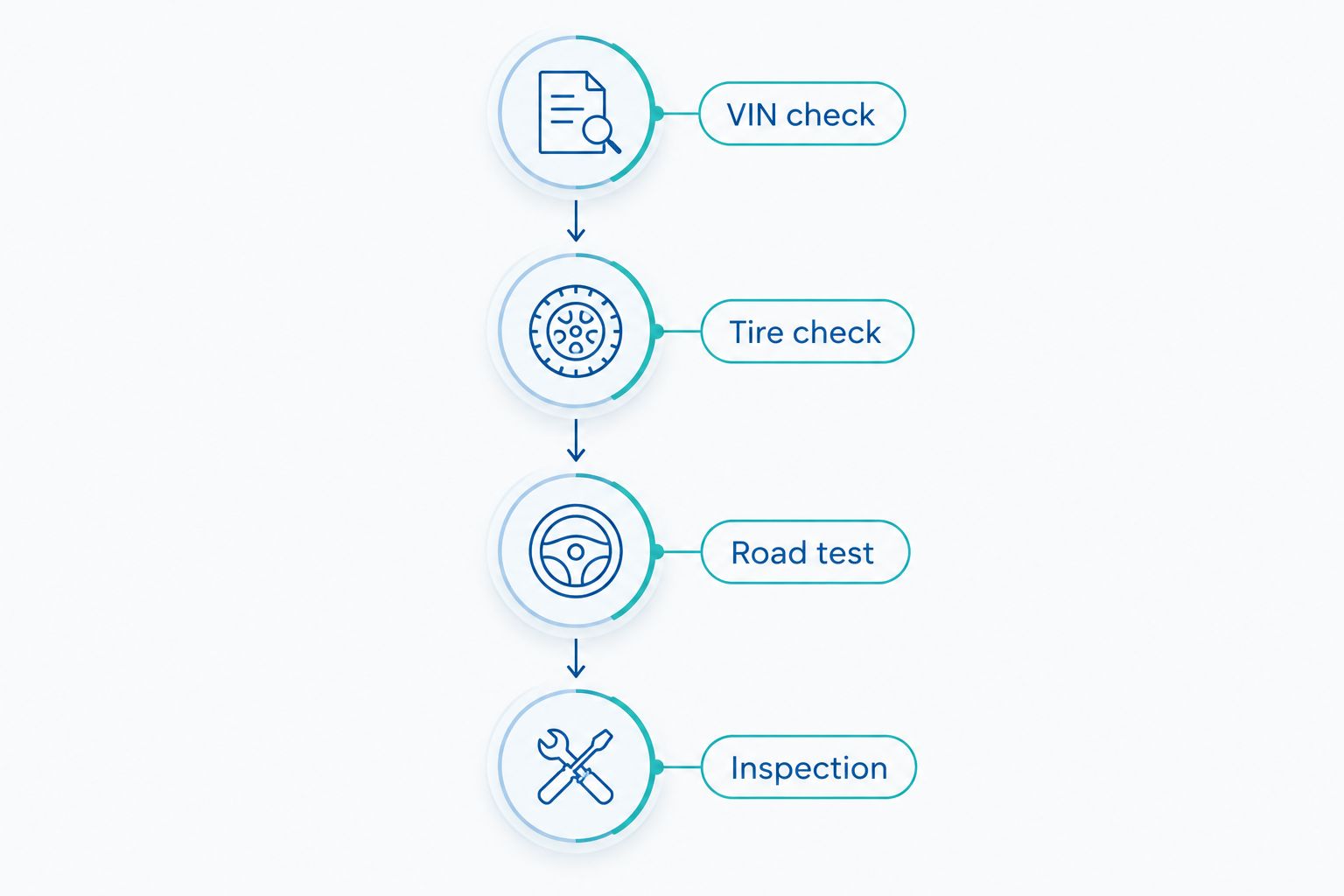
Check a used AWD car before you buy
Follow this sequence when comparing used all-wheel-drive cars at GMS Autos or another dealership.
VIN check
Match the 17-character VIN on the vehicle to the paperwork. Obtain manufacturer build information to confirm AWD, then review the history report for recorded title issues, damage, and odometer information. History reports do not replace an inspection.
Tire check
Inspect all 4 tires for size, tread pattern, uneven wear, and damage. Follow the vehicle manufacturer's tire-matching requirements; do not assume that any tires with the correct diameter are an acceptable set.
Passenger-car tire wear bars indicate 2/32 inch of remaining tread. Treat that as a wear marker, not proof that the tires suit wet roads or a mountain trip. Check age and condition as well.
Road test
Start with seating and visibility, then assess steering, braking, shifting, and noise. Use normal driving conditions and note anything that needs explanation. Do not attempt aggressive maneuvers to test AWD engagement.
Inspection
Have an independent technician evaluate the engine, transmission, brakes, suspension, and AWD system. For a hybrid, include hybrid-system checks. Request written findings so you can distinguish routine service from unresolved mechanical problems.
GMS Autos offers financing and trade-in services for local used-car buyers. Keep those decisions separate from the mechanical assessment: a payment arrangement does not resolve an inspection concern.
Which used AWD car should you choose?
For an undecided buyer in 2026, start with the Subaru Impreza. It answers the basic request for a practical compact with standard AWD without requiring a premium-sedan or hybrid preference.
Choose the Toyota Prius AWD for hybrid commuting, the Subaru Legacy for passenger space, or the Mazda3 AWD when its handling and compact layout fit you better. Consider the Audi A4 quattro only when its specific configuration and maintenance history meet your requirements.
Before signing, compare the inspection findings and service records for the actual cars. Reject the idea that AWD alone makes either vehicle the better purchase.
FAQ
What's the best used all-wheel-drive car to buy in 2026?
The Subaru Impreza is the default choice in this shortlist for everyday compact-car use because AWD is standard. Choose the individual car only after checking its records, tires, and mechanical condition.
Is the Subaru Legacy better than the Impreza?
The Subaru Legacy is the better fit when you want midsize-sedan passenger space; the Impreza is the better fit when compact size matters. Compare seating and cargo access before deciding.
Does every Toyota Prius have all-wheel drive?
No, not every Toyota Prius has AWD. Confirm the exact vehicle's drivetrain through manufacturer build information rather than relying on the model name.
Does all-wheel drive help a car stop faster?
AWD does not by itself give a car shorter stopping distances. Tire grip, road conditions, brakes, and driving speed determine braking performance.
Do all four tires need to match on an AWD car?
Follow the vehicle manufacturer's requirements for matching tire size, type, and tread or circumference. Differences outside those requirements can affect drivetrain operation, so have an inspector check the full set.
Should I get an independent inspection on a used AWD car?
Yes, arrange an independent inspection before buying a used AWD car. Include the drivetrain, tires, brakes, suspension, and any hybrid-system checks relevant to the vehicle.
Can GMS Autos help with financing and a trade-in?
GMS Autos offers financing and trade-in services for used-car buyers in Placentia. Discuss those services alongside your vehicle search, while keeping the car's condition central to the buying decision.
One last thing
For your 2026 purchase, inspect the tires before getting attached to the car. AWD badges draw attention; mismatched or damaged tires reveal a problem you need to resolve.
Choose the car whose condition you can verify, not the one whose badge promises the most.