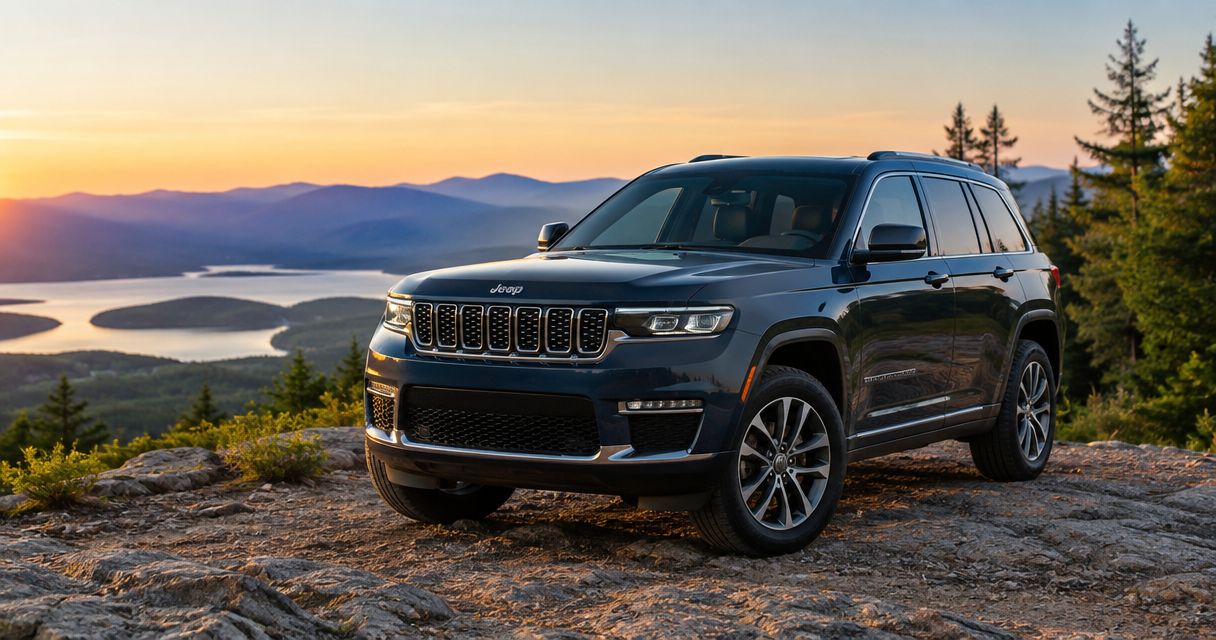
Best overall: a later-production Jeep Grand Cherokee WK2 with the 3.6-liter V6 and eight-speed automatic. Best for a third row: Grand Cherokee L with the V6; best simpler older option: WJ with the 4.0-liter inline-six. This 2026 guide ranks the configurations behind the best Jeep Grand Cherokee years to buy, then explains which individual vehicles deserve your inspection.
- The best Jeep Grand Cherokee years to buy start with later-production WK2 V6 models with documented maintenance.
- Jeep Grand Cherokee L is the pick when you need three rows rather than two.
- Choose a WK2 V8 for an actual towing requirement, not the badge alone.
- Gmsautos buyers should compare service records, equipment, and inspection results before choosing a used SUV.
Why this matters
A model year does not tell you whether a Grand Cherokee has conventional springs, air suspension, neglected cooling components, or documented transmission maintenance. Those differences affect what you own and what you must maintain. Use the year to narrow your search; use the vehicle’s condition to make the decision.
For your 2026 search, separate the WK2, WL, Grand Cherokee L, and older WJ before comparing listings. Two vehicles wearing the same Grand Cherokee badge can have different seating layouts, engines, suspension systems, and four-wheel-drive equipment.
Gmsautos is a used-car dealership in Placentia, CA, with financing and trade-in services. If you are shopping locally, decide which Grand Cherokee configuration fits your needs before comparing individual vehicles or discussing financing.
What makes the best used Jeep Grand Cherokee?
These criteria determine the ranking, rather than an unsupported claim that every vehicle from one calendar year is reliable:
- Service history: Look for dated invoices and maintenance records that match the vehicle, not just a seller’s summary.
- Powertrain fit: The 3.6-liter V6 suits general SUV shopping; the 5.7-liter V8 deserves consideration when its capability serves a specific need.
- Suspension complexity: Conventional springs avoid the additional components of an air-suspension system. Inspect either setup for wear.
- Seating needs: A two-row Grand Cherokee and a three-row Grand Cherokee L solve different family requirements.
- Verified equipment: Confirm towing equipment, drivetrain, and features on the actual vehicle. Trim names alone are not enough.
- Inspection results: A cold start, road test, diagnostic scan, and independent inspection take priority over a model-year reputation.
Best Grand Cherokee choices at a glance
The order below matches the detailed recommendations. These are configuration-based picks, not promises about every vehicle built in a particular year.
| Rank and configuration | Best for | Standout feature | Key limitation |
|---|---|---|---|
| 1. Later-production WK2, 3.6-liter V6 | Everyday two-row SUV use | V6 paired with an eight-speed automatic | Suspension and equipment vary by vehicle |
| 2. Grand Cherokee L, V6 | Families needing a third row | Three-row seating layout | Extra seating adds vehicle size |
| 3. WK2, 5.7-liter V8 | Buyers with a defined towing need | V8 powertrain option | Fuel use and maintenance need attention |
| 4. WL two-row, 3.6-liter V6 | Buyers wanting the newer two-row layout | Newer-generation cabin and controls | Equipment differs by trim and package |
| 5. WJ, 4.0-liter inline-six | Hands-on buyers wanting an older Jeep | Older inline-six configuration | Age-related condition dominates the decision |
1. Later-production WK2 V6: best for everyday SUV use
The later-production WK2 with the 3.6-liter V6 and eight-speed automatic is the default starting point for a two-row Grand Cherokee search. It gives you a practical configuration to evaluate without choosing a V8 for a job you do not need it to do.
The WK2 V6 is the best used Jeep Grand Cherokee starting point for buyers who need two rows, not a specialized towing or performance setup. Prefer an example with conventional springs if you do not specifically need air suspension. That choice removes air-system components from your ownership checklist, but it does not eliminate normal suspension repairs.
WK2 V6 pros:
- Two-row seating fits buyers who do not need a third row.
- The eight-speed automatic provides a clearly identifiable powertrain configuration.
- Conventional-spring examples avoid air-suspension hardware.
WK2 V6 cons:
- Maintenance history still matters more than the generation label.
- Drivetrain, suspension, and towing equipment differ between examples.
Best for: Commuting, errands, and general family use in a two-row SUV.
During the road test, check cold and warm transmission behavior. Inspect for fluid leaks, warning lights, and cooling-system concerns rather than treating a clean cabin as evidence of mechanical condition.
Verdict: Buy a documented, inspected WK2 V6; skip an example whose condition does not support the purchase.
2. Grand Cherokee L V6: best for third-row seating
The Jeep Grand Cherokee L is the three-row choice in this comparison. Pick it because you need the seating layout, not because the longer body automatically makes it the better Grand Cherokee.
Try the third row with the people who will use it. Check access, seating position, and the cargo space remaining behind occupied seats. A seating diagram cannot answer whether your child seats, passengers, and everyday bags work together.
Grand Cherokee L V6 pros:
- Three rows address a need the two-row Grand Cherokee does not.
- Flexible seating lets you compare passenger and cargo arrangements.
- The V6 configuration gives families a starting point without selecting a V8 by default.
Grand Cherokee L V6 cons:
- Its longer body requires a parking and maneuverability check.
- Using the third row reduces the space available for cargo behind it.
Best for: Families who regularly need a third row and can accommodate the larger body.
Test the seating arrangement before focusing on cabin features. Fold and restore the seats, check the latches, and operate the rear climate controls where fitted. Confirm that the specific vehicle has the equipment your passengers need.
Verdict: Buy Grand Cherokee L for a real third-row requirement; skip it if two rows already cover your routine.
3. WK2 V8: best for a defined towing requirement
A WK2 with the 5.7-liter V8 belongs on your shortlist when you have a specific trailer or workload to evaluate. The engine badge alone does not establish what the individual vehicle can tow.
Read the owner’s manual and confirm the vehicle’s factory equipment. Match its applicable towing and load limits to your trailer, passengers, luggage, and hitch setup. A V8 is not a substitute for checking the actual vehicle’s limits.
WK2 V8 pros:
- The V8 provides a powertrain alternative to the V6.
- Properly equipped examples deserve consideration for towing-focused use.
- The two-row layout suits buyers who do not need extra seating.
WK2 V8 cons:
- Fuel consumption belongs in your ownership comparison.
- Towing suitability depends on equipment and loading, not displacement alone.
Best for: Buyers who can explain the towing requirement that justifies choosing the V8.
Inspect the hitch area and review maintenance records carefully. Evidence of previous towing is a reason to examine the vehicle closely, not an automatic reason to reject it. Ask the inspector to assess brakes, cooling components, drivetrain leaks, and suspension condition.
Verdict: Buy the WK2 V8 when verified capability matches your job; skip it when the V6 already meets your needs.
4. WL two-row V6: best for the newer cabin layout
The WL two-row Grand Cherokee is the choice for buyers who prefer the newer-generation interior and controls without adding a third row. Keep it separate from Grand Cherokee L when filtering listings.
For a 2026 purchase, inspect the exact features rather than assuming the generation includes everything you want. Operate the infotainment system, cameras, seat adjustments, climate controls, and fitted driver-assistance functions. Use the vehicle’s equipment information to confirm what is installed.
WL two-row V6 pros:
- Two rows avoid choosing a longer vehicle solely for newer-generation features.
- The newer cabin layout offers a different experience from the WK2.
- The 3.6-liter V6 remains a distinct alternative to other powertrain configurations.
WL two-row V6 cons:
- A trim badge does not confirm every feature or option.
- More recent construction does not excuse missing service records or unresolved faults.
Best for: Buyers who prioritize the newer two-row cabin and are willing to inspect its electronics carefully.
Check screen operation and physical controls while parked, then assess visibility and control placement on the road. A feature is useful only if it works and suits the way you drive.
Verdict: Buy the WL two-row V6 for its layout and verified features; hold if equipment or fault history remains unclear.
5. WJ inline-six: best for hands-on older-Jeep ownership
The WJ with the 4.0-liter inline-six is an older-vehicle choice, not the default recommendation for someone seeking low-effort ownership. Its appeal starts with the configuration; its suitability ends with a detailed condition assessment.
On a WJ, age-related wear deserves close attention. Inspect the cooling system, seals, hoses, wiring, steering, suspension, and underbody. An engine’s reputation does not repair deterioration elsewhere in the vehicle.
WJ inline-six pros:
- The 4.0-liter inline-six is a clearly identifiable configuration.
- Its older layout suits buyers deliberately seeking an older Jeep.
- A thorough inspection provides a useful basis for planning repairs and maintenance.
WJ inline-six cons:
- Age increases the importance of checking rubber, seals, corrosion, and previous repairs.
- Its equipment and cabin differ substantially from newer Grand Cherokee generations.
Best for: Hands-on owners comfortable assessing and maintaining an older SUV.
Look beyond the engine bay. Examine structural areas, the underside, tire wear, steering play, and evidence of modifications. Reject unsafe repairs or serious structural corrosion rather than treating them as minor bargaining points.
Verdict: Buy a sound WJ for intentional older-Jeep ownership; skip it as a shortcut to trouble-free transportation.
How the choices are ranked
This 2026 ranking prioritizes use-case fit, verifiable equipment, and inspection requirements. It does not assign failure rates or reliability scores to individual model years.
The WK2 V6 leads because it is the default two-row configuration in this guide. Grand Cherokee L takes the third-row slot; the WK2 V8 addresses towing; the WL two-row serves newer-cabin preferences; and the WJ serves hands-on older-vehicle ownership. Different needs produce different winners.
Turn the shortlist into a buying decision
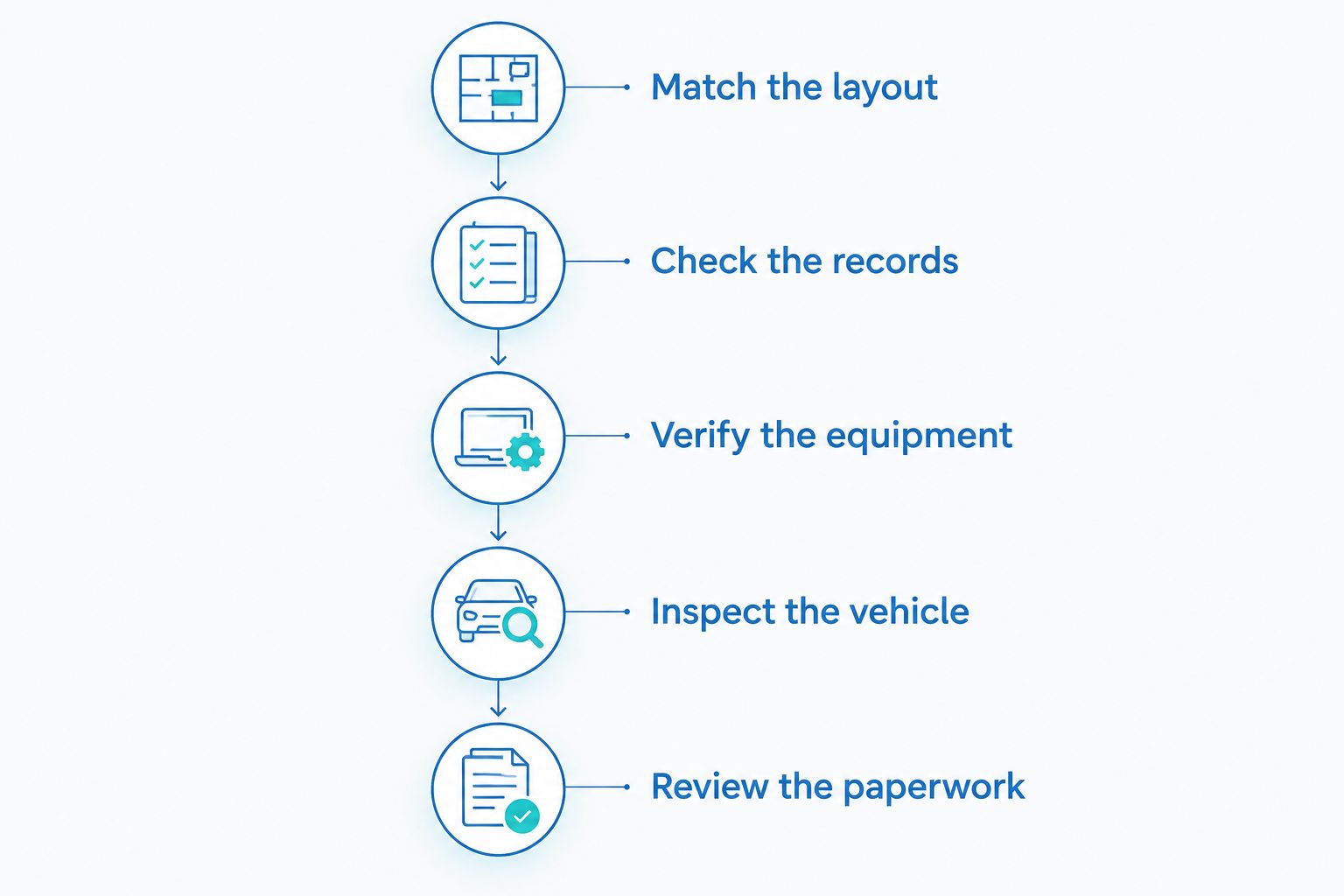
Use this sequence on every candidate. It keeps attractive features from distracting you from the vehicle’s actual condition.
- Match the layout: Confirm two rows or three rows, cargo needs, and parking fit.
- Check the records: Match invoices and maintenance entries to the vehicle identification number, or VIN.
- Verify the equipment: Confirm engine, transmission, suspension, drivetrain, and towing equipment where relevant.
- Inspect the vehicle: Arrange an independent mechanical assessment, including a diagnostic scan and underbody inspection.
- Review the paperwork: Resolve title, history, recall, and financing questions before signing.
For recall checks in 2026, use the National Highway Traffic Safety Administration’s VIN recall lookup for the individual vehicle. A model-level recall listing does not establish whether that vehicle has an outstanding repair. For operating limits and maintenance instructions, use Jeep’s owner documentation for the exact vehicle and powertrain.
Gmsautos used-SUV shoppers should bring the same discipline to financing and trade-ins. Compare the vehicle decision separately from the loan terms and trade-in appraisal. A convenient transaction does not replace an independent inspection.
Which Grand Cherokee should you choose?
Start with a later-production WK2 V6 if you are undecided and need a two-row SUV. Move to Grand Cherokee L only for a third row, the WK2 V8 for a verified towing requirement, or the WL two-row for its newer cabin layout.
Keep the WJ on a separate shortlist for older-vehicle ownership. Across every choice, the better-documented, better-inspected example takes priority over a preferred badge or model-year reputation.
FAQ
What are the best Jeep Grand Cherokee years to buy used?
Start with later-production WK2 model years equipped with the 3.6-liter V6 and eight-speed automatic if you need a two-row SUV. Choose the individual vehicle by service history, equipment, and independent inspection rather than its year alone.
Is the Jeep Grand Cherokee V6 better than the V8?
The V6 is the default choice in this guide for everyday SUV use; the V8 belongs on a towing-focused shortlist. Confirm the actual vehicle’s equipment and applicable limits before choosing either engine for towing.
Which used Grand Cherokee should I buy if I need a third row?
Choose Grand Cherokee L if you need three rows. Test passenger access and the remaining cargo space with the seats arranged as you will use them.
Should I choose a Grand Cherokee with air suspension?
Choose air suspension only when its functions serve your needs and the system passes inspection. Conventional springs avoid air-system components, but still require checks for wear and damage.
Is an older WJ Grand Cherokee a good daily driver?
A WJ deserves consideration only after a detailed condition assessment and a realistic maintenance plan. Its 4.0-liter inline-six configuration does not remove age-related concerns elsewhere in the vehicle.
What should I check before buying a used Grand Cherokee?
Check service records, VIN history, outstanding recalls, equipment, and independent inspection results. Include a cold start, road test, diagnostic scan, and underbody assessment.
Does Gmsautos offer financing and trade-in services?
Gmsautos offers financing and trade-in services at its used-car dealership in Placentia, CA. Review the transaction terms separately from your assessment of the vehicle’s mechanical condition.
One last thing
Before your final 2026 buying decision, ask to see the vehicle before it has been warmed up. A cold start gives your inspector another operating condition to assess; a warm test drive alone does not show it. Choose the Grand Cherokee that passes the checks, not the one with the most persuasive year-based reputation.